
Why Do Turkey Teeth Go Wrong and How Can You Avoid It
Turkey teeth gone wrong usually describes crowns or veneers that fit poorly, healthy teeth reduced more than they needed to be, or work placed over gum disease or decay that was not treated first. These problems relate to assessment and planning, so it helps to check the plan carefully before you book.
Medically reviewed by Ertan Omerov
What Does Turkey Teeth Gone Wrong Usually Look Like
Turkey teeth gone wrong usually means a dental crown or veneer that has become uncomfortable, loose, chipped or poorly fitted, or gums and a bite that have changed since treatment. The phrase is a UK nickname rather than a diagnosis, and a dentist has to examine each tooth before saying what the problem is.
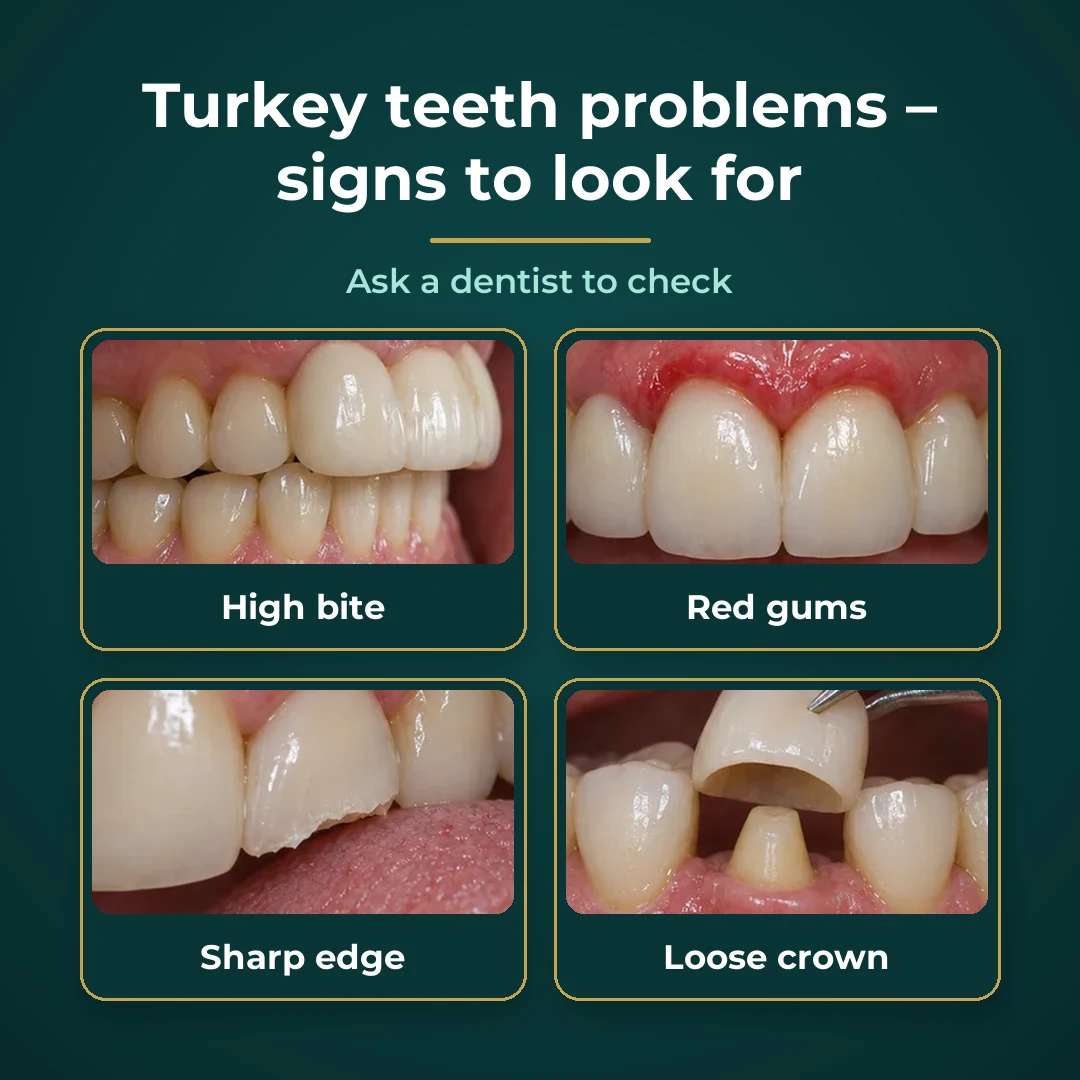
These are the signs worth asking a dentist about:
- A crown that feels high or uneven when you bite
- A gum that looks red or swollen, or bleeds, around one crown or veneer
- A sharp edge that keeps catching your tongue or cheek
- Sensitivity that is getting worse instead of settling
- A crown or veneer that feels loose or has come off
Any of these may point to a problem with the fit, the bite or the gum, and a dentist can confirm which after examining you. They do not prove that treatment failed. If you are new to the term, our introduction answers the question "what are Turkey teeth", and issues that concern zirconia in particular have their own article on zirconia crown problems.
Patient stories
How Do Patients Describe Their Treatment Visits
Patients describe their own experience at Er Dental Clinic. Individual results vary.
What Causes Turkey Teeth to Go Wrong
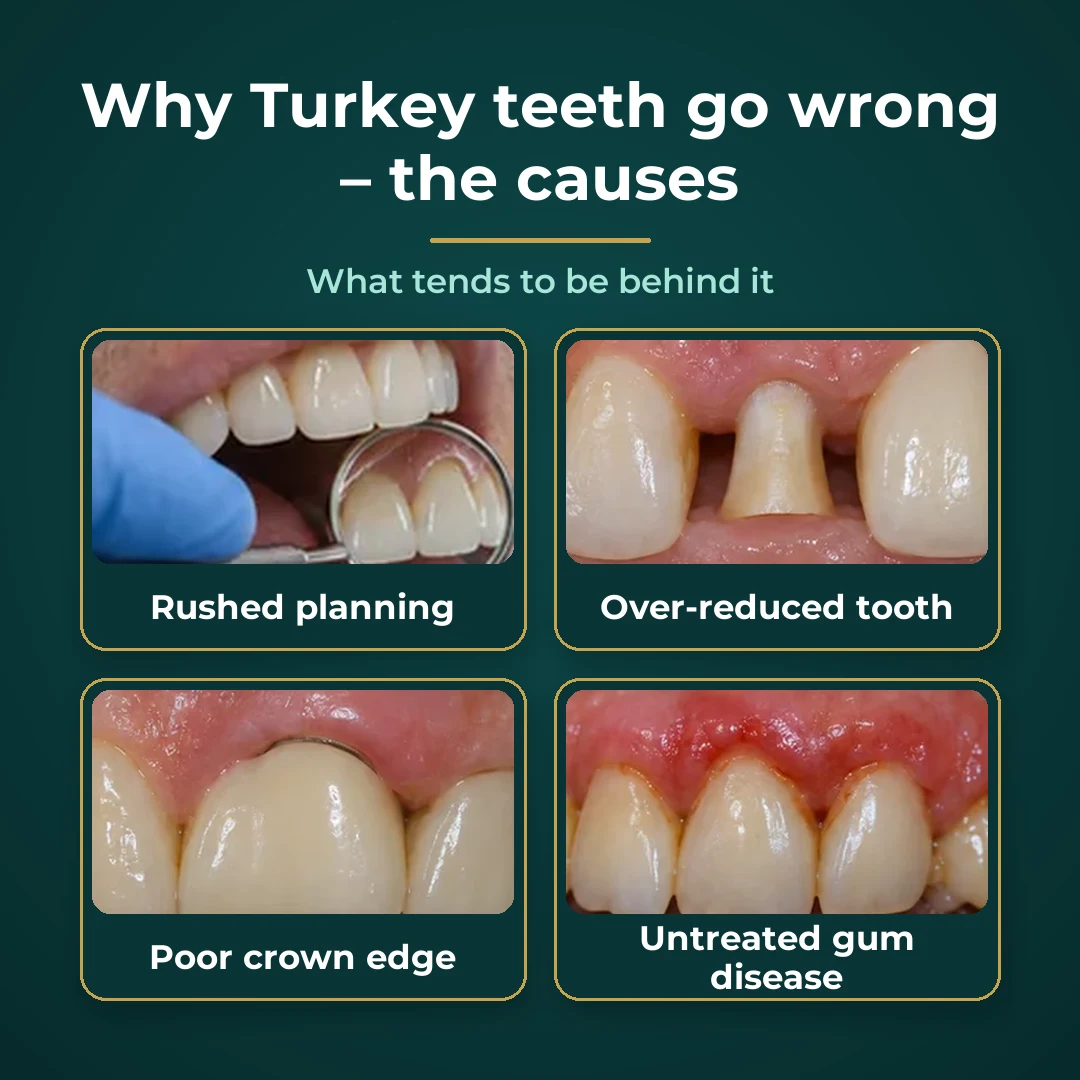
The problems that tend to come up are treatment planned without a proper assessment, healthy teeth reduced beyond what the case needed, crown or veneer edges that do not sit well against the gum, and gum disease or decay left untreated underneath. They relate to how the work was assessed and planned, not to the country.
Preparing a tooth for a crown removes some natural enamel, as Cleveland Clinic explains, so how much is taken and why should be explained for every tooth. Heavier reduction of a healthy tooth may irritate the nerve, and some teeth later need root canal treatment. Our article on Turkey teeth shaved down looks at tooth preparation in more detail.
Gum health matters as much as the tooth. A 2022 narrative review in the Journal of Functional Biomaterials reported that a poorly fitting crown margin favours plaque build-up, recurrent decay and gum problems, and that gums and hygiene should be assessed before prosthetic treatment starts.
Aftercare is the last piece. A bite that feels uneven or a crown that feels loose needs someone to contact, which is why the General Dental Council lists who to contact for advice after treatment among the questions to ask.
What Should a Proper Treatment Plan Include
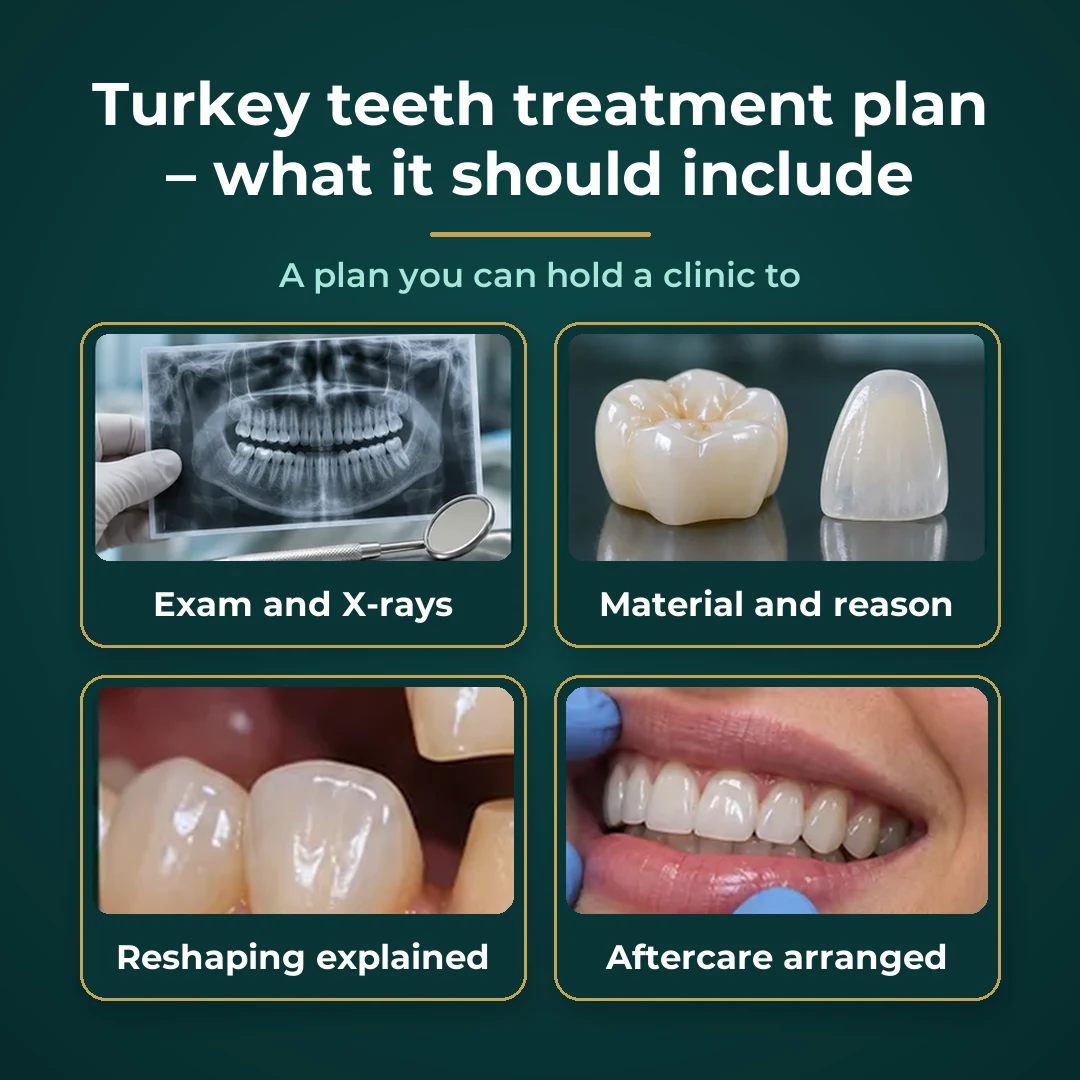
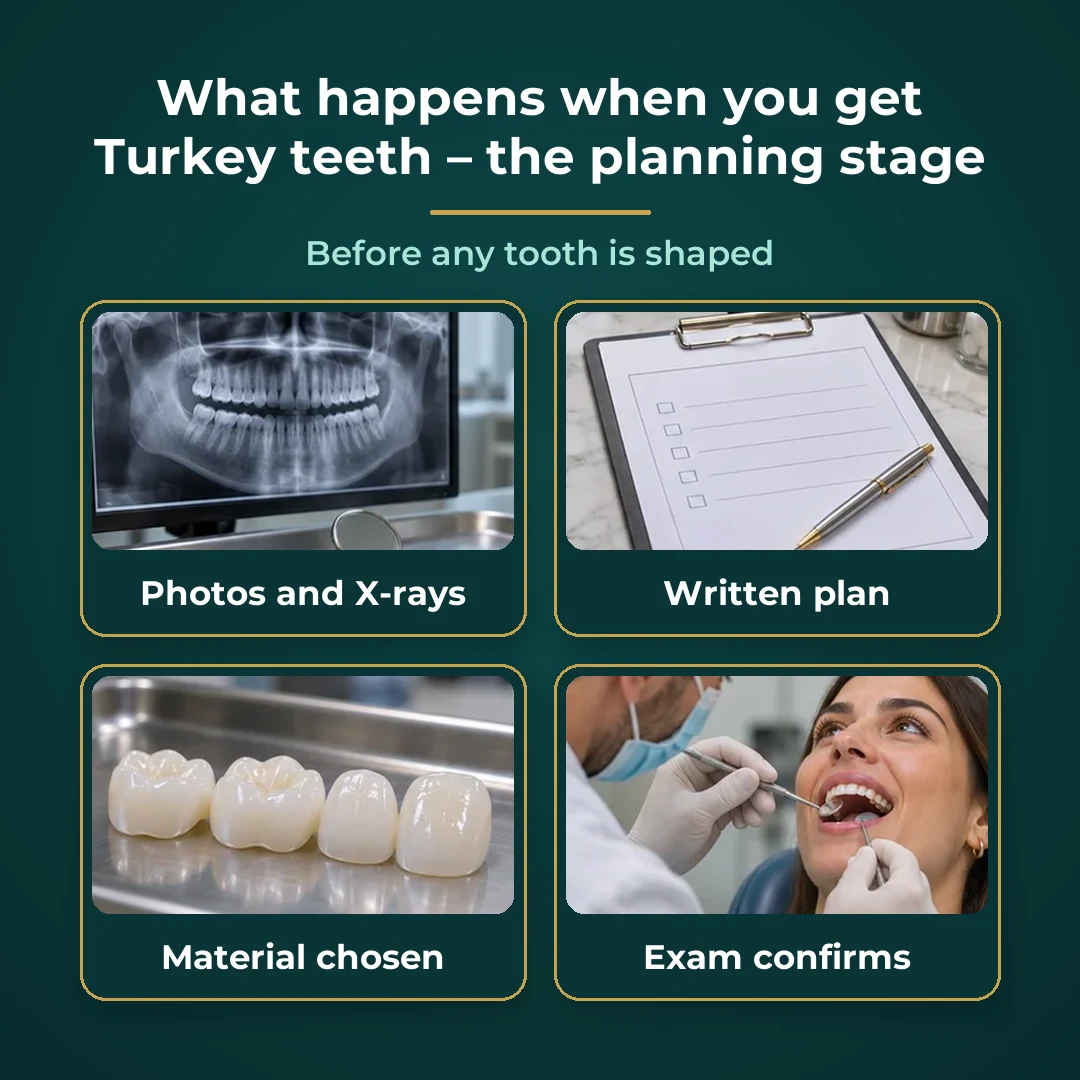
A proper treatment plan starts with an examination of every tooth, the gums and the bite, supported by X-rays, before any tooth is shaped. It then says which teeth need a crown or veneer, which material is proposed and why, and what is being done about any decay or gum disease first.
At Er Dental Clinic, a panoramic X-ray and, where your dentist needs it, a CBCT scan are part of planning. We also use 3Shape digital scanning, which in many cases replaces traditional impression trays. These tools do not promise a particular result; they simply give your dentist a clearer picture before treatment starts.
A plan you can hold a clinic to usually lists:
- The findings for each tooth and for the gums
- The proposed material and the reason for choosing it
- How much of each tooth will be reshaped and why
- Any gum, decay or root canal treatment needed first
- The number of visits and how aftercare is arranged
If any of these is missing, ask about it, and expect the findings for each tooth to be confirmed only after an examination with X-rays.
Which Warning Signs Should You Look For Before You Book
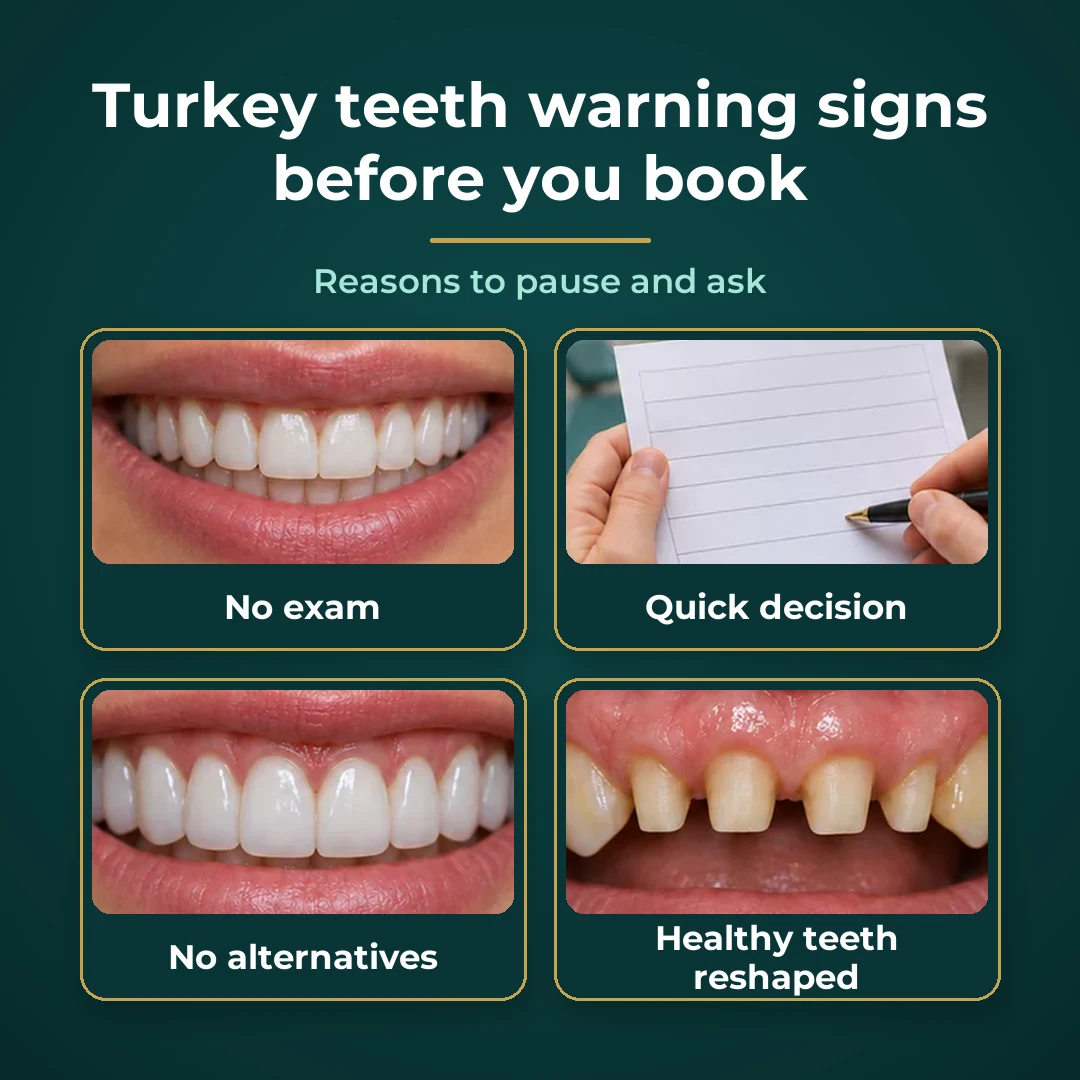
Warning signs before you book include a final plan and quote that no dentist will confirm by examining you, pressure to decide quickly, no mention of alternatives and no explanation of how much of each tooth will be reshaped. None of these proves a clinic is unsafe, but each is a reason to ask questions before you travel.
The General Dental Council advises that you should always be assessed by a qualified dentist before being given a treatment plan and cost estimate. The NHS treatment abroad checklist also lists a hard sell, pressure to make a quick decision, no discussion of possible complications and no mention of aftercare as warning signs. A plan that proposes crowns on every tooth, including healthy ones, without explaining the alternatives is another reason to pause.
Also ask yourself whether the clinic has answered these:
- Who will treat you, and can you contact them after you fly home
- What happens if you are unhappy with the result
- Whether further treatment for complications is included in the quoted price
Patient videos and comments help you judge a clinic, and our reviews page lists ours. Compare them with sources outside the clinic's own website as well.
Are Turkey Teeth Safe
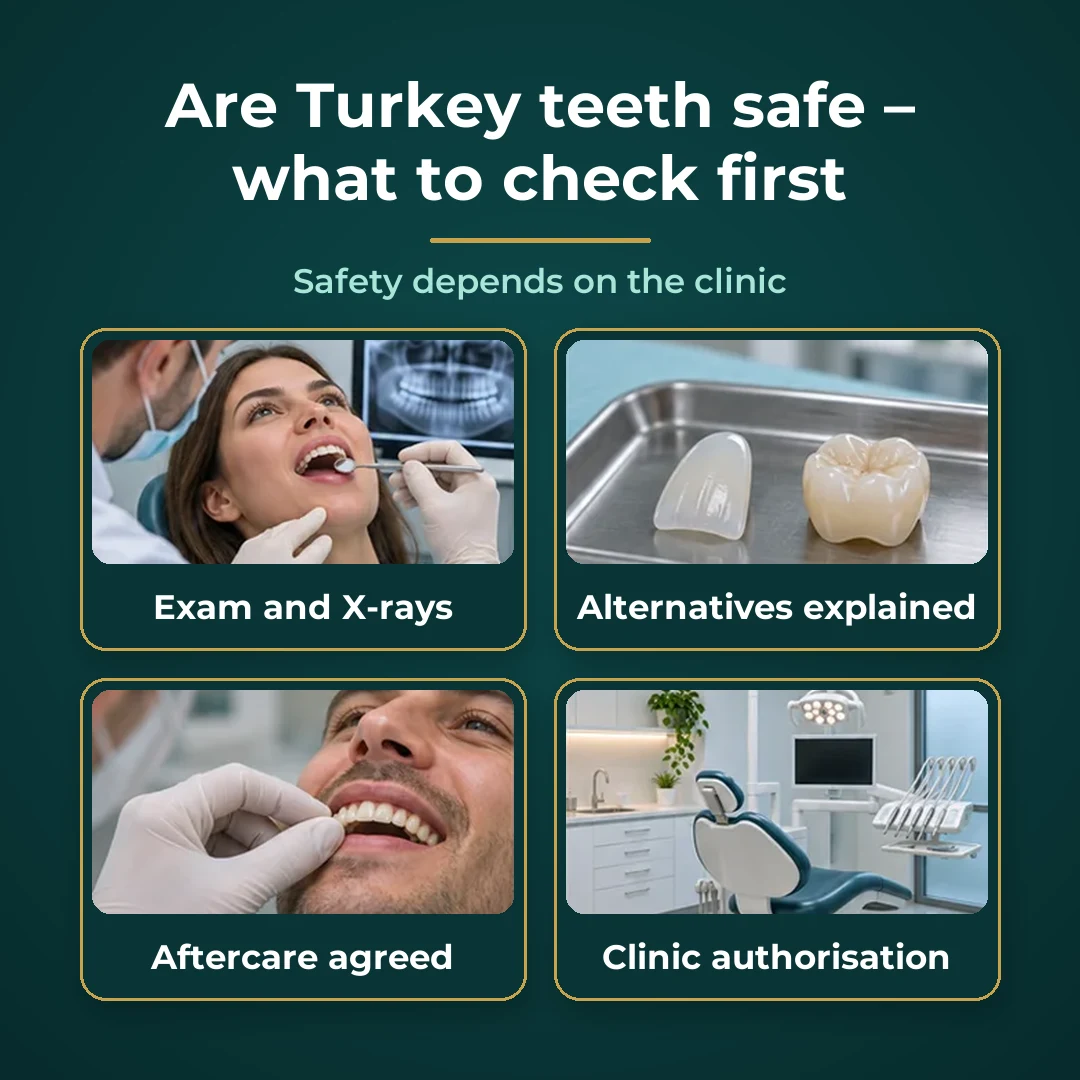
Safety depends on the clinic, the assessment and the health of your teeth rather than the country where the work is done. A clinic should examine and X-ray each tooth before preparing it, explain the alternatives and agree aftercare with you in advance.
A 2025 review in the British Dental Journal examined how UK newspapers reported dental tourism and found that tabloids often stigmatised people who had dentistry abroad. It looked at press coverage, not clinical outcomes, so it cannot tell you how often treatment goes wrong.
The General Dental Council adds that dental regulation is likely to vary by country, so it is sensible to research a clinic's authorisation and complaints process before you book.
Which Questions Should You Ask a Clinic First
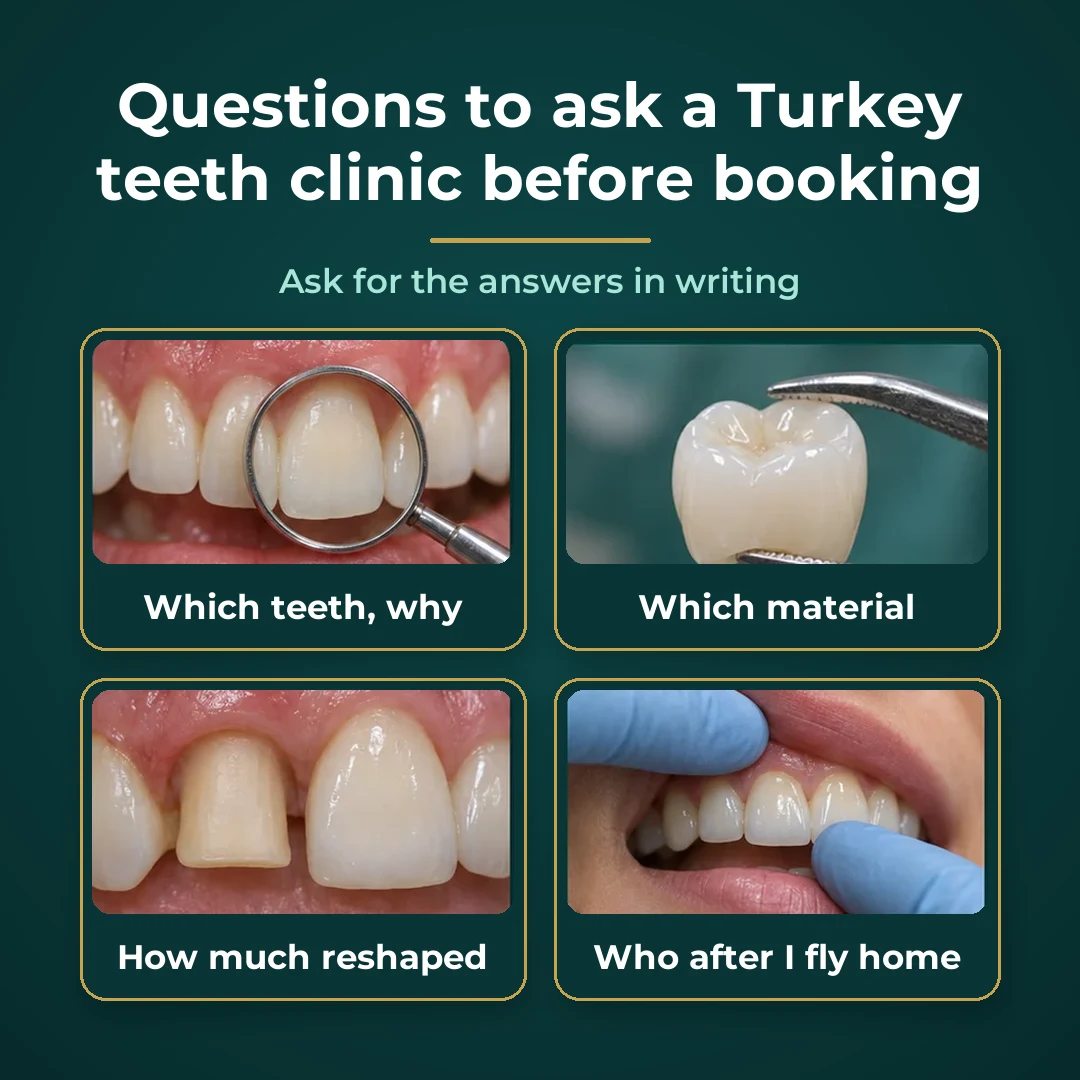
Ask which teeth need treatment and why, which material is proposed, how much of each tooth will be reshaped and what the alternatives are. Then ask who will treat you, how aftercare works and who to contact once you are home.
The General Dental Council suggests questions such as these:
- Is there a complaints system in place, and can you see a copy of it?
- What happens if you are unhappy with the results?
- Who can you contact for advice after the treatment?
- If there are complications and you need further treatment, is this included in the initial cost?
The NHS treatment abroad checklist adds that you should be clear how aftercare will be coordinated and that you should understand the possible complications and side effects. You can put all of these questions to our dentists in a free online consultation before you book anything, and it helps to ask for the answers in writing.
What Can You Do If Your Turkey Teeth Have Gone Wrong
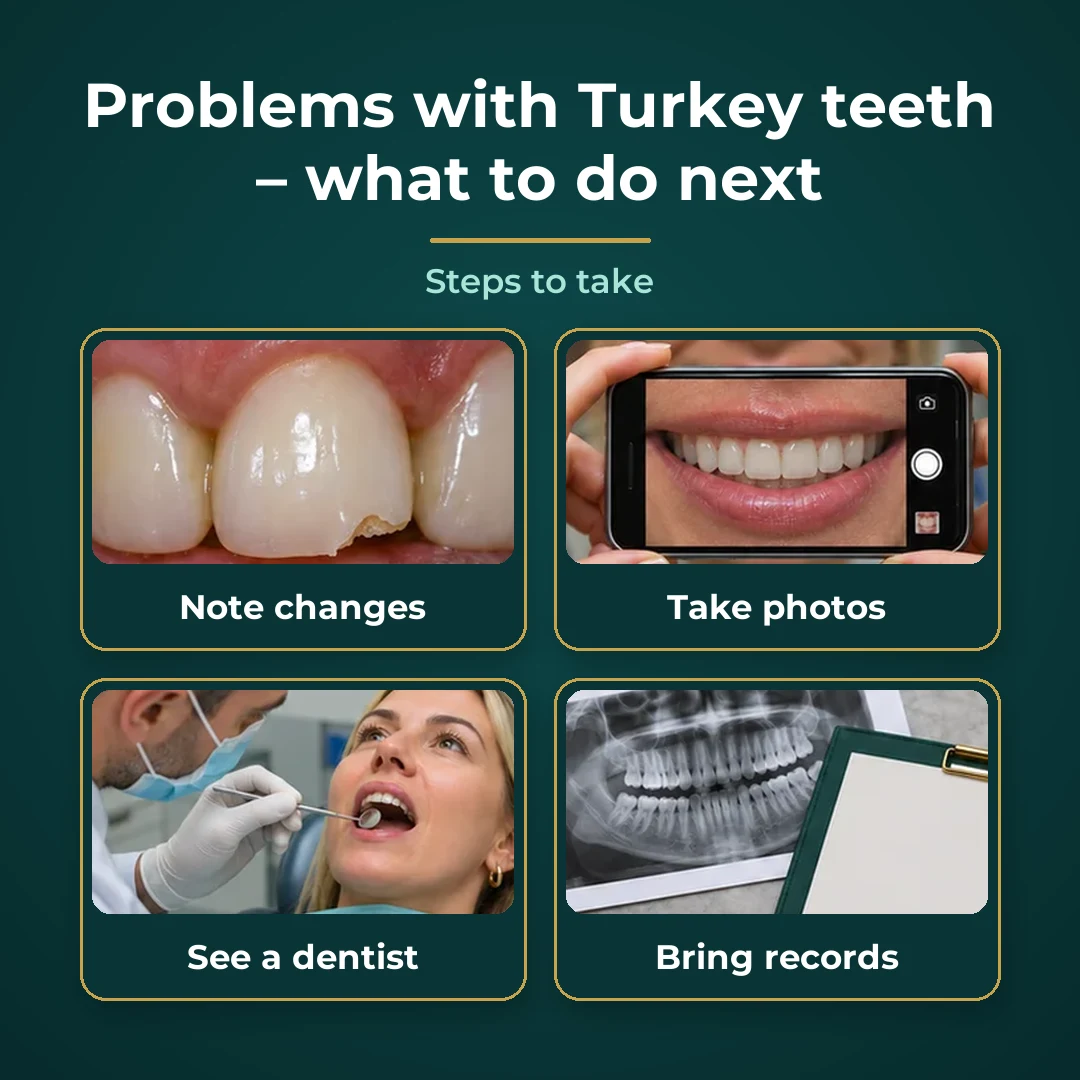
Start by noting what has changed and when, take clear photos and see a dentist in person as soon as you can. A dentist can examine the tooth, take X-rays and tell you whether the problem lies in the crown, the gum, the bite or the tooth underneath.
Keep these to hand, because they save time at the appointment:
- Your treatment plan, quote and consent forms
- X-rays and scans taken before and after treatment
- The materials used and the dates of each visit
- Photos of the problem and any aftercare instructions you were given
Tell the clinic that treated you as well, since it holds your records and knows what was done. Pain or swelling that is getting worse should be seen promptly by a dentist or an urgent dental service rather than left to settle. How long a crown or veneer can be expected to last is a separate question, which our article on how long do Turkey teeth last answers.
Can a UK Dentist Repair Turkey Teeth
A UK dentist can examine Turkey teeth, take X-rays and explain your options, but whether a practice takes on the repair is its own decision. What can be done depends on the tooth, the material and the problem, and no outcome can be promised before an examination.
Records make that appointment easier. Without a plan, X-rays and details of the materials, a dentist may need new X-rays and may find it harder to tell what was done to each tooth.
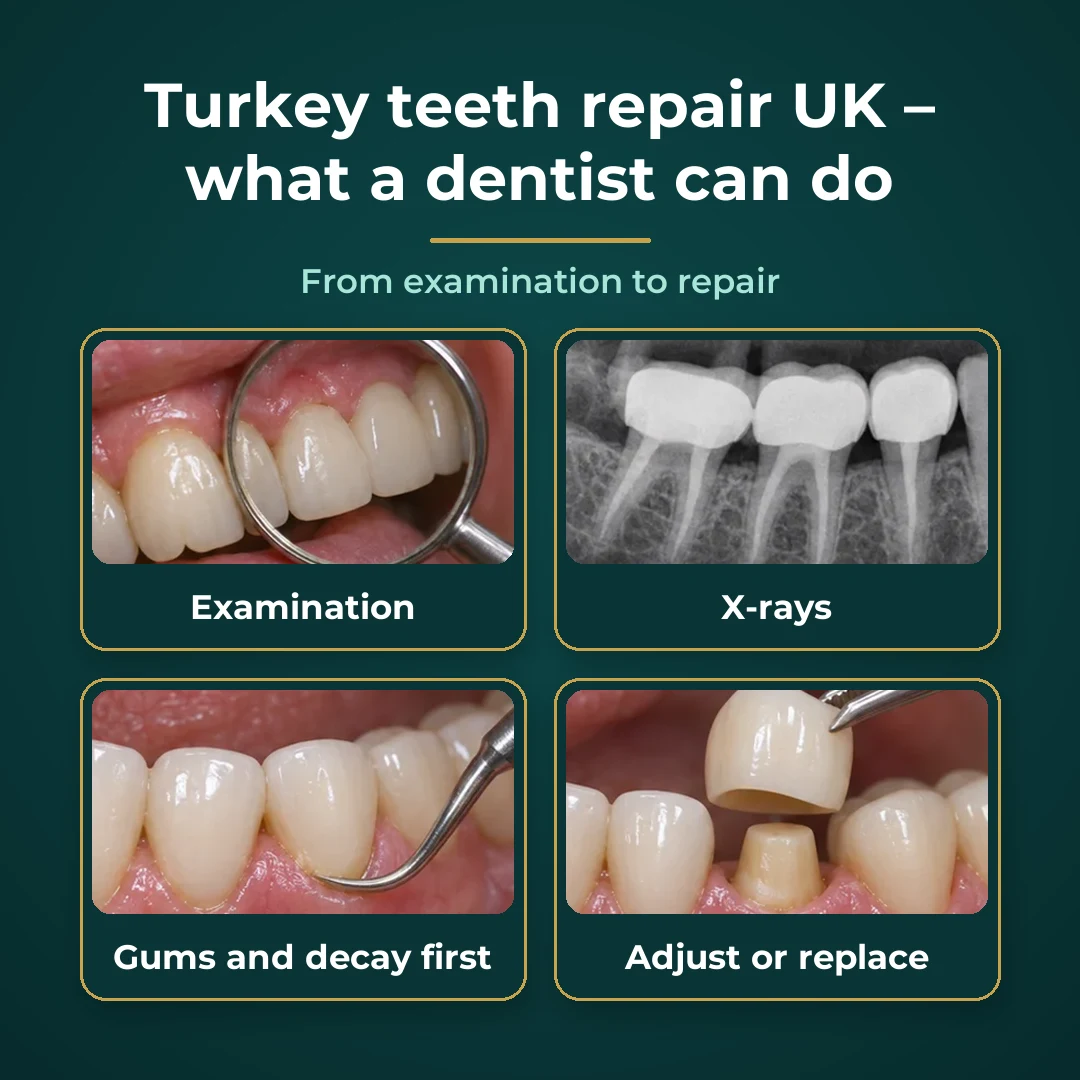
Typical steps are an examination, X-rays, treatment of any gum disease or decay, and then a decision to adjust, repair or replace the crown or veneer. The General Dental Council says your own dentist needs to know about treatment abroad in case of later complications. Whoever carried out the original work, the useful question is what the tooth needs now.
What Does a Written Turkey Teeth Treatment Plan Look Like
Before you travel, our dentists review your photos and any X-rays and prepare a provisional written treatment plan stating the material, the number of teeth, the expected length of your stay and the price. An examination and X-rays at the clinic then confirm the final plan.
The plan says which material is proposed and why, for example whether a zirconium crown or another crown type suits a back tooth, and the examination at the clinic confirms whether any gum or decay treatment is needed first. You can ask for your case to be reviewed by Dt. Ertan Omerov, whose work centres on gum health and dental implants, which is useful if gum disease is a concern.
The price band below shows our zirconia crown price per unit and for a full-smile package, and your own total is stated in your plan before you book. Our price list shows the per-unit prices for crowns and veneers.
Ask Our Dentists to Review Your Turkey Teeth Plan
Send us clear photos of your teeth and any X-ray, and our dentists reply with a provisional plan at no charge. If you already hold a plan from another clinic, we are happy to look at it as well.
Turkey Teeth Questions Patients Ask
Can Turkey teeth be fixed?
It depends on what has gone wrong, and a dentist can only say after examining you and taking X-rays. A loose crown may be re-cemented, a poorly fitting one replaced, and gum disease or decay would be treated first. No outcome can be promised before that examination.
How do I know if my crowns were done badly?
Only an examination can tell you, because the fit at the edge, the bite and the tooth underneath are hard to judge by eye. A dentist checks how the crown meets the tooth and gum, whether your bite is even and, with an X-ray, whether anything looks wrong underneath. Ask about any sharp edge, a bite that feels high or sensitivity that is getting worse.
Should I go back to the same clinic if something goes wrong?
Contacting the clinic that treated you is a sensible first step, because it holds your records and knows what was done. It does not stop you getting an independent opinion from a dentist at home, and you can do both. Ask what the clinic offers, including whether further treatment is included, before you decide.
What records should I ask for after treatment abroad?
Ask for your treatment plan and quote, your X-rays and scans, the materials used for each tooth, the dates of each visit, any consent forms and the aftercare instructions. NHS guidance asks you to be clear how aftercare will be coordinated. Keep copies, because they help a UK dentist see what was done to each tooth.
Can I get a second opinion on my treatment plan before I travel?
Yes, and it is a reasonable thing to do. Take the plan, your photos and any X-rays to your own dentist and ask what they think of the material, the number of teeth and the amount of reshaping. The NHS treatment abroad checklist recommends getting a second opinion, and the General Dental Council advises telling your own dentist about your plans in case of later complications.
Do I need travel insurance for dental treatment abroad?
It is sensible to have it, and the NHS treatment abroad checklist advises making sure you have appropriate travel insurance. Ask the insurer what the policy covers for planned treatment abroad and any complications before you buy it. Keep the policy details with your treatment plan and records.
References
- Going abroad for dental treatment — General Dental Council (GDC), 2026
- Treatment abroad checklist — NHS, 2023
- Contemporary dental tourism: a review of reporting in the UK news media — British Dental Journal (PubMed PMID 40021870), 2025
- Dental Crowns: Types, Procedure & Care — Cleveland Clinic, 2023
- Fixed Prosthetic Restorations and Periodontal Health: A Narrative Review — Journal of Functional Biomaterials (PubMed PMID 35225978), 2022
Related Pages
Get your free online consultation
Send us a short message with your question, and photos or X-rays if you have them. Our dentists review your case and reply with a personalised treatment plan — send it by e-mail or WhatsApp — your message is not stored on our server.
A short sentence is enough; no medical terms needed. What you write is only sent when you send it; this page stores no information.