
Zirconia (Ceramic) Dental Implants: A Metal-Free Alternative to Titanium
A zirconia implant is a metal-free, ceramic alternative to a titanium implant. Compare suitability in Istanbul, Turkey, and check your candidacy online.
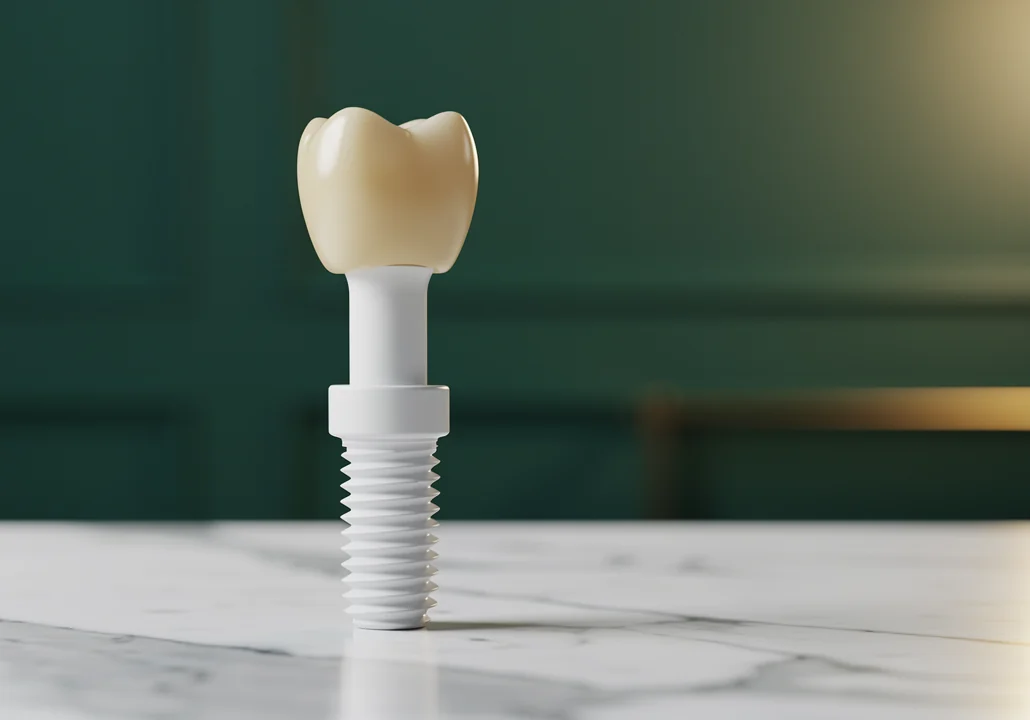
A zirconia implant is a one-piece ceramic dental implant that replaces a missing tooth root without titanium. At Er Dental Clinic in Istanbul, Turkey, it is offered as a metal-free option for selected patients and planned with the same CBCT imaging used for titanium implants.
Written by Er Dental Clinic
Treatment at a glance
Zirconia Implants, Step by Step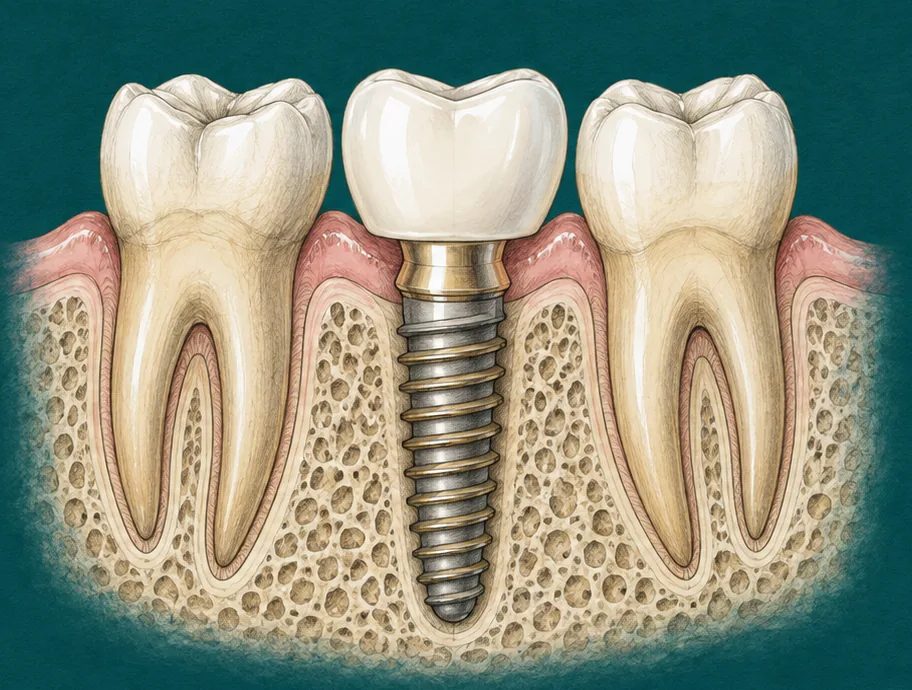
- 1CBCT scanA clinical examination and a CBCT scan measure the bone at the implant site in three dimensions.
- 2Implant placementThe implant is placed in the jawbone under local anaesthesia.
- 3Built-in connectorBecause it is one-piece, the visible connector for the crown is built into the implant rather than screwed on afterwards.
- 4Healing periodA healing period allows the bone to bond to the implant before it can safely carry chewing forces.
- 5Ceramic crownThe ceramic crown restores chewing on that tooth and is matched to the colour of the surrounding teeth.
What Is a Zirconia (Ceramic) Dental Implant?
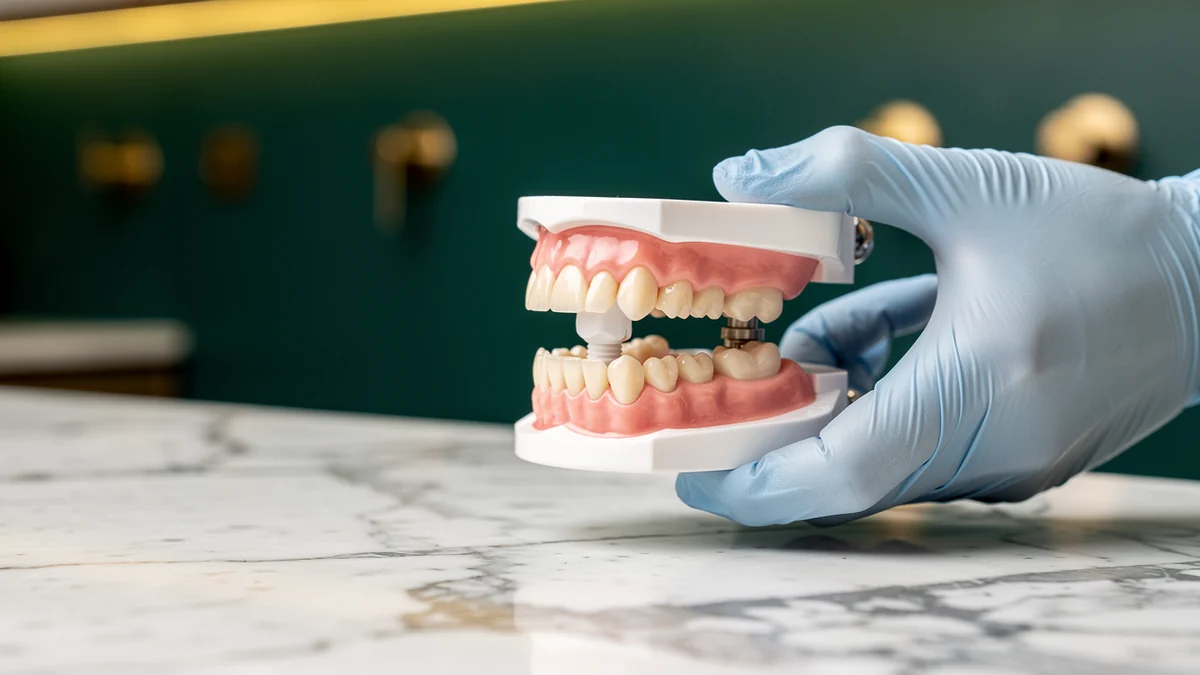
A zirconia implant is a one-piece ceramic dental implant, usually made from monolithic zirconia, that replaces a missing tooth root without using titanium. It is placed in the jawbone in the same way as a conventional implant and, once healed, supports a crown above the gum line.
Titanium remains the most widely used implant material and has the longest clinical track record of any dental implant. Zirconia is offered as a metal-free alternative for patients who prefer to avoid titanium for personal or cosmetic reasons, or who report a suspected metal sensitivity.
This page explains how zirconia implants differ from titanium implants, who they tend to suit, and what treatment involves at Er Dental Clinic. For an overview of implant treatment in general, including single, multiple and full-arch options, see our dental implants page.
Zirconia Implants at a Glance
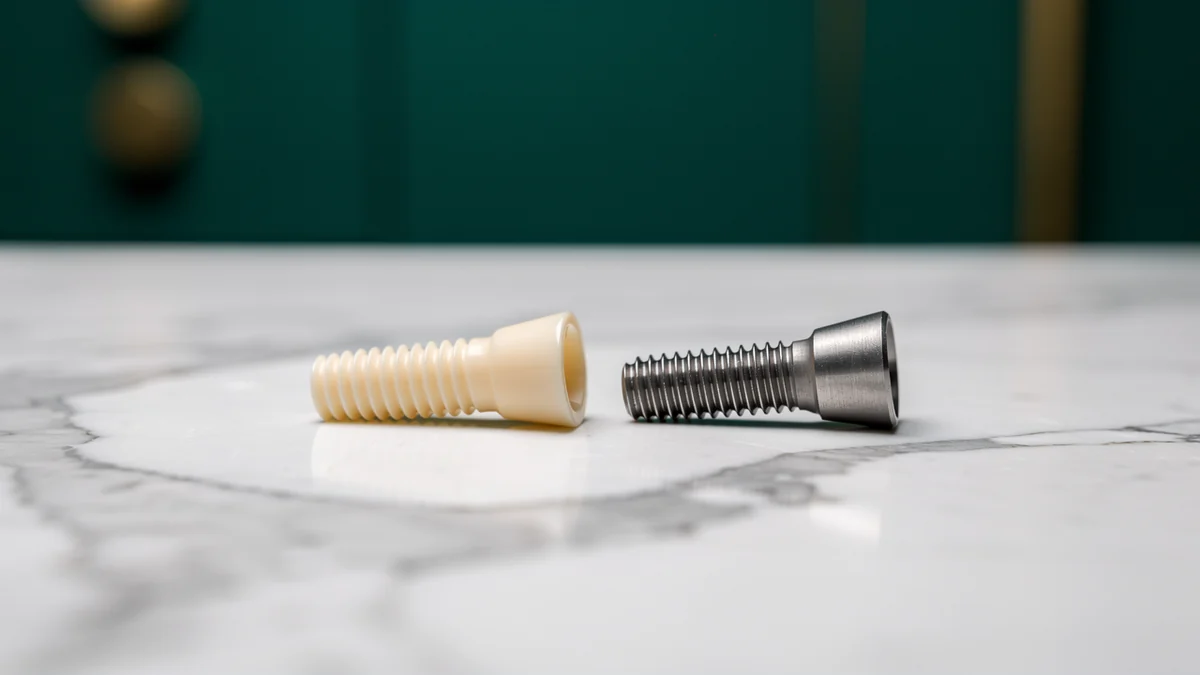
Material: monolithic zirconia ceramic, white in colour rather than the grey-metallic tone of titanium.
Design: a one-piece implant, where the connector for the crown is part of the implant itself rather than a separate component.
Placement: placed in the jawbone under local anaesthesia, in the same way as a titanium implant, followed by a healing period before the crown is fitted.
Use: most often used for a single missing tooth; current systems are not used for full-arch techniques such as All-on-4 or All-on-6.
When Is a Zirconia Implant Considered?
Zirconia implants replace a missing tooth in the same clinical situations as a titanium implant: a tooth lost to extraction, trauma, decay or a failed root canal treatment, or a gap left by a tooth that was never present. The underlying reasons for missing teeth, and the other replacement options available, are covered on our missing teeth page; this page focuses on the ceramic implant material itself, most often chosen to replace a single tooth.
Who Is Suitable for a Zirconia Implant?
A zirconia implant may suit you if you want to avoid a titanium implant for personal or cosmetic reasons, have enough bone at the implant site without extensive grafting, and are having a single tooth or a small number of teeth replaced rather than a full arch. Because a one-piece implant cannot be adjusted or repositioned once placed, your dentist confirms suitability from a CBCT scan before recommending it instead of a titanium implant.
The comparison below summarises the main practical differences between the two materials; your dentist weighs these against your own scan and priorities.
How Do Zirconia and Titanium Implants Compare?
Read this diagram as text
| Criterion | Zirconia | Titanium |
|---|---|---|
| Metal-free material | ✓ Yes | ✗ No |
| Longest clinical track record | ✗ No | ✓ Yes |
| White (non-metallic) colour | ✓ Yes | ✗ No |
| Available as a two-piece implant | ✗ No | ✓ Yes |
| Used for full-arch treatment (All-on-4/6) | ✗ No | ✓ Yes |
Who Is a Zirconia Implant Not Suitable For?
A zirconia implant is not usually recommended where several adjacent teeth are missing and a full-arch fixed solution such as All-on-4 or All-on-6 is being planned, because current zirconia systems are one-piece and are not used in these full-arch techniques.
It may also not be suitable where there is not enough bone to place a one-piece implant without grafting first, or where the implant needs to be angled in a way that a two-piece titanium implant can accommodate more easily. In these situations, a titanium implant is usually discussed instead, and where a fixed result is not essential, an implant-supported denture may also be worth considering.
Assessment Before Zirconia Implant Treatment
Before you travel
The process starts with a free online consultation. You send recent photos and, if you have them, X-rays or a CT scan, and our dentists give an initial view on whether a zirconia implant is an option for your case before you book anything.
At the clinic
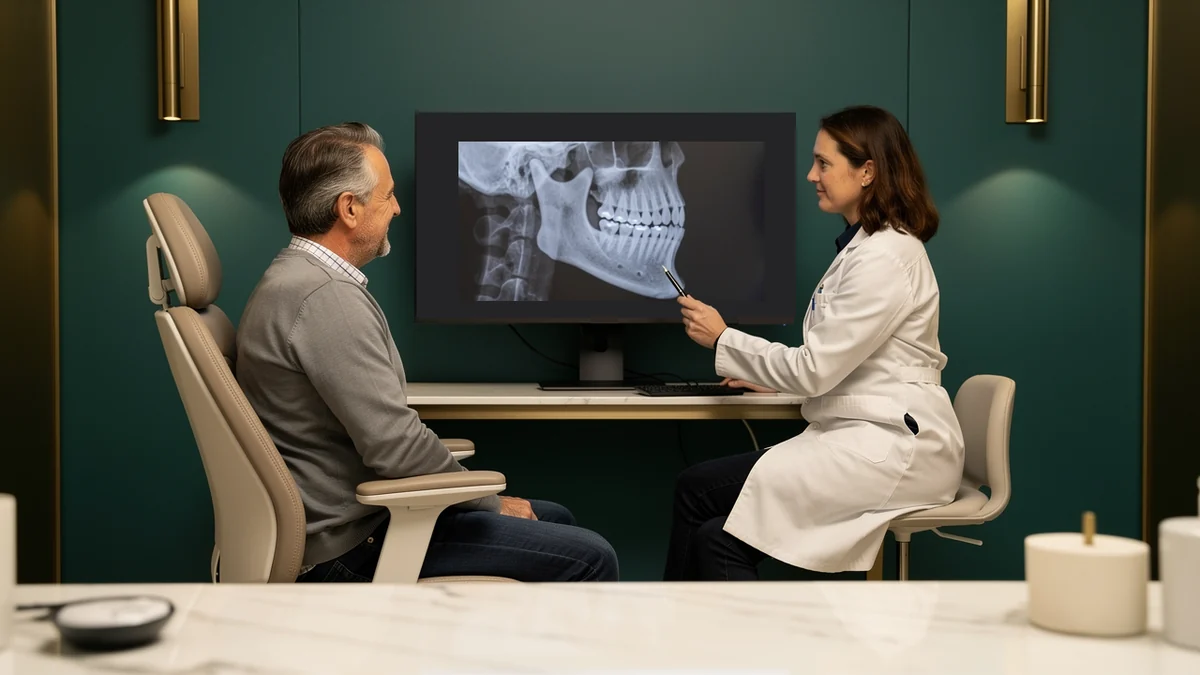
A clinical examination and a CBCT scan measure the bone at the implant site in three dimensions. This is particularly important for a one-piece implant, since its position and angle cannot be adjusted after placement in the way a two-piece titanium implant sometimes can.
If zirconia is not suitable
Where the scan shows the site is better suited to a two-piece implant, or where more than a single tooth needs replacing, your dentist discusses a titanium implant or another option instead, with any cost difference explained and agreed before treatment begins.
How Is a Zirconia Implant Placed?
A zirconia implant restoration has the same functional layers as a titanium one, though the implant itself is a single ceramic piece rather than an implant joined to a separate abutment.
The implant is placed in the jawbone under local anaesthesia. Because it is one-piece, the visible connector for the crown is built into the implant rather than screwed on afterwards. As with titanium implants, a healing period allows the bone to bond to the implant before it can safely carry chewing forces, and a temporary restoration may be worn during this time.
What Are the Parts of a Zirconia Implant Restoration?
Read this diagram as text
- Crown
- The visible ceramic tooth, cemented onto the implant
- Connector (built-in)
- Part of the one-piece implant, not a separate component
- Implant (fixture)
- The zirconia post that replaces the tooth root
- Jawbone
- Bone that bonds to the implant during healing
Aftercare for Zirconia Implants
Aftercare after a zirconia implant is placed is the same as for a titanium implant. Some swelling and tenderness for a few days is common and is usually managed with ordinary painkillers, and soft foods and avoiding chewing on the treated area help healing in the first days.
Once the crown is fitted, a zirconia implant is cleaned in the same way as a natural tooth: brushing twice a day, cleaning around the implant with interdental brushes or implant-friendly floss, and keeping regular check-ups so your dentist can monitor the gum and bone around it.
Patient stories
Hear From Our International Patients
Patients from the UK, Romania, France, Ukraine and Russia talk about their treatment at Er Dental Clinic. Each video shows the treatment the patient had.
What to Expect from a Zirconia Implant
With a successful zirconia implant, the ceramic crown restores chewing on that tooth and is matched to the colour of the surrounding teeth. Because the material is white rather than metallic, there is no risk of a grey shadow showing through thin gum tissue, which is sometimes reported with titanium implants at the front of the mouth in patients with thin gums.
As with any implant, the result depends on the bone bonding successfully to the implant and on how well it is looked after afterwards. Titanium implants still have a longer overall clinical history, so your dentist explains what is and is not yet known about zirconia for your specific case.
Real patients
Before and After at Er Dental Clinic
Photos of Er Dental Clinic patients. Every case is different, so ask us to see implant cases similar to yours.
Limitations of Zirconia Implants
Shorter clinical history
Zirconia implants have been used for less time than titanium implants, so there is less long-term data on how they perform over many decades.
One-piece design
Current zirconia systems join the implant and the connector in a single piece. This is why they are not used for full-arch techniques such as All-on-4 or All-on-6, and why precise positioning on a CBCT scan matters, since the implant cannot be adjusted after placement.
Cost
A zirconia implant fixture is priced higher than a standard titanium implant fixture, reflecting the material and the manufacturing process.
Risks and Possible Complications of Zirconia Implants
Failure to integrate
As with any implant, the bone may not bond to the zirconia implant; it is removed and can often be replaced after healing.
Fracture
Zirconia is a strong ceramic, but like any dental material it can fracture under an unusually heavy bite or trauma; this is checked at follow-up visits.
Infection
Infection at the implant site is possible, as with titanium implants, and is usually treated with cleaning and antibiotics.
Peri-implant inflammation
Inflammation of the gum and bone around the implant, similar to gum disease, can occur if hygiene is not kept up; regular check-ups reduce the risk.
Limited repairability
Because the implant is one piece, a damaged connector cannot be replaced separately, unlike some two-piece titanium systems.
Your dentist explains the risks that apply to your case, based on your scans and medical history, before you give your consent.
How We Assess Zirconia Implants at Er Dental Clinic
Zirconia implant treatment at Er Dental Clinic is assessed and planned by Dt. Ertan Omerov, Periodontology & Implantology (MSc), alongside our other implantology-trained dentists. Suitability for a ceramic implant is confirmed individually on a CBCT scan and your medical history, and your written treatment plan states whether a zirconia or a titanium implant is proposed for your case, and why.
The clinic holds an International Health Tourism Authorisation Certificate issued by the Republic of Turkiye Ministry of Health (certificate no. ST-6264), which you can check on the e-Devlet document verification service at turkiye.gov.tr/saglik-bakanligi-ebys.
Alternatives to Zirconia Implants
If a zirconia implant is not the right fit, a titanium implant covers the same range of situations, from a single missing tooth to a full-arch treatment, and is explained in full on our dental implants page.
Where several teeth are missing and a fixed result is not essential, an implant-supported denture is a removable alternative that still uses implants to stay stable.
Where more bone is needed before any implant is placed, guided bone regeneration or a sinus lift may be discussed first.
Zirconia Dental Implants: Frequently Asked Questions
What is the difference between a zirconia and a titanium implant?
A zirconia implant is a white, one-piece ceramic implant, while a titanium implant is metallic and usually available as a two-piece system with a separate abutment. Titanium has a longer clinical track record and is used for a wider range of treatments, including full-arch techniques, while zirconia is offered as a metal-free option, most often for a single tooth.
Are zirconia implants as strong as titanium implants?
Zirconia is a strong ceramic material and is used successfully for single-tooth implants, but titanium has been used in implant dentistry for longer and has more long-term data across a wider range of situations. Your dentist explains which material suits the forces expected at your specific implant site.
How much more do zirconia implants cost than titanium implants?
At Er Dental Clinic, a single Ceramic Implant (SDS Zirconia) is £1,400 / €1,600 / $1,850, compared with a titanium implant fixture from £390 / €450 / $520; the Straumann titanium fixture is £820 / €950 / $1,100. The crown on top is priced separately in both cases, and your final cost is confirmed after our dentists review your X-rays.
Can zirconia implants be used for a full-arch treatment like All-on-4?
No, not with current systems. Zirconia implants are one-piece and are used for single-tooth or limited cases, while All-on-4 and All-on-6 full-arch techniques use titanium implants. If you are missing most or all of your teeth in one jaw, our All-on-4 and All-on-6 pages explain the titanium-based options.
Who are zirconia implants suitable for?
Zirconia implants tend to suit patients replacing a single tooth or a small number of teeth who want to avoid titanium for personal or cosmetic reasons and who have enough bone at the implant site. Suitability is confirmed individually on a CBCT scan, since the one-piece design cannot be adjusted once placed.
Is a zirconia implant a good option if I have a metal allergy?
A metal-free implant such as zirconia is one of the options your dentist may discuss if you have a known metal sensitivity, alongside reviewing your specific allergy with your medical history. True allergic reactions to titanium implants are considered rare, and your dentist assesses your case individually before recommending either material.
How long do zirconia implants last?
With good oral hygiene and regular check-ups, a well-integrated zirconia implant can last for many years, similar to a titanium implant, though the crown on top may need replacing over time due to normal wear. Because zirconia implants have a shorter clinical history than titanium, long-term data over many decades is still more limited.
Related Implant Options
Zirconia implants are one option among several implant techniques offered at Er Dental Clinic. The pages below cover the other options in detail.
All-on-4 Dental Implants
A fixed full arch of teeth on four titanium implants, for patients missing most or all of their teeth in one jaw.
Explore All-on-4All-on-6 Dental Implants
A fixed full arch on six titanium implants, spreading chewing forces further where bone volume allows.
Explore All-on-6Same Day Dental Implants
When a tooth is removed, the implant may sometimes be placed the same day, with a temporary tooth attached shortly after.
Explore same day implantsZygomatic Implants
For severe bone loss in the upper jaw: longer titanium implants anchored in the cheekbone.
Explore zygomatic implantsSinus Lift Surgery
Raises the floor of the sinus to create room for implants in the upper back jaw where bone is thin.
Read about sinus lift surgeryGuided Bone Regeneration
Bone grafting under a protective membrane to rebuild the jaw before an implant is placed.
Read about bone graftingOur Dentists in Istanbul
Meet the implantology-trained dentists who assess and plan implant treatment at Er Dental Clinic.
Meet our dentistsReferences
- Dental Implants: Types, Purpose & Benefits — Cleveland Clinic, 2026
- Understanding Dental Implants — Oral Health Foundation, 2026
- Implants — American Dental Association (MouthHealthy), 2026
Ask About Zirconia Implants in Istanbul
Send us your photos or X-rays for a free online consultation. Our dentists will give an initial view on whether a zirconia or a titanium implant fits your case and reply with a written treatment plan and a clear quote, so you can compare your options before you decide to travel. You can also contact us directly with any questions.
Find the Right Path for You
There are many different conditions and options in this area — browse by topic below, or answer a few questions to see the step closest to your situation.
Explore by Topic
The Basics
2 pagesComparisons
2 pages
Dentistry · Esenyurt, İstanbul
Why Er Dental Clinic?
Related Pages
All-on-4 Dental Implants in Turkey: A Fixed Full Arch on Four Implants
All-on-6 Dental Implants in Turkey: A Full Arch on Six Implants
Same Day Dental Implants in Turkey: Immediate Implant Treatment Explained
Zygomatic Implants in Turkey: An Option for Severe Upper Jaw Bone Loss
Er Dental Clinic: Meet the Dentists Who Plan and Carry Out Your Treatment
Free Online Dental Consultation: Send Your Photos and X-Rays for a Written Plan
Dt. Ertan Omerov – MSc in Periodontology and Implantology, Er Dental Clinic Istanbul
Contact Er Dental Clinic
How Much Are Turkey Teeth? Treatment Prices at Er Dental Clinic, Istanbul
Dentures in Turkey: Complete, Partial, Immediate and Implant Options
Your treatment plan · 3 short steps
Get your personal implant plan
Answer a few quick questions — it takes about a minute. Our dentists review your answers and reply with a written treatment plan and a clear price for your case, before you decide anything.
- Your treatmentWhat are you looking for?
- Your timingX-ray, dates and how we reply
- Your detailsSo we can send your plan
What you receive
- A written treatment plan prepared by our dentists
- A clear price for your case before you travel
- No obligation — ask every question first



Your answers are reviewed by our dentist teamErtan Omerov · Enes Yol · Ahmet Mustafa Zeren · Vijdan Aslanoğlu