
Implant-Supported Overdentures: Snap-On Dentures Held by Implants
An implant overdenture is a removable denture that clips onto two or more implants so it stays secure when eating and speaking. See how it is planned in Istanbul.
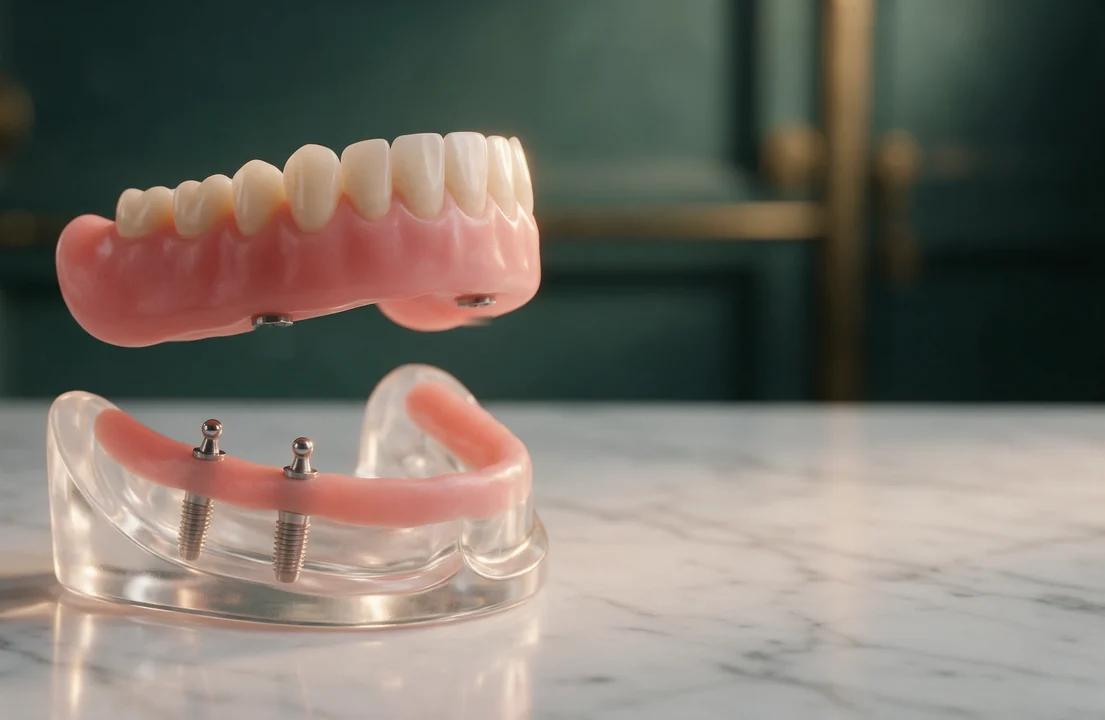
An implant-supported overdenture, often called a snap-on denture, is a removable denture that clips onto two or more dental implants rather than resting on the gums, so it stays more secure when eating or speaking. At Er Dental Clinic, the implants are planned on a CBCT scan and the denture is removed daily for cleaning.
Written by Er Dental Clinic
Treatment at a glance
Snap-On Overdentures, Step by Step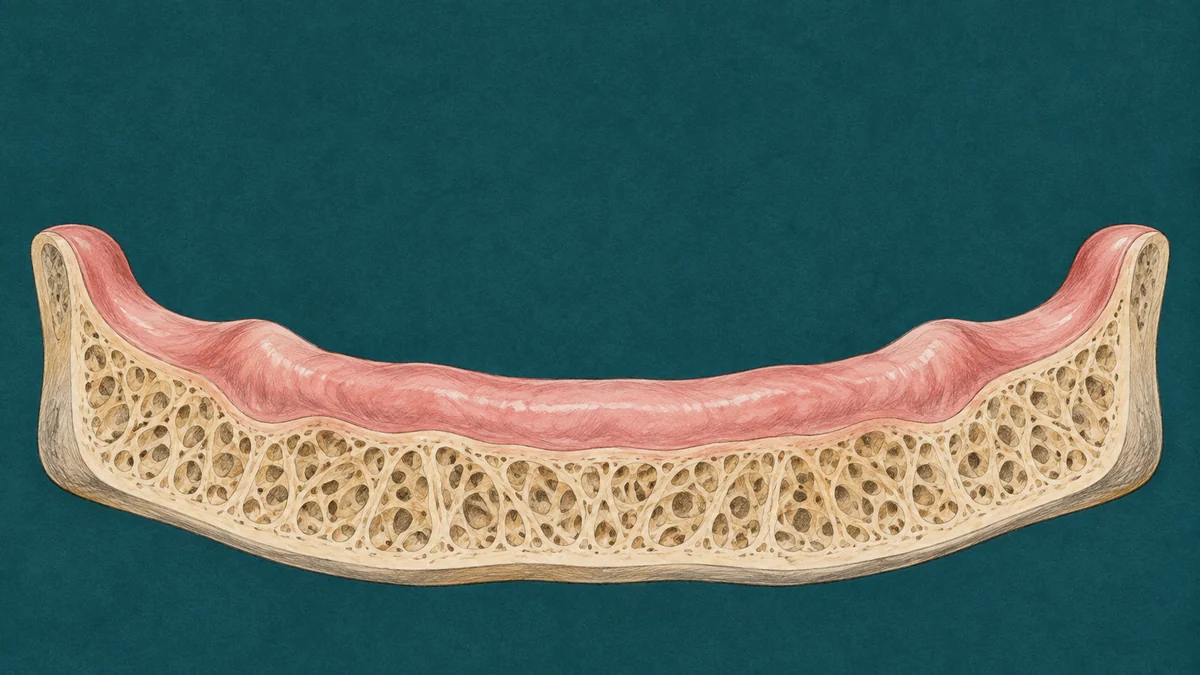
- 1CBCT planningBone volume and the position of nerves and sinuses are measured to decide where the implants will go.
- 2Implants placedThe planned number of implants, commonly two in the lower jaw, are placed under local anaesthesia.
- 3HealingThe bone bonds to the implants over a period of months before the attachments are fitted.
- 4Attachments fittedLocator attachments or a connecting bar are fitted to the implants, chosen for your bone and bite.
- 5Overdenture clips onThe denture is adjusted to clip on securely, and you take it out each night to clean it.
What Is an Implant-Supported Overdenture?
An implant-supported overdenture, commonly called a snap-on denture, is a removable denture built to clip onto two or more dental implants placed in the jawbone. Retentive attachments under the denture connect to matching parts on the implants, so the denture snaps into place and holds far more securely than a conventional denture that rests on the gums alone, while still coming out each day for cleaning.
This page describes the removable, implant-retained version of a denture. A different, fixed version also exists, where a full set of replacement teeth is fixed to implants and is not taken out by the patient day to day; that option is described on our implant-supported denture page. Which one suits you depends on how many implants your bone can support and whether you would prefer a removable or a fixed result, and your dentist explains both routes at your assessment.
How an Overdenture Stays in Place
Removable by design: the overdenture clips onto the implants and is taken out by the patient for daily cleaning.
Implants needed: commonly two implants in the lower jaw, though the exact number is planned on your CBCT scan and can differ for the upper jaw.
Attachment type: a locator-style stud attachment or a connecting bar, chosen for your bone and bite.
Compared with a conventional denture: the overdenture resists movement while chewing and speaking because it is anchored to the implants rather than relying on suction or adhesive alone.
What holds an implant overdenture in place?
Read this diagram as text
- Denture
- The removable replacement teeth, taken out by the patient for cleaning
- Attachment
- A stud or bar that the denture clips onto and detaches from
- Implants
- Anchored in the jawbone, commonly two in the lower jaw
- Jawbone
- Bonds with the implants and supports the attachment
When Is an Implant Overdenture Considered?
An implant overdenture is considered when a patient has lost, or is about to lose, all the teeth in one jaw, which is covered in more detail on our missing teeth page. It is also considered by patients already wearing a conventional or complete denture that keeps slipping, clicking or causing sore spots, especially a lower denture, since the lower jaw has less surface area for a denture to grip. Where bone has shrunk after tooth loss, a CBCT scan shows how much remains and whether it is enough to support implants before an overdenture can be planned.
Who Is an Implant Overdenture Suitable For?
This option generally suits patients who want a more secure result than a conventional denture without committing to a fully fixed implant-supported denture, and who are comfortable continuing to remove their denture each day for cleaning. It is often chosen for a loose lower denture, since a small number of implants can make a noticeable difference to stability in that jaw. It also suits patients whose existing denture may be adaptable to fit onto new attachments once implants are placed, which your dentist assesses individually, and patients who have enough bone, or bone that can be built up, to support the planned implants.
Who Might Not Be Suitable for an Implant Overdenture?
An implant overdenture may not be the first choice for patients who want teeth that are never removed and are able and willing to have the additional implants and any bone work a fixed implant-supported denture usually needs. It is also not usually recommended where active gum disease or uncontrolled general health conditions need to be treated first, or for heavy smokers who have not been able to cut down, since smoking increases the risk of implants not integrating with the bone. Patients with very limited bone may need grafting before implants can be placed at all, which your dentist explains at assessment.
Where an overdenture is not the right fit, a conventional denture without implants, our complete or partial denture pages, or a fixed implant-supported denture remain options, and your dentist discusses which applies to your case.
Assessment Before an Implant Overdenture
Assessment starts with a free online consultation: you send photos and, if you have them, X-rays or details of your current denture, and our dentists reply with a written treatment plan. At the clinic, a CBCT scan measures the bone in the jaw being treated, a clinical examination checks your gums and bite, and a digital scan records the shape of your mouth so the overdenture and its attachments can be designed to fit precisely once the implants have healed.
How an Implant Overdenture Is Made and Fitted
Treatment combines implant placement with the design and fitting of a removable denture.
- 1CBCT planning. Bone volume and the position of nerves and sinuses are measured to decide where the implants will go.
- 2Implants placed. The planned number of implants, commonly two in the lower jaw, are placed under local anaesthesia.
- 3Healing. The bone bonds to the implants over a period of months before the attachments are fitted.
- 4Attachments and overdenture fitted. Locator attachments or a connecting bar are fitted to the implants, and the denture is adjusted to clip on securely.
Aftercare: Looking After an Implant Overdenture
Some swelling and tenderness around the gums are common for a few days after implant placement and are usually managed with ordinary painkillers and soft foods. Once the overdenture is fitted, care combines looking after a removable denture with looking after implants:
- Take the overdenture out each night and clean it as instructed, and clean around the attachments with the brush your dentist recommends.
- Keep regular check-ups so the fit of the denture, the attachments and the implants can be reviewed.
- Tell your dentist promptly if the denture feels loose, clicks less securely than before, or causes a sore spot.
- Avoid smoking, which slows healing and is linked to a higher risk of implant complications.
Before you leave Istanbul, you receive written aftercare instructions and your treatment documents, and we stay in touch for remote follow-up once you are home.

What to Expect from an Implant Overdenture
Once healing is complete, a well-fitted implant overdenture allows most patients to chew more confidently and speak with less worry about the denture moving than they had with a conventional denture. Because part of the chewing force is carried by the implants rather than the gums alone, it can also help slow the further bone loss that often continues under a conventional denture. Results depend on your remaining bone, the number of implants placed and how well you keep to the recommended cleaning and check-up routine, which your dentist reviews with you at each visit.
Limitations of an Implant Overdenture
An implant overdenture is still a removable denture, so it does not give the same all-day, never-removed feel as a fixed implant-supported denture, and the retentive attachments need periodic replacement as they wear. It also depends on having, or building, enough bone for the planned implants, which can add time to treatment if grafting is needed first. Compared with a conventional denture, it usually needs more implants than the minimum used for a simple stabilising overdenture if the upper jaw is being treated, and your dentist confirms the plan that fits your bone and bite.
Risks and Possible Complications
An implant overdenture relies on implant surgery and carries the same risks as other implant treatment, which your dentist explains before you give your consent:
Failure to integrate
Failure to integrate, when the bone does not bond to one of the implants; it can usually be replaced after healing.
Peri-implantitis
Peri-implantitis, an inflammation of the gum and bone around an implant, reduced by good hygiene and regular check-ups.
Wear of the retentive attachments
Wear of the retentive attachments, which loosens the click-in fit over time and is corrected by replacing the worn part.
Sore spots or irritation
Sore spots or irritation where the denture base contacts the gum, usually resolved by an adjustment.
Nerve irritation
Nerve irritation in the lower jaw, minimised by CBCT planning before surgery.
Your dentist reviews which of these risks are relevant to your case based on your scans and medical history.
How We Plan Implant Overdentures at Er Dental Clinic
Implant overdentures at Er Dental Clinic are planned by dentists with postgraduate training in implantology and oral surgery, including Ahmet Mustafa Zeren, Oral Surgery & Implantology (MSc). You can read more about the dentists who carry out implant treatment at our clinic on our dedicated dentists page.
We work with Straumann and Nobel Biocare implant systems, and the attachment type used to connect your overdenture to the implants is chosen for your bone and bite rather than applied by default. The clinic holds an International Health Tourism Authorization Certificate issued by the Republic of Turkiye Ministry of Health (certificate no. ST-6264), and every plan is confirmed in writing before you travel.
Alternatives to an Implant Overdenture
Several other options can replace the teeth in a jaw, and the table below compares an implant overdenture with a conventional denture and a fixed implant-supported denture on the points patients ask about most.
Conventional denture. Rests on the gums without implants, described on our complete dentures and partial dentures pages; it avoids implant surgery but relies on suction or adhesive and can move while eating or speaking.
Fixed implant-supported denture. A full set of replacement teeth fixed to implants and not removed by the patient day to day; usually built on more implants than an overdenture. See our implant-supported denture page for details.
Dental implants for individual teeth. Where only some teeth are missing rather than a full arch, single dental implants may replace them instead of a denture-based solution.
Implant overdenture vs conventional denture vs fixed implant-supported denture
Read this diagram as text
| Criterion | Conventional Denture | Snap-On Overdenture | Fixed Implant-Supported Denture |
|---|---|---|---|
| Removed by the patient | ✓ Yes | ✓ Yes | ✗ No |
| Held by implants | ✗ No | ✓ Yes | ✓ Yes |
| Requires implant surgery | ✗ No | ✓ Yes | ✓ Yes |
Implant Overdentures: Frequently Asked Questions
How many implants does a snap-on denture need?
A common approach uses two implants in the lower jaw, but the exact number for either jaw is planned on your CBCT scan according to your bone and the attachment type chosen. Your dentist confirms the number after reviewing your scan, and if both jaws need treatment, each is planned and quoted separately.
What is the difference between an overdenture and a fixed implant-supported denture?
An implant overdenture, as described on this page, clips onto implants and is taken out by the patient every day for cleaning. A fixed implant-supported denture is attached to more implants and stays fixed in place, cared for like natural teeth rather than removed at home. Which one suits you depends on your bone, budget and whether you would prefer a removable or a fixed result.
Is a snap-on overdenture the same as All-on-4 dental implants?
No. All-on-4 is a fixed, non-removable bridge built on four implants, closer in design to a fixed implant-supported denture than to a snap-on overdenture. An overdenture is removable and is usually planned on fewer implants. Your dentist explains which design fits your bone and your preference for a removable or fixed result.
Can my existing denture be converted into a snap-on overdenture?
Sometimes an existing denture can be adapted to clip onto new attachments once implants are placed, which your dentist assesses at your consultation. In other cases a new denture is made to fit the attachments precisely, particularly if the current denture is worn or does not seat well. Either way, the final fit is checked once the attachments are in place.
How often are the attachments on an overdenture replaced?
The retentive parts inside the attachments wear with daily use and gradually lose some of their grip, so they are checked at your review appointments and replaced when needed. This is a routine part of maintaining an overdenture rather than a sign that something has gone wrong. How often it is needed varies from patient to patient and is reviewed at each check-up.
Do I still take an implant overdenture out at night?
Yes. Unlike a fixed implant-supported denture, an implant overdenture is designed to be removed by the patient, and most dentists recommend taking it out overnight to let the gums and attachments rest and to clean it thoroughly. Your dentist confirms the cleaning routine that suits your specific attachment type.
Can implants stop a loose lower denture from moving?
In many cases, yes: a lower jaw has less surface area for a denture to grip than the upper jaw, so even a small number of implants can make a noticeable difference to how securely a lower denture stays in place. Whether an overdenture is the right route for a loose lower denture, rather than an adjustment or a new denture, depends on your bone and gums, which your dentist assesses at your consultation.
Related Reading on Dentures and Implants
An implant overdenture sits between a conventional denture and a fixed implant-supported denture, so patients researching this page often also read about complete dentures, partial dentures and immediate dentures for the removable options, and about dental implants for the surgical foundation an overdenture is built on. Anyone whose current denture is loose or uncomfortable can also read our page on loose or ill-fitting dentures, which explains why dentures move and what can be done before implants are considered.
Getting Used to an Implant Overdenture in Daily Life
Most patients notice the overdenture feels steadier than their previous denture as soon as it is fitted, and adapt fully to speaking and eating within a few weeks. Because the denture is still removed daily, the routine of taking it out at night, cleaning it and cleaning around the attachments becomes part of daily life, in a similar way to caring for a conventional denture, and your dentist shows you the technique before you leave Istanbul. Over time the retentive parts inside the attachments wear and are replaced during a check-up, which restores the secure fit.
References
- Dental Implants: Types, Purpose & Benefits — Cleveland Clinic, 2026
- Dentures — American Dental Association (MouthHealthy), 2026
- Understanding Dental Implants — Oral Health Foundation, 2026
Plan Your Snap-On Denture in Istanbul
Send us your photos or X-rays for a free online consultation. Our dentists review your bone and your current denture and reply with a written treatment plan and the number of implants proposed, so you can compare your options before you decide to travel.
Find the Right Path for You
There are many different conditions and options in this area — browse by topic below, or answer a few questions to see the step closest to your situation.
Explore by Topic
The Basics
1 page
Dentistry · Esenyurt, İstanbul
Why Er Dental Clinic?
Related Pages
Dentures in Turkey: Complete, Partial, Immediate and Implant Options
Er Dental Clinic: Meet the Dentists Who Plan and Carry Out Your Treatment
Dental Implants in Istanbul: Single, Multiple and Full-Arch
Free Online Dental Consultation: Send Your Photos and X-Rays for a Written Plan
Dt. Ahmet Mustafa Zeren – Oral Surgery and Implantology, Er Dental Clinic Istanbul
Contact Er Dental Clinic
How Much Are Turkey Teeth? Treatment Prices at Er Dental Clinic, Istanbul
Your treatment plan · 3 short steps
Get your personal denture plan
Answer a few quick questions — it takes about a minute. Our dentists review your answers and reply with a written treatment plan and a clear price for your case, before you decide anything.
- Your treatmentWhat are you looking for?
- Your timingX-ray, dates and how we reply
- Your detailsSo we can send your plan
What you receive
- A written treatment plan prepared by our dentists
- A clear price for your case before you travel
- No obligation — ask every question first

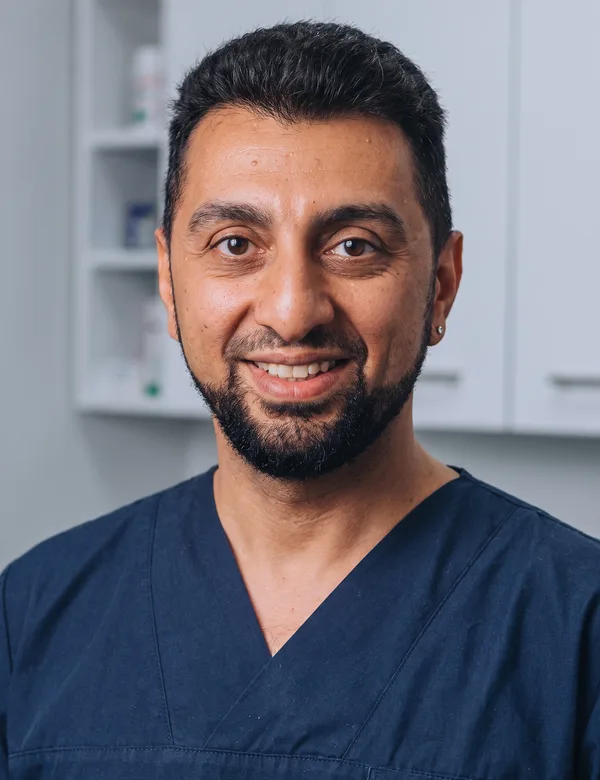

Your answers are reviewed by our dentist teamErtan Omerov · Enes Yol · Ahmet Mustafa Zeren · Vijdan Aslanoğlu