
Stained or Discoloured Teeth: Causes, Whitening and Veneers
Stained or discoloured teeth can come from coffee, smoking, tetracycline or a dead tooth. See when whitening helps and when a veneer works better, Istanbul.
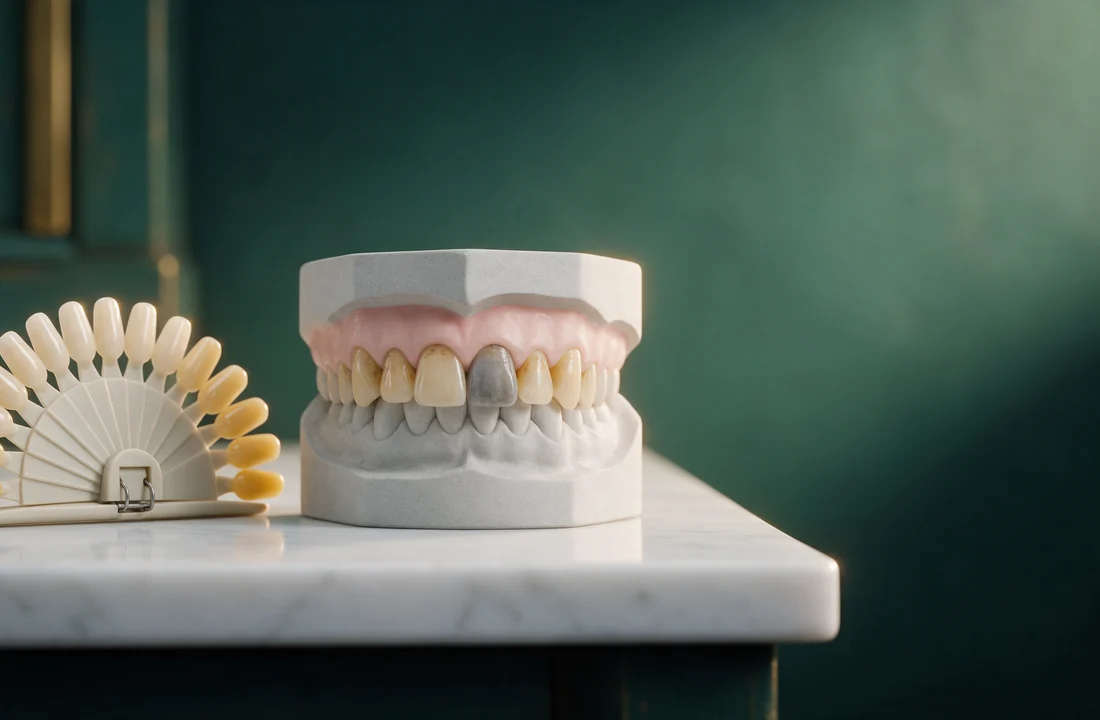
Stained or discoloured teeth are usually caused by surface staining from coffee, tea, red wine or smoking, or by internal factors such as tetracycline exposure, fluorosis or a dead tooth. External whitening lifts most surface staining, internal whitening can lighten a single dark tooth, and a veneer covers staining whitening cannot reach.
Written by Er Dental Clinic
At a glance
Stained Teeth: Whitening or Veneer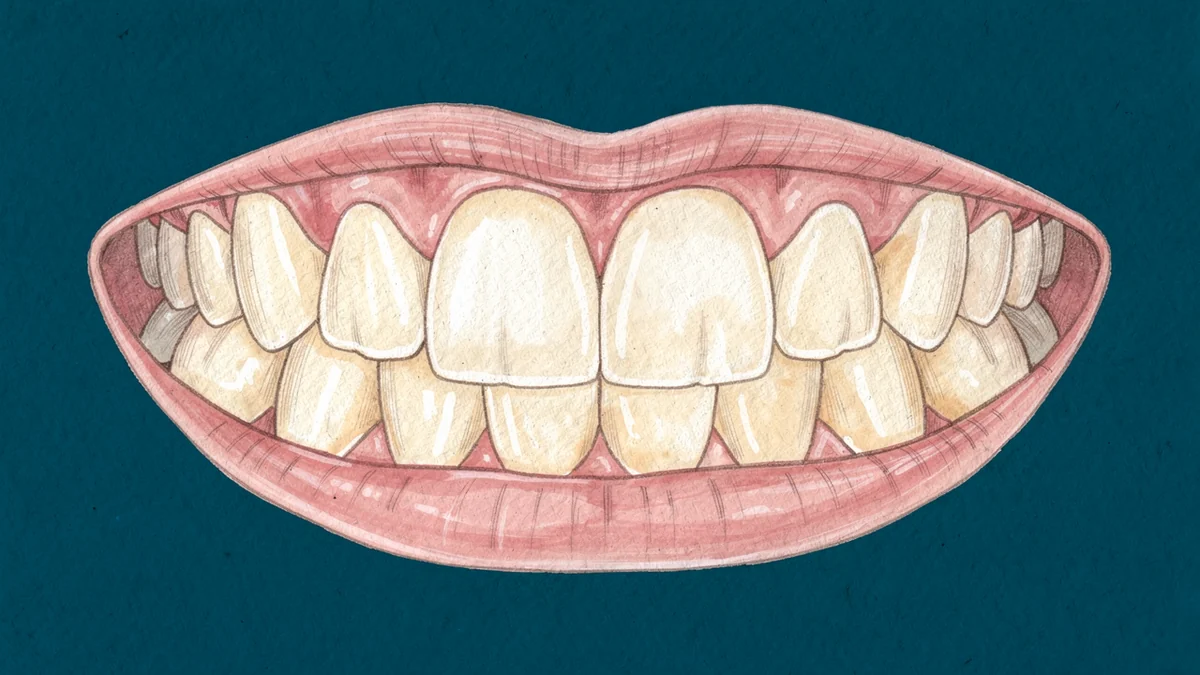
- 1Surface stainingPigments from coffee, tea, red wine and dark sauces gradually settle into the outer enamel, the most common cause of surface staining.
- 2Staining builds upLeft untreated, surface staining tends to build up gradually rather than resolve on its own.
- 3One tooth darkensA dead or non-vital tooth, following an injury, a large filling or a root canal, can darken from within, and a single dark tooth generally does not lighten again by itself.
- 4Whitening lifts surface stainsExternal whitening lifts most surface staining, but it changes the shade of the natural tooth rather than covering colour that whitening cannot reach.
- 5A veneer covers deeper colourFor deeper or more resistant staining, a thin ceramic shell covers the front of the tooth.
Why Do Teeth Become Stained or Discoloured?
Teeth can become stained or discoloured for several reasons, and the cause matters because it points toward a different fix. Surface (extrinsic) staining from coffee, tea, red wine, curry sauces or smoking usually responds well to whitening. Staining that sits inside the tooth (intrinsic) - from tetracycline exposure in childhood, fluorosis, an old filling, or a tooth that has died after an injury or a root canal - often needs a different approach, from internal whitening on a single dark tooth to a veneer where whitening cannot lighten the colour enough. A dentist looks at where the staining sits before recommending a specific treatment.
Stained and Discoloured Teeth at a Glance
Most stained or discoloured teeth fall into one of two groups: surface stains sitting on the enamel from what you eat, drink or smoke, and internal staining that sits inside the tooth itself and cannot be scrubbed or brushed away. Surface staining is the most common and usually responds to whitening. Internal staining is less common but explains why one tooth can look much darker than its neighbours, or why teeth do not always whiten evenly. Working out which type you have is the first step, and a dentist can usually tell from an examination alone.
What Do Staining and Discolouration Mean?
Stained teeth have taken on colour from something outside the tooth - pigments from food, drink or tobacco settling into the outer enamel or into the thin film that builds up on teeth between cleans. Discoloured teeth have a colour change that runs deeper than the surface, either because the enamel itself formed with a colour change, as with fluorosis or tetracycline exposure, because ageing has thinned the enamel and let the darker dentine underneath show through, or because a single tooth has died following trauma or a root canal and darkened from within. The distinction matters because a surface stain usually responds to whitening or a professional clean, while a deeper discolouration often needs a treatment that changes or covers the tooth itself.
Signs of Stained or Discoloured Teeth
Signs of staining or discolouration can build up gradually or, in the case of a single dark tooth, appear quite suddenly:
A yellow or dull cast across all your teeth
A yellow or dull cast across all your teeth, often building up slowly over years.
Brown or grey patches or streaks
Brown or grey patches or streaks, sometimes present since the adult teeth first came through.
One tooth noticeably darker than the others
One tooth noticeably darker than the others, which can follow an old knock, a large filling or root canal treatment.
White or chalky patches
White or chalky patches, which can be an early sign of fluorosis rather than a food or drink stain.
Staining that toothpaste does not shift
Staining that toothpaste does not shift, which usually means the colour sits below the surface rather than on top of it.
If you are unsure which of these applies to you, a free online consultation is a simple way to get an initial opinion - send a clear photo in natural light and describe when you first noticed the change.
Common Causes of Stained and Discoloured Teeth
Most staining and discolouration comes down to one of these:
Coffee, tea, red wine and dark sauces
Coffee, tea, red wine and dark sauces, whose pigments gradually settle into the outer enamel - the most common cause of surface staining.
Smoking or tobacco use
Smoking or tobacco use, which stains heavily and can also affect gum colour.
Tetracycline exposure
Tetracycline exposure, from antibiotics taken during tooth development in childhood, which can leave grey or brown bands built into the enamel itself.
Fluorosis
Fluorosis, from too much fluoride during tooth development, which can leave white flecks or, in more marked cases, brown mottling.
A dead or non-vital tooth
A dead or non-vital tooth, following an injury, a large filling or a root canal, which can darken from within over time.
Old, discoloured fillings or crowns
Old, discoloured fillings or crowns, which can make a tooth look different from its neighbours even when the natural tooth structure is otherwise healthy.
Ageing
Ageing, since enamel naturally thins over the decades, letting the darker dentine layer underneath show through more.
More than one of these can act together - a smoker who also drinks a lot of coffee usually stains faster than either habit alone would explain.

When Should You See a Dentist About Staining?
Staining on its own is rarely urgent, but it is worth booking an assessment sooner rather than later if a single tooth has darkened suddenly, especially after a knock, a large filling or root canal treatment, since this can point to a tooth that has died and may eventually need further treatment. The same applies if staining appears alongside pain, sensitivity, an unpleasant taste or swelling, which suggests decay or gum disease rather than simple staining. Cosmetic staining with no other symptoms can be assessed at a routine visit, where a dentist can also confirm whether professional cleaning, whitening or a covering treatment fits the type of staining you have.
How Are Stained or Discoloured Teeth Assessed?
A dentist assesses staining by looking at where the colour sits - on the surface, spread evenly through the enamel, or confined to a single tooth - and by checking whether the tooth responds normally to cold, which helps confirm whether the nerve is still healthy. Old restorations, previous root canal treatment, and any history of childhood antibiotic use or high fluoride exposure are also relevant, since they point toward a different type of discolouration than everyday staining. A shade guide is often used to record the current colour before any treatment, so the result can be compared afterwards.
Our process starts with a free online consultation: send clear photos of your teeth in natural light, and our dentists, led by Dt. Vijdan Aslanoglu, reply with an initial assessment of which type of staining is likely and which options may apply, before you book anything.

Does Staining Need to Be Treated?
Staining is a cosmetic concern in most cases, not a health risk, so treatment is a choice rather than a necessity. That said, staining is sometimes a visible sign of something worth checking - a dead tooth that has darkened can, left unassessed, occasionally lead to infection at the root tip, and heavy staining can make it harder to notice early decay underneath. Left untreated, surface staining tends to build up gradually rather than resolve on its own, and a single dark tooth generally does not lighten again by itself.
Treatment Options for Stained or Discoloured Teeth
Treatment depends mainly on where the staining sits:
External (professional) whitening
For surface staining from drinks, food or smoking, in-clinic teeth whitening lightens the natural tooth colour; a course is £260 / €300 / $350.
Internal whitening
For a single tooth that has darkened from within after trauma or root canal treatment, a bleaching agent is placed inside the tooth; this is £90 / €100 / $120.
Composite veneers or bonding
For staining that whitening does not fully resolve, a thin resin layer can be bonded over the front of the tooth - see our composite veneers page.
Porcelain or E-max veneers
For deeper or more resistant staining - including most tetracycline staining and fluorosis - a thin ceramic shell covers the front of the tooth; an E-max veneer is £300 / €350 / $400 per tooth, and other porcelain veneer materials are quoted after your photos and X-rays are reviewed.
A crown
Where a tooth is already heavily restored or structurally weakened as well as discoloured, a crown may be recommended instead of a veneer.
Whitening changes the colour of the natural tooth, while a veneer covers it - which is why the two are not simply interchangeable; whitening is usually tried first where it is likely to work, and a covering option is kept for staining it cannot reach. Full pricing for whitening, veneers and other treatments is set out on our Turkey teeth prices page.
Real patients
Before and After at Er Dental Clinic
Photos of Er Dental Clinic patients treated for stained or discoloured teeth. Every case is different - ask us to see veneer cases similar to yours.
Stained and Discoloured Teeth: Frequently Asked Questions
What causes stained or discoloured teeth?
Most staining comes from pigments in coffee, tea, red wine or tobacco settling into the outer enamel. Deeper discolouration can come from tetracycline exposure in childhood, fluorosis, an old filling, or a tooth that has died after an injury or a root canal. The type of staining points toward the treatment that is likely to help.
Can whitening fix tetracycline stains?
Whitening can help with mild tetracycline staining, but the bands are often too deep or too even in colour for whitening to fully clear them. In more marked cases, a porcelain or E-max veneer usually gives a more predictable, even result than whitening alone.
Why is one tooth darker than the others?
A single dark tooth is often a sign that the tooth has died, usually following an old injury, a deep filling or root canal treatment. Blood and tissue changes inside the tooth cause it to darken from within, which is why it does not respond the same way as surface staining. Internal whitening or a crown are the usual ways to address this.
When would a dentist recommend a veneer instead of whitening?
A veneer is usually recommended when staining sits too deep for whitening to reach, such as marked tetracycline staining or fluorosis, or when the tooth also needs its shape improved at the same time. Whitening is generally tried first for straightforward surface staining, since it changes less of the natural tooth.
Does whitening work on coffee and smoking stains?
Yes, external whitening is usually effective on surface staining from coffee, tea, red wine and smoking, since these pigments sit on or just within the outer enamel. Staying off staining drinks and tobacco after treatment helps the result last longer.
How long does the effect of whitening last?
How long whitening lasts varies between patients and depends on diet, smoking and oral hygiene; teeth gradually pick up new surface staining over time in the same way they did before treatment. Many patients top up with occasional whitening rather than expecting a single treatment to hold indefinitely.
Related Treatments
Stained and discoloured teeth are closely linked to whitening and to the range of veneers used when whitening is not enough.
Dental Veneers
An overview of veneer materials and how they are fitted.
Explore dental veneersComposite Veneers
A resin veneer option that can be repaired in the mouth.
Explore composite veneersWhich Veneers Are Right for Me?
Compare E-max, porcelain, composite and other veneer types.
Compare veneer typesCosmetic Dentistry
The wider range of treatments used to improve the appearance of your smile.
Explore cosmetic dentistryWhich Treatment Suits Which Type of Staining?
As a general pattern, surface staining that responds to whitening is treated with external whitening, a single dark tooth after injury or root canal treatment often needs internal whitening, sometimes alongside a crown if the tooth is already weakened, and staining that runs too deep for whitening - such as marked tetracycline staining or fluorosis - is usually covered with a veneer. If veneers turn out to be the right route for you, our guide on choosing between veneer types compares the options side by side. A dentist confirms which of these applies to your teeth after an examination.
Stained teeth: which option is usually considered?
Read this diagram as text
- Is just one tooth much darker than the others?
- Yes: A dentist may consider internal whitening, a crown or a veneer
- No: Surface stains from drinks, smoking or ageing?
- Yes: A dentist may consider external whitening first
- No: Stains deeper than whitening can reach?
- Yes: A dentist may consider porcelain or E-max veneers
- No: Your dentist assesses the teeth individually
Whitening or Veneers?
Whitening and veneers solve different problems, so it helps to compare them directly rather than choose on price alone: whitening changes the shade of the natural tooth and works well on surface staining, while a veneer covers the tooth and can hide colour that whitening cannot reach.
How We Assess Staining and Discolouration at Er Dental Clinic
At Er Dental Clinic, staining and discolouration are assessed by Dt. Vijdan Aslanoglu together with our restorative and cosmetic dentistry team. The process starts with a free online consultation: send photos of your teeth in natural light, and you receive an initial assessment before travelling. At the clinic, a clinical examination confirms whether whitening, a veneer or another option is realistic for your teeth, and the proposed plan, materials and cost are set out in writing before treatment begins.
The clinic holds an International Health Tourism Authorization Certificate issued by the Republic of Turkiye Ministry of Health (certificate no. ST-6264), which you can verify on the e-Devlet document verification service at turkiye.gov.tr/saglik-bakanligi-ebys.
References
- Teeth Whitening — NHS, 2026
- Tooth Whitening — Oral Health Foundation, 2026
- Teeth Whitening — American Dental Association (MouthHealthy), 2026
Get Your Smile Assessed
Send us a photo of your teeth on WhatsApp, or through a free online consultation. Our dentists review it and reply with an initial assessment of whether whitening, a veneer or another option may suit you, and you can always get in touch with any questions before you decide.
Find the Right Path for You
There are many different conditions and options in this area — browse by topic below, or answer a few questions to see the step closest to your situation.
Explore by Topic
The Basics
2 pagesDecision Support
1 page
Dentistry · Esenyurt, İstanbul
Why Er Dental Clinic?
Related Pages
Porcelain (Laminate) Veneers in Turkey: How They Work
E-max Veneers in Turkey: Thin, Translucent Ceramic Veneers
Free Online Dental Consultation: Send Your Photos and X-Rays for a Written Plan
Cosmetic Dentistry in Turkey: Smile Makeover, Hollywood Smile, Whitening
Dt. Vijdan Aslanoğlu – Dentist at Er Dental Clinic, Istanbul
Contact Er Dental Clinic
Dental Crowns in Turkey: Zirconia, E-max and Porcelain Options
Your treatment plan · 3 short steps
Get your personal veneer plan
Answer a few quick questions — it takes about a minute. Our dentists review your answers and reply with a written treatment plan and a clear price for your case, before you decide anything.
- Your treatmentWhat are you looking for?
- Your timingX-ray, dates and how we reply
- Your detailsSo we can send your plan
What you receive
- A written treatment plan prepared by our dentists
- A clear price for your case before you travel
- No obligation — ask every question first



Your answers are reviewed by our dentist teamErtan Omerov · Enes Yol · Ahmet Mustafa Zeren · Vijdan Aslanoğlu