
Tooth Fillings in Turkey: White Composite Fillings and Amalgam Replacement
Tooth-coloured composite fillings and amalgam filling replacement at Er Dental Clinic in Istanbul, Turkey, planned after an examination and X-rays. Ask on WhatsApp.
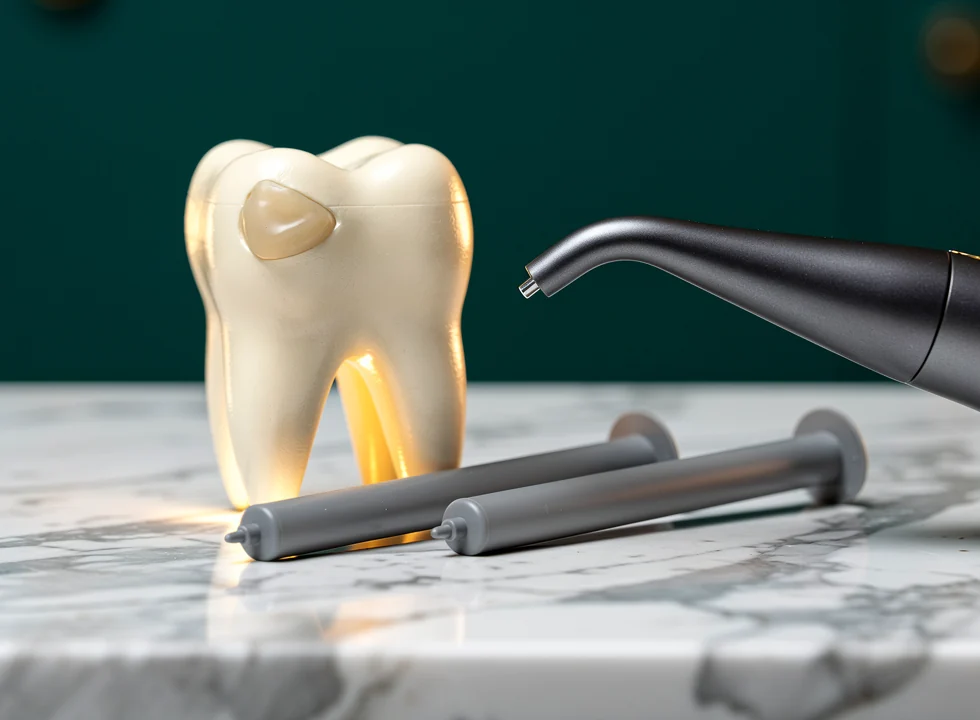
A tooth filling repairs a tooth damaged by decay, a small chip or an older, leaking filling, usually with tooth-coloured composite resin bonded to the remaining tooth. At Er Dental Clinic in Istanbul, Turkey, fillings follow an examination and X-rays, and old amalgam fillings can be replaced with composite when needed.
Written by Er Dental Clinic
Treatment at a glance
Tooth Fillings, Step by Step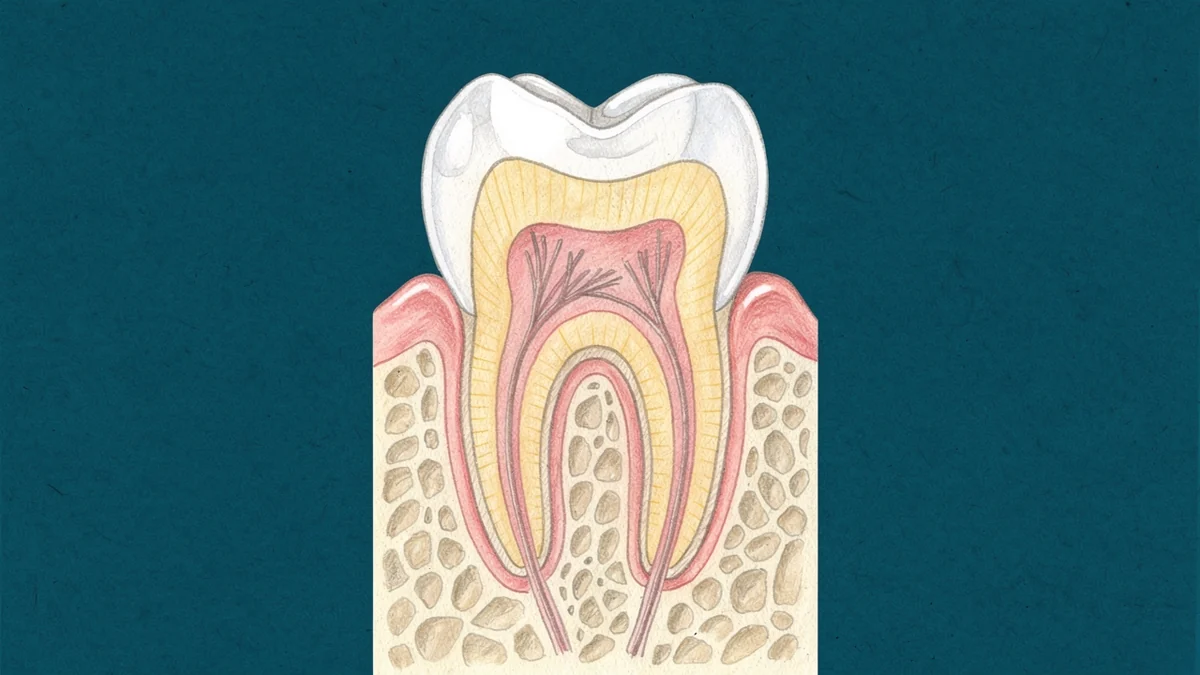
- 1Decay creates a cavityA filling is considered once tooth decay has created a cavity, most often because plaque bacteria have broken down the enamel and started on the dentine underneath.
- 2Remove decayDecay or the old filling material is removed, leaving healthy tooth structure.
- 3Bond the toothA bonding agent is applied so the composite adheres to the tooth.
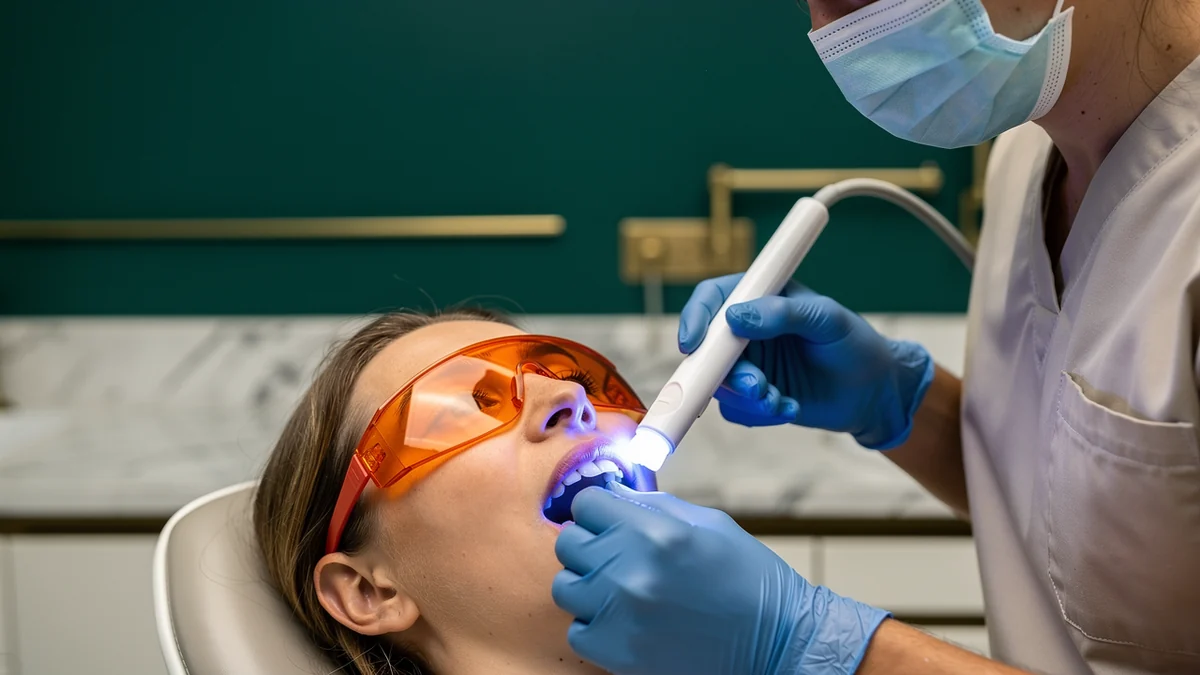
- 4Build up compositeTooth-coloured composite is placed and hardened in layers with a curing light.
- 5Shape, polish and check biteThe filling is shaped, polished, and your bite is checked before you leave.
What Is a Tooth Filling?
A tooth filling repairs a tooth after decay, a small chip or fracture, or a worn, leaking older filling has been removed, restoring the shape and function of the tooth. At Er Dental Clinic, fillings are usually made from composite resin, a tooth-coloured material that bonds directly to the remaining tooth structure and is built up and hardened in layers with a curing light.
Some patients also arrive with older amalgam fillings, a silver-coloured metal alloy that contains mercury. We place tooth-coloured composite fillings, and an existing amalgam filling can be replaced with composite when there is a clinical reason, such as decay or a failing edge, or simply because you would prefer a tooth-coloured repair.
This page explains when a filling is the right treatment, how composite compares with amalgam, and what to expect during and after the appointment. Where a cavity is too large for a filling, our inlay and onlay page and our root canal treatment page cover the next steps.
Tooth Fillings at a Glance
Material: tooth-coloured composite resin, bonded directly to the tooth in layers.
Colour: matched to the shade of the surrounding tooth, so a front-tooth filling is not obvious.
Use: small to medium cavities, chipped or worn areas, and replacement of old or failing fillings, including amalgam.
Anaesthesia: local anaesthesia numbs the tooth and surrounding gum before any decay is removed; most patients feel pressure rather than pain once the area is numb.
When Is a Tooth Filling Used?
A filling is considered once tooth decay has created a cavity, most often because plaque bacteria have broken down the enamel and started on the dentine underneath. It is also used for a small chip or crack, or to replace an older filling that has cracked, discoloured at the edges or started to let bacteria leak underneath. The stages of tooth decay, from an early white spot to a cavity that has reached the nerve, are explained in more detail on our tooth decay page; this page focuses on the filling itself, once your dentist has confirmed it is the right repair for your tooth.
Who Is a Tooth Filling Suitable For?
A small to medium cavity
Where decay has reached the dentine but a good amount of healthy tooth structure remains, a composite filling is usually the first choice.
A chipped or fractured edge
Composite resin can rebuild a small chipped corner or edge, particularly on front teeth, without the need for a full crown.
An old, failing filling
A filling with a leaking or discoloured edge, or one that has partly come away from the tooth, is usually replaced before decay can spread underneath it.
Patients who want to move away from amalgam
If you have older amalgam fillings and would prefer a tooth-coloured repair, these can be replaced with composite once your dentist has checked there is no other underlying issue.
Who Is a Tooth Filling Not Suitable For?
A filling is not the right repair where a cavity is very large and has removed most of the biting surface of the tooth, since a large filling in a weakened tooth is more likely to crack; an inlay, onlay or crown usually protects the tooth better in that situation. If decay has reached the pulp, the soft tissue in the centre of the tooth, root canal treatment is needed before or instead of a filling, because a filling alone cannot resolve an infection inside the tooth. Heavy, untreated grinding can also shorten the life of a filling, and your dentist may suggest a night guard alongside any restorative work. Your dentist confirms which repair suits your tooth from your X-rays and the clinical examination.
Assessment Before a Tooth Filling
Before you travel. The process starts with a free online consultation. You send a photo of the tooth, and an X-ray if you have one, and our dentists give an initial view on whether a filling is likely to be the right repair.
At the clinic. A clinical examination and, where needed, an X-ray confirm the size and depth of the decay or damage, and whether the nerve of the tooth is likely to be affected.
Choosing the material. Your dentist explains whether composite alone is enough, or whether the cavity is large enough that an inlay, onlay or crown would be a more durable option, before any tooth structure is removed.

How Is a Tooth Filling Placed?
Placing a composite filling starts with numbing the tooth and surrounding gum with local anaesthesia, so the tooth can be treated comfortably. Decay or the old filling material is then removed, and the remaining healthy tooth structure is cleaned and prepared. The tooth is bonded, and the tooth-coloured composite is built up in thin layers, each one hardened with a curing light, before the filling is shaped and polished and your bite is checked.
The steps involved are shown in the illustration below.
How a Tooth Filling Is Placed, Step by Step
Read this diagram as text
- Numb the tooth: Local anaesthesia numbs the tooth and the surrounding gum.
- Remove decay: Decay or the old filling material is removed, leaving healthy tooth structure.
- Bond the tooth: A bonding agent is applied so the composite adheres to the tooth.
- Build up composite: Tooth-coloured composite is placed and hardened in layers with a curing light.
- Shape, polish and check bite: The filling is shaped, polished, and your bite is checked before you leave.
Aftercare for a Tooth Filling
Straight after the appointment
Wait until the numbness has fully worn off before eating or drinking anything hot, to avoid accidentally biting or scalding the numb area.
The first few days
Some sensitivity to hot, cold or pressure is common and usually settles on its own; an ordinary painkiller can help if needed.
Long term
Brush twice a day with a fluoride toothpaste, clean between your teeth daily, and keep up regular check-ups so your dentist can review the filling and catch any new decay early.
What to Expect from a Tooth Filling
With a well-placed composite filling, the treated tooth regains its normal shape and function for chewing, and the repair blends in closely with the surrounding tooth so it is not obvious when you talk or smile. Fillings and root canal-treated teeth can last for many years with good care; how long any individual filling lasts depends on its size, your bite, whether you grind your teeth and how well you keep up your daily hygiene.
Limitations of Tooth Fillings
A filling is a repair, not a renewal. Placing a filling removes decayed or damaged tooth structure, and no filling restores a tooth to the strength of the original, untouched tooth.
Fillings can wear or need replacing over time. Like any restoration, a filling can wear at the edges, stain or, occasionally, leak, and may eventually need to be replaced or upgraded to an inlay, onlay or crown.
A large filling can weaken a tooth. Where very little natural tooth structure remains, a filling may not be strong enough on its own, and an inlay, onlay or crown is usually recommended instead.
Risks and Possible Complications of Tooth Fillings
Sensitivity
Short-term sensitivity to hot, cold or biting pressure is common after a filling and usually settles; persistent sensitivity is checked by your dentist.
High bite
Occasionally a filling feels slightly high when the numbness wears off; this is a quick adjustment rather than a sign of a failed filling.
Wear or chipping
A composite filling can wear or chip at the edges over time, particularly in a heavy grinding pattern.
Leakage or recurrent decay
A filling can occasionally let bacteria in at the edge, which can lead to further decay underneath if not checked at regular visits.
Nerve irritation
In a small number of teeth, especially where decay was close to the nerve, the tooth can become irritated after a filling and may later need root canal treatment.
Your dentist explains the risks that apply to your specific tooth, based on your X-rays and examination, before you give your consent.
Common Misunderstandings About Fillings
"All amalgam fillings must be removed." A sound, symptom-free amalgam filling is not automatically removed just because it contains mercury, since the removal itself can take away extra healthy tooth structure; replacement is usually considered when there is decay, a failing edge, or a wish for a tooth-coloured repair.
"White fillings don't last." Composite fillings, properly placed and cared for, can last for years; lifespan depends far more on the size of the filling, your bite and your hygiene than on the material alone.
"A filling always hurts." Local anaesthesia numbs the tooth before any decay is removed, so most patients feel pressure and vibration rather than pain during the appointment.
How We Assess Tooth Fillings at Er Dental Clinic
Tooth filling treatment at Er Dental Clinic is assessed and planned by Dt. Vijdan Aslanoglu, alongside our other general dentists. The size and depth of any decay or damage is confirmed from your X-rays and a clinical examination before a filling, inlay, onlay or crown is proposed, and your written treatment plan sets out which repair is recommended and why. The clinic holds an International Health Tourism Authorisation Certificate issued by the Republic of Turkiye Ministry of Health (certificate no. ST-6264), which you can check on the e-Devlet document verification service at turkiye.gov.tr/saglik-bakanligi-ebys.
Alternatives to a Tooth Filling
If a cavity or old filling is too large for a straightforward filling, a ceramic inlay or onlay is usually the next option, giving a more durable repair while still keeping most of the natural tooth. Where decay has reached the pulp of the tooth, root canal treatment is needed to treat the infection before the tooth is restored. To help prevent new cavities from forming in the first place, our dental sealants page and our fluoride treatment page cover two preventive options, and our tooth decay page explains how decay progresses at each stage.
Tooth Fillings: Frequently Asked Questions
How much is a filling in Turkey?
At Er Dental Clinic, a Composite Dental Filling is priced per tooth at £100 / €120 / $140. Your final cost is confirmed after our dentists review your photos and, where needed, your X-rays.
Composite or amalgam — what is the difference?
Composite is a tooth-coloured resin that bonds directly to the tooth, while amalgam is a silver-coloured metal alloy that contains mercury and is not bonded. Er Dental Clinic places composite fillings; an existing amalgam filling can be replaced with composite when there is a clinical reason or you prefer a tooth-coloured repair.
Should I replace my old amalgam fillings?
A sound amalgam filling with no decay or damage is not automatically removed, since taking it out can remove extra healthy tooth structure. Replacement is usually considered when the filling is failing, decay has developed underneath it, or you would prefer a tooth-coloured repair; your dentist reviews this at your examination.
How long do fillings last?
Fillings can last for many years with good care; lifespan depends on the size of the filling, your bite, whether you grind your teeth and your day-to-day hygiene. Regular check-ups let your dentist spot early wear or leakage before it becomes a bigger problem.
Does getting a filling hurt?
Local anaesthesia numbs the tooth and surrounding gum before any decay is removed, so most patients feel pressure rather than pain during the appointment. Some short-term sensitivity to hot, cold or biting pressure is common for a few days afterwards and usually settles by itself.
What is a temporary filling?
A temporary filling is a short-term restoration used between visits, for example while waiting for a permanent filling, inlay, onlay or crown, or between the stages of a root canal treatment. It is not meant to last as long as a definitive filling, so it should be replaced at the appointment your dentist recommends.
Filling or root canal — how do dentists decide?
The decision depends on whether decay has reached the pulp, the soft tissue in the centre of the tooth. If the pulp is healthy, a filling can repair the tooth; if it is infected or irreversibly inflamed, root canal treatment is needed to treat the tooth before it is restored with a filling, onlay or crown.
Related General Dentistry Options
Tooth fillings sit alongside several other general dentistry treatments at Er Dental Clinic. The pages below cover related repairs and prevention in more detail.
General Dentistry in Turkey
An overview of check-ups, fillings, root canals and the other general dentistry treatments we offer.
Explore general dentistryInlays and Onlays
Ceramic repairs for cavities too large for a straightforward filling.
Explore inlays and onlaysRoot Canal Treatment
How an infected or damaged nerve inside a tooth is treated.
Explore root canal treatmentDental Sealants
A protective coating that helps prevent new cavities on back teeth.
Explore dental sealantsFluoride Treatment
Professional fluoride that can help stop early decay before a filling is needed.
Explore fluoride treatmentTooth Decay
How tooth decay develops and which treatment fits each stage.
Read about tooth decayOur Dentists in Istanbul
Meet the dentists who assess and plan filling treatment at Er Dental Clinic.
Meet our dentistsComposite vs Amalgam Fillings
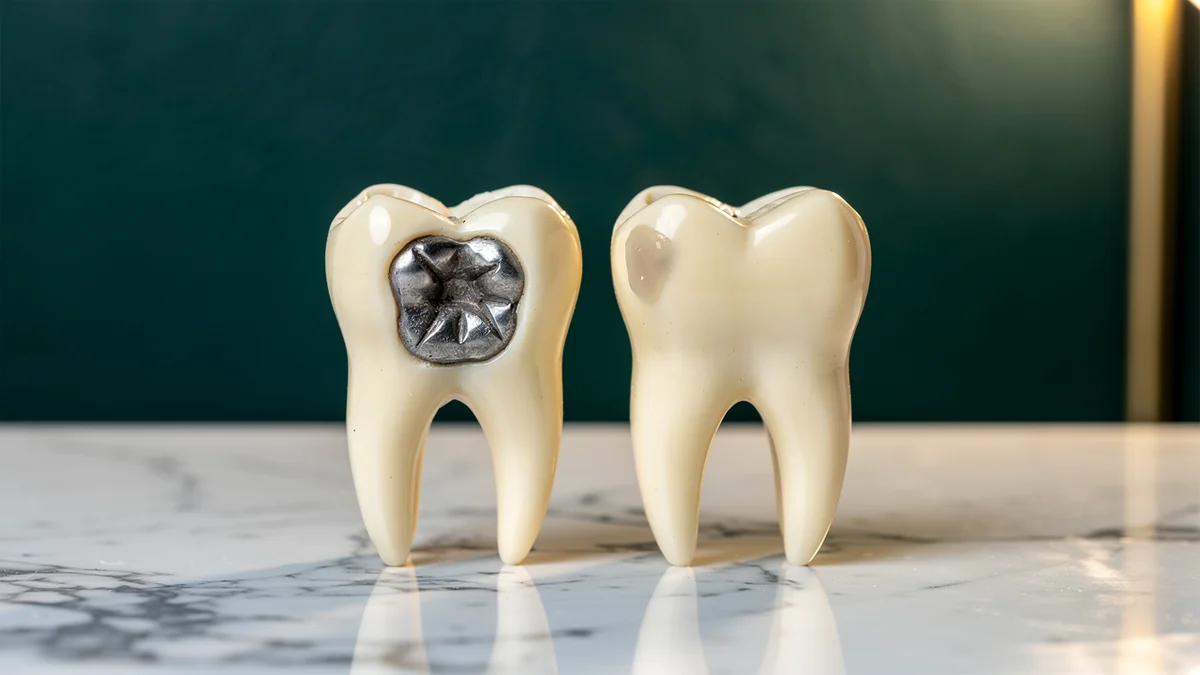
Composite and amalgam are the two main filling materials used in dentistry, and each has different properties. Er Dental Clinic places tooth-coloured composite fillings; some patients arrive with existing amalgam fillings placed elsewhere, and these can be replaced with composite where there is a clinical reason or a preference for a tooth-coloured repair. Many countries are phasing down the use of amalgam, and your dentist can talk through the general considerations if this is relevant to you.
How Do Composite and Amalgam Fillings Compare?
Read this diagram as text
| Criterion | Composite | Amalgam |
|---|---|---|
| Tooth-coloured | ✓ Yes | ✗ No |
| Bonded to the tooth | ✓ Yes | ✗ No |
| Contains mercury | ✗ No | ✓ Yes |
Returning to Daily Life After a Tooth Filling
Most patients return to normal eating and speaking the same day, once the numbness from the local anaesthetic has fully worn off, and there is usually no need to take time off work. It is sensible to avoid chewing on the treated side until the numbness has gone, so you do not accidentally bite your cheek or tongue. Some short-term sensitivity to hot, cold or biting pressure is common in the days after a filling and usually settles by itself as the tooth adjusts.
References
- Fillings: Silver-Colored — American Dental Association (MouthHealthy), 2026
- White Fillings — Oral Health Foundation, 2026
- Dental Fillings — Cleveland Clinic, 2026
Ask About Tooth Fillings in Istanbul
Send us a photo of your tooth, and an X-ray if you have one, for a free online consultation. Our dentists will give an initial view on whether a filling is the right repair and reply with a written treatment plan and a clear quote, so you can compare your options before you decide to travel. You can also contact us directly with any questions.
Find the Right Path for You
There are many different conditions and options in this area — browse by topic below, or answer a few questions to see the step closest to your situation.
Explore by Topic
The Basics
2 pagesDiagnosis & Methods
2 pages
Dentistry · Esenyurt, İstanbul
Why Er Dental Clinic?
Related Pages
General Dentistry in Turkey: Check-Ups, Fillings, Root Canals and More
Professional Teeth Cleaning in Turkey: Scaling, Polishing and Deep Cleaning
Tooth Extraction in Turkey: Simple, Surgical and Wisdom Tooth Removal
Bruxism Treatment in Turkey: Night Guards and Other Options for Teeth Grinding
Er Dental Clinic: Meet the Dentists Who Plan and Carry Out Your Treatment
Free Online Dental Consultation: Send Your Photos and X-Rays for a Written Plan
Dt. Vijdan Aslanoğlu – Dentist at Er Dental Clinic, Istanbul
Contact Er Dental Clinic
How Much Are Turkey Teeth? Treatment Prices at Er Dental Clinic, Istanbul
Your treatment plan · 3 short steps
Get your personal treatment plan
Answer a few quick questions — it takes about a minute. Our dentists review your answers and reply with a written treatment plan and a clear price for your case, before you decide anything.
- Your treatmentWhat are you looking for?
- Your timingX-ray, dates and how we reply
- Your detailsSo we can send your plan
What you receive
- A written treatment plan prepared by our dentists
- A clear price for your case before you travel
- No obligation — ask every question first



Your answers are reviewed by our dentist teamErtan Omerov · Enes Yol · Ahmet Mustafa Zeren · Vijdan Aslanoğlu