
Missing Teeth: Causes, Effects and Replacement Options
A missing tooth affects your bite and jawbone over time. Compare dental implants, bridges and dentures as replacement options in Istanbul. Book a consultation.
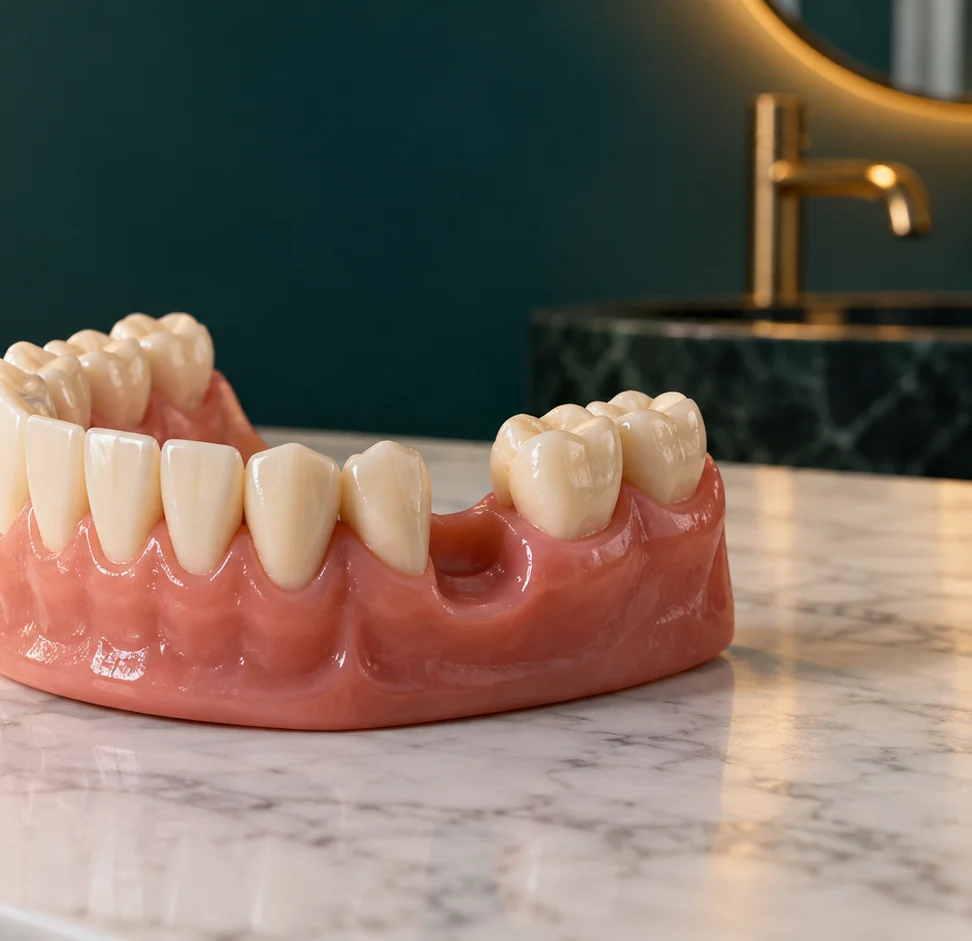
A missing tooth can be replaced with a dental implant, a bridge or a denture. The right choice depends on how many teeth are missing, the health of neighbouring teeth and the jawbone available. Left unreplaced, a gap can lead to jawbone loss and nearby teeth shifting, so it is worth discussing replacement early.
Written by Er Dental Clinic
At a glance
What Happens After a Tooth Is Lost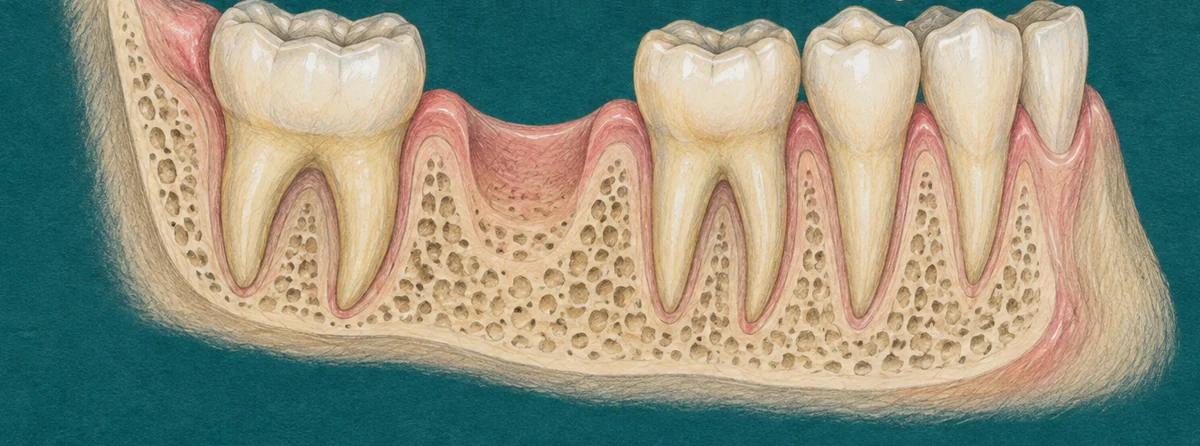
- 1A tooth is lostAn empty space is left in the gum and the jawbone beneath it.
- 2Neighbouring teeth tiltTeeth next to the gap can tilt or drift into the empty space.
- 3The jawbone shrinksNo longer used for chewing, the bone under the gap gradually loses height and width.
What Are the Options for a Missing Tooth?
Losing a tooth is common, whatever the cause, and it rarely fixes itself: the gap can change the way you bite, speak and smile, and the bone underneath tends to shrink if nothing is put in its place. The three main ways to replace a missing tooth are a dental implant, a bridge and a denture.
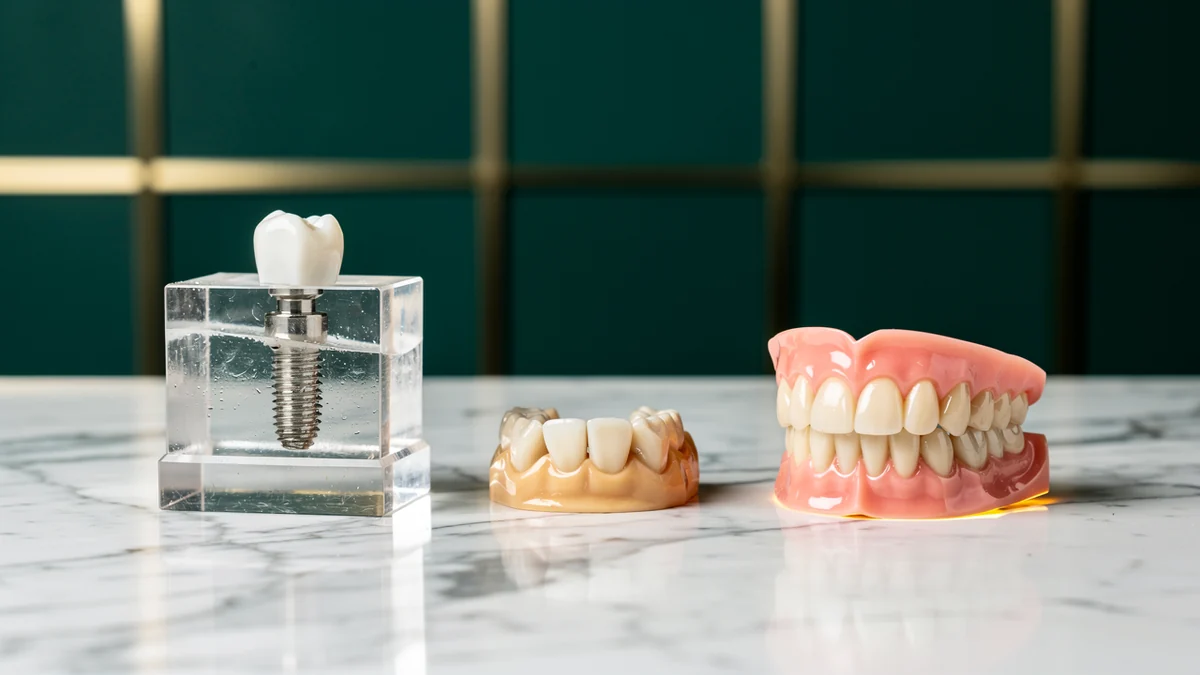
A dental implant is a small titanium or ceramic post placed in the jawbone to act as an artificial root, with a crown fitted on top. A bridge uses the neighbouring teeth as anchors for a false tooth in between. A denture is a removable appliance that can replace one tooth, several teeth or a whole arch. None of the three is automatically the right option; each suits a different combination of missing teeth, bone and budget, which is why an examination and X-rays come before any decision.
Missing Teeth at a Glance
A tooth can be missing from birth, from decay, injury or gum disease, or after an extraction. Whatever the cause, the space left behind does not stay neutral: neighbouring teeth can drift or tilt into the gap, the opposing tooth can over-erupt, and the jawbone in that area gradually loses volume because it is no longer being used for chewing. These changes tend to happen slowly, over months or years, which is one reason people postpone a decision — and one reason dentists usually advise against leaving a gap indefinitely.
What Does Having Missing Teeth Mean?
Missing teeth, also called tooth loss or partial edentulism, means one or more natural teeth are no longer in the mouth, whether they were lost through decay, gum disease, injury or extraction, or never developed. Dentists describe a single gap, several gaps and a whole arch without teeth differently, because each situation affects chewing, speech, appearance and the jawbone in its own way and leads to different replacement options.
Signs That a Gap Is Affecting Your Bite
A single missing tooth at the back of the mouth is sometimes barely noticed at first. Over time, though, a gap tends to produce some combination of the following:
- Difficulty chewing on the affected side, or a tendency to favour the other side.
- Neighbouring teeth tilting or drifting into the empty space, which can also make them harder to clean.
- The opposing tooth over-erupting, growing slightly out of its socket because it no longer meets a tooth on the other jaw.
- A change in speech, particularly with missing front teeth.
- A visible gap when smiling, affecting confidence.
- A sunken appearance of the cheek or lip where several teeth have been missing for a long time, linked to bone loss underneath (read more about jawbone loss).
If you notice any of these, it is worth having the area assessed rather than waiting, since some of these changes are easier to prevent than to reverse.
Common Causes of Missing Teeth
A tooth is usually lost or removed for one of these reasons:
- Untreated tooth decay that has destroyed too much of the tooth to restore.
- Advanced gum disease (periodontitis), which breaks down the bone and ligament holding a tooth in place.
- Injury or trauma, for example a fall or a sports impact that fractures or knocks out a tooth.
- A failed root canal treatment or a tooth that fractures below the gum line.
- Extraction for orthodontic or surgical reasons, such as an impacted wisdom tooth.
- Teeth missing from birth (congenitally missing teeth), most often the second premolars or upper lateral incisors.
The cause does not usually change which replacement is possible, but gum disease in particular needs to be brought under control before an implant or bridge is planned, since the same bacteria can affect the tissue around a new restoration.
When Should You See a Dentist About a Missing Tooth?
There is rarely an emergency reason to rush, but a consultation sooner rather than later keeps your options open. It is worth booking an appointment if a tooth has recently been extracted or lost to trauma, if a gap has been present for a while and you have started to notice shifting teeth or discomfort when chewing, or if an existing denture or bridge feels loose or uncomfortable. Waiting does not usually make a decision easier: the longer a gap is left, the more jawbone tends to be lost, which can later make an implant more complex to place.

How Is a Missing Tooth Assessed?
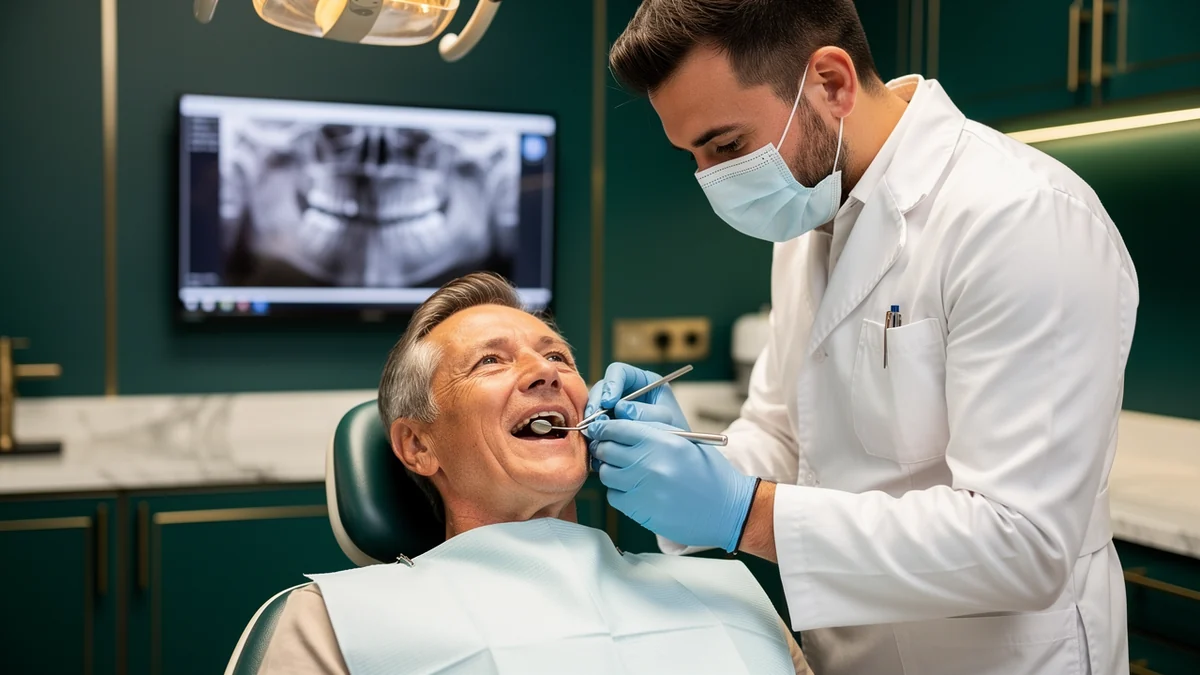
The assessment for a missing tooth looks at more than the gap itself. A clinical examination checks the health of the gums and neighbouring teeth, and a panoramic dental X-ray gives an overview of the whole jaw, including any teeth that have not fully erupted. Where an implant is being considered, a CBCT (cone beam computed tomography) scan is usually added: this 3D scan measures the height, width and quality of the remaining bone and shows exactly where the nerves and sinuses lie, which is what mainly decides whether an implant can be placed straightforwardly or whether bone needs to be rebuilt first.
Our process starts with a free online consultation: send recent photos and, if you have them, an existing X-ray or scan, and our dentists reply with an initial assessment and a written treatment plan before you book anything.
What Happens if a Missing Tooth Is Not Replaced?
A missing tooth does not have to be replaced immediately, but leaving the space empty for a long time tends to cause knock-on problems rather than staying neutral. The jawbone in that area is no longer stimulated by chewing forces and gradually loses height and width, a process explained in detail on our jawbone loss page. Neighbouring teeth can tilt or drift into the gap, making them harder to clean and more prone to decay or gum problems, and the tooth on the opposing jaw can over-erupt. Over months or years, these changes can also alter your bite, which can sometimes cause jaw discomfort. None of this means a decision has to be made overnight, but the earlier a replacement is planned, the more options are usually available.
Replacement Options for a Missing Tooth
Three main options replace a missing tooth, and each works differently:
Dental implant
A titanium or ceramic post is placed in the jawbone to act as an artificial root, with a crown fitted on top once it has healed. Neighbouring teeth are left untouched, and the implant helps to preserve the bone underneath. If the tooth has not been removed yet, our immediate implant page explains when an implant can be placed at the same visit as the extraction. Read more about dental implants.
Dental bridge
A false tooth is fused between crowns that fit over the teeth on either side of the gap, or, in a cantilever or Maryland bridge, anchored to a tooth on just one side. A bridge does not need surgery and is usually completed sooner than an implant, but it relies on the neighbouring teeth for support. See our dental bridge options, and our traditional bridge page for how the supporting teeth are prepared.
Denture
A removable appliance replaces one tooth, several teeth or a full arch, and can rest on the gums or clip onto implants for extra stability. See our denture options.
When several teeth are missing across a full arch, full mouth dental implants combine several implants with a fixed set of teeth, which is compared in detail on its own page.
Real patients
Before and After at Er Dental Clinic
Photos of Er Dental Clinic patients who replaced missing teeth. Every case is different — ask us to see cases similar to yours.
Missing Teeth: Frequently Asked Questions
What are my options if I have a missing tooth?
The three main options are a dental implant, a dental bridge and a denture. An implant replaces the tooth root in the jawbone and leaves neighbouring teeth untouched; a bridge uses the neighbouring teeth as anchors; a denture is removable and can replace one tooth or several. Your dentist confirms which options are realistic after reviewing your X-rays and, where relevant, a CBCT scan.
What happens if you don't replace a missing tooth?
The jawbone in that area gradually loses volume because it is no longer used for chewing, which is explained in detail on our jawbone loss page. Neighbouring teeth can also tilt or drift into the gap, and the opposing tooth can over-erupt, which can affect your bite over time.
Is a dental implant always the right choice for a missing tooth?
Not always. An implant is often suitable for a single tooth with healthy neighbours and enough jawbone, but a bridge or a denture can be a better fit when there is not enough bone, surgery is not an option, or a lower-cost or removable solution is preferred. The right choice depends on your specific case.
Is there an alternative to dental implants?
Yes. Dental bridges and dentures are the two established alternatives to implants for replacing a missing tooth. A bridge avoids surgery by using neighbouring teeth for support, while a denture is removable and can replace one tooth, several teeth or a full arch. Each has different trade-offs in durability, cost and effect on neighbouring teeth.
How much does it cost to replace a missing tooth in Turkey?
A single implant fixture starts from £390 / €450 / $520, with the crown priced separately (a zirconia crown is £215 / €250 / $290). Bridge and denture prices depend on the material and the number of teeth involved. Your final cost is confirmed after our dentists review your X-rays and photos.
Can a missing tooth affect my other teeth?
Yes. Neighbouring teeth can tilt or drift into the empty space, making them harder to clean, and the tooth on the opposing jaw can grow slightly out of its socket because it no longer meets a tooth on the other side. These changes are usually slow, but they are a common reason dentists recommend deciding on a replacement rather than leaving the gap indefinitely.
Do I need a CBCT scan before replacing a missing tooth?
Only if a dental implant is being considered. A CBCT scan measures the height, width and quality of the jawbone and shows the position of the nerves and sinuses, which decides whether an implant can be placed directly or whether the bone needs to be rebuilt first. Bridges and dentures do not usually require a CBCT scan.
Related Conditions and Treatments
Missing teeth are closely linked to what happens to the jawbone underneath, and to the treatments used to replace them.
Jawbone Loss
Why the jaw shrinks after tooth loss, how bone is measured on a CBCT scan and how it can be rebuilt.
Read about jawbone lossDental Implants
How implants replace a missing tooth root, from a single tooth to a full arch.
Explore dental implantsDental Bridges
Traditional, cantilever and Maryland bridge options for replacing one or more missing teeth.
Explore dental bridgesDentures
Complete and partial denture options, including implant-supported dentures.
Explore denturesWhich Option Suits Which Situation?
As a starting point: a single missing tooth with healthy neighbouring teeth is often a good candidate for an implant, since it avoids preparing those teeth. Where the neighbouring teeth already need crowns, or surgery is not an option for medical reasons, a bridge can be a reasonable alternative. Where several teeth are missing and a fixed result is preferred, implants supporting a bridge or a full arch (All-on-4 or All-on-6) are usually considered; where a removable option is preferred, or the budget is a priority, a denture — plain or implant-supported — is compared alongside them. The amount of jawbone available, checked on a CBCT scan, often narrows the choice further, particularly for implants.
Dental Implant vs Bridge
A side-by-side comparison of durability, effect on neighbouring teeth, bone preservation, treatment time and cost.
Compare implant and bridgeIs There an Alternative to Dental Implants?
If surgery is not right for you, bridges and dentures are the two established alternatives, each with its own trade-offs.
See bridge optionsComparing the Three Replacement Options
The table below is a simplified starting point; your dentist confirms which option is realistic for you after reviewing your X-rays and scans.
Implant, bridge or denture: how do the options compare?
Read this diagram as text
| Criterion | Dental Implant | Dental Bridge | Denture |
|---|---|---|---|
| Fixed, not removable | ✓ Yes | ✓ Yes | ✗ No |
| Neighbouring teeth left untouched | ✓ Yes | ✗ No | ✓ Yes |
| Helps preserve jawbone | ✓ Yes | ✗ No | ✗ No |
| No surgery required | ✗ No | ✓ Yes | ✓ Yes |
How We Assess Missing Teeth at Er Dental Clinic
At Er Dental Clinic, missing teeth are assessed by Dt. Ertan Omerov, Periodontology & Implantology (MSc), together with our oral surgery and implantology team. The process starts with a free online consultation: send your photos and, if you have them, an existing X-ray or scan, and you receive a written assessment before travelling. At the clinic, a clinical examination, a panoramic X-ray and, where an implant is being considered, a CBCT scan confirm which replacement options are realistic for you, and the proposed plan, materials and cost are set out in writing before treatment begins.
The clinic holds an International Health Tourism Authorization Certificate issued by the Republic of Türkiye Ministry of Health (certificate no. ST-6264), which you can verify on the e-Devlet document verification service at turkiye.gov.tr/saglik-bakanligi-ebys.
References
- Missing Teeth — Cleveland Clinic, 2026
- Tooth Loss — American Dental Association (MouthHealthy), 2026
- Replacing Missing Teeth — Oral Health Foundation, 2026
Discuss Your Missing Tooth Options
Send us your photos or X-rays for a free online consultation. Our dentists review them and reply with a written assessment of your options — implant, bridge or denture — and a clear next step, so you can decide with confidence before booking anything.
Find the Right Path for You
There are many different conditions and options in this area — browse by topic below, or answer a few questions to see the step closest to your situation.
Explore by Topic
The Basics
2 pagesComparisons
2 pages
Dentistry · Esenyurt, İstanbul
Why Er Dental Clinic?
Related Pages
All-on-4 Dental Implants in Turkey: A Fixed Full Arch on Four Implants
All-on-6 Dental Implants in Turkey: A Full Arch on Six Implants
Implant-Supported Dentures: Stable Teeth Held by Implants
Zirconia (Ceramic) Dental Implants: A Metal-Free Alternative to Titanium
Maryland (Resin-Bonded) Bridges: A Conservative Option for Front Teeth
Cantilever Bridges: When a Bridge Is Supported From One Side
Complete (Full) Dentures: A Full Set of Teeth for One or Both Jaws
Partial Dentures in Turkey: Acrylic, Flexible and Metal-Framework Options
Jawbone Loss After Missing Teeth: Causes, Signs and Implant Options
Free Online Dental Consultation: Send Your Photos and X-Rays for a Written Plan
Dental Bridges in Turkey: Types, Treatment Steps and Who They Suit
Dental Implant vs Bridge: Cost, Lifespan and Which to Choose
Dt. Ertan Omerov – MSc in Periodontology and Implantology, Er Dental Clinic Istanbul
Contact Er Dental Clinic
How Much Are Turkey Teeth? Treatment Prices at Er Dental Clinic, Istanbul
Your treatment plan · 3 short steps
Get your personal implant plan
Answer a few quick questions — it takes about a minute. Our dentists review your answers and reply with a written treatment plan and a clear price for your case, before you decide anything.
- Your treatmentWhat are you looking for?
- Your timingX-ray, dates and how we reply
- Your detailsSo we can send your plan
What you receive
- A written treatment plan prepared by our dentists
- A clear price for your case before you travel
- No obligation — ask every question first


Your answers are reviewed by our dentist teamErtan Omerov · Enes Yol · Ahmet Mustafa Zeren · Vijdan Aslanoğlu