
Cantilever Bridges: When a Bridge Is Supported From One Side
A cantilever bridge replaces a missing tooth using support from only one side, fitted at Er Dental Clinic in Istanbul, Turkey. Ask on WhatsApp about your case.
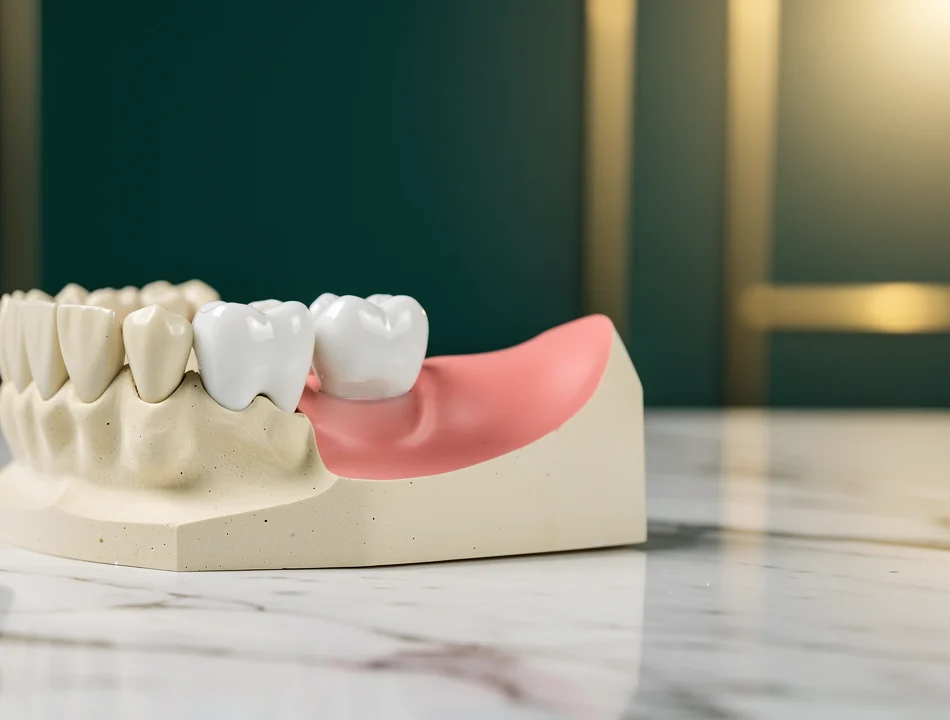
A cantilever bridge is a fixed dental bridge in which the replacement tooth, or pontic, is supported by one or two natural teeth on only one side of the gap, instead of both sides. At Er Dental Clinic in Istanbul, Turkey, it is considered when a suitable supporting tooth exists on just one side.
Written by Er Dental Clinic
Step by step
Support From One Side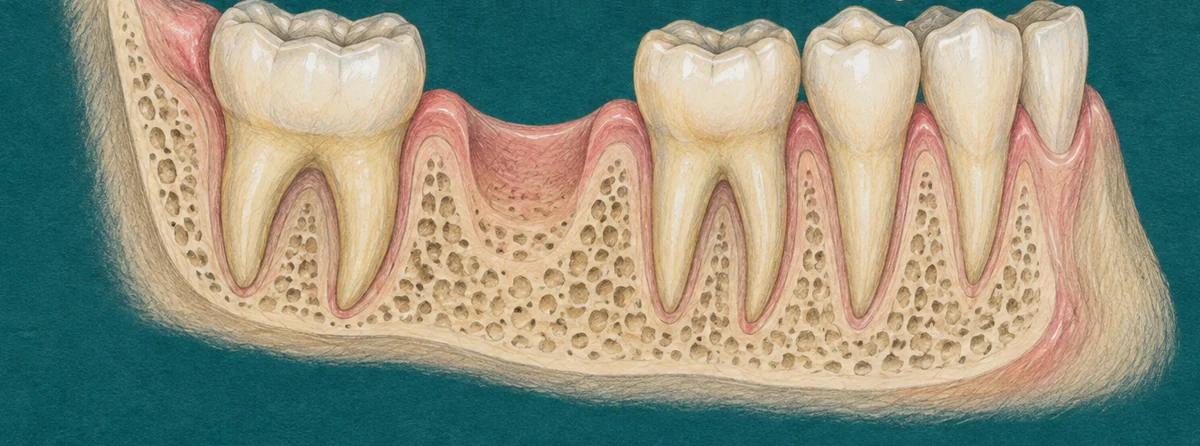
- 1One missing toothA cantilever bridge replaces one missing tooth using support from only one side of the gap.
- 2The supporting tooth is preparedThe supporting tooth is reshaped under local anaesthesia to make room for the crown that will anchor the bridge.
- 3Crown and pontic joinedThe pontic is joined to the crowned supporting tooth and the whole structure is cemented in place.
- 4Load on one sideThe biting load on the pontic is carried by the supporting tooth on one side only.
What Is a Cantilever Dental Bridge?
A cantilever bridge is a type of fixed dental bridge that replaces one missing tooth using support from only one side of the gap, rather than from teeth on both sides as with a traditional bridge. The replacement tooth, called a pontic, is joined to one or two crowned supporting teeth next to it, and the whole structure is cemented in place so it is not removed by the patient.
A cantilever design is one of several ways to build a fixed bridge, alongside the traditional two-sided design and the Maryland resin-bonded design. It tends to be considered for a specific situation: a gap that has a natural tooth on only one side, so there is nothing on the far side to anchor a traditional bridge to.
This page explains when a cantilever bridge is considered, how the one-sided support affects the supporting tooth, and how it compares with our other bridge designs. For an overview of every bridge type we offer, see our dental bridges page.
Cantilever Bridges at a Glance
Support: one or two prepared teeth on a single side of the gap, rather than teeth on both sides.
Suited to: a gap with a supporting tooth on only one side, most often in the front of the mouth or in a lower-load area at the back.
Materials: zirconia or porcelain fused to metal for the pontic and supporting crowns; E-max is generally reserved for short front-tooth spans.
Anaesthesia: preparing the supporting tooth or teeth is carried out under local anaesthesia, in the same way as for a traditional bridge.
When Is a Cantilever Bridge Used?
A cantilever bridge is considered when a patient is missing a single tooth and a natural tooth is present on only one side of that gap, so a traditional bridge, which needs support on both sides, is not straightforward to fit. This situation can arise at the very end of the row of teeth, or where the tooth on the far side of a gap has already been lost or is not suitable to prepare for a crown. Our missing teeth page covers the wider causes of tooth loss and the full range of replacement options, including implants, dentures and other bridge designs; this page focuses on the cantilever bridge design itself.
Who Is a Cantilever Bridge Suitable For?
Front-tooth gaps with light biting load
A cantilever bridge is more often used at the front of the mouth, where the forces involved in biting and chewing are generally lower than at the back.
A strong single supporting tooth, or two teeth joined together
Your dentist checks that the supporting tooth has a healthy root and enough bone support to carry the extra load of the pontic; sometimes two adjacent teeth are joined as a combined support to spread that load.
Patients who cannot or do not want an implant
Where a dental implant is not possible, for example due to insufficient bone or a patient's own preference, a cantilever bridge can be an alternative that avoids that side of the gap needing its own support.
A short span
A cantilever bridge design is generally reserved for a single missing tooth rather than several teeth in a row, since a longer pontic increases the leverage placed on the one supporting side.
Who Might Not Suit a Cantilever Bridge?
A cantilever bridge is generally avoided at the back of the mouth, where chewing forces are highest and the leverage on a single supporting tooth is greatest, unless the supporting tooth and bone are assessed as strong enough. Patients whose only available supporting tooth already has a weakened root, active gum disease, or insufficient bone support are usually advised towards a different option, such as a traditional bridge with support restored on the far side, a dental implant, or a removable partial denture. Where more than one tooth is missing in the same area, a longer span is also usually better supported by an implant or a different bridge design rather than a single-sided cantilever.
Assessment Before a Cantilever Bridge Is Fitted
Before you travel. The process starts with a free online consultation. You send recent photos and, if you have them, X-rays, and our dentists give an initial view on whether a cantilever bridge suits your gap before you book anything.
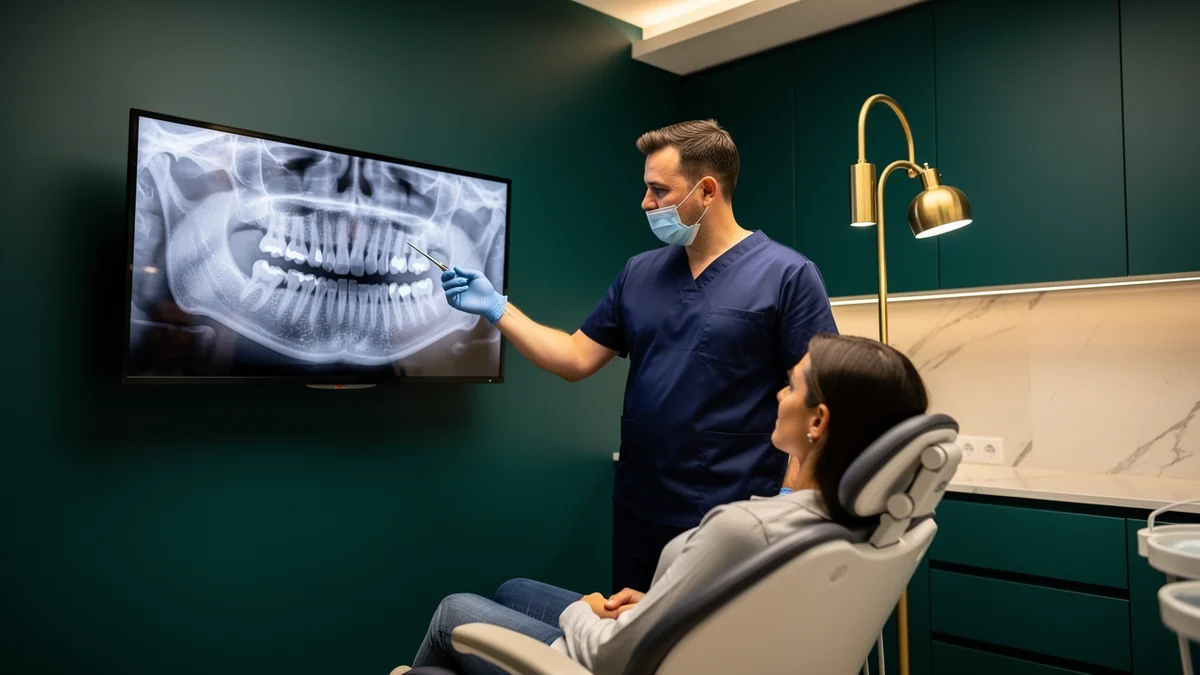
At the clinic. A clinical examination and X-rays confirm the root, bone and gum condition of the tooth or teeth that would support the bridge, and whether the biting load on that side is likely to be manageable.
If cantilever is not the right fit. Where the assessment favours a different design, your dentist discusses a traditional bridge, a Maryland bridge, or a dental implant instead, with the reasons explained before treatment begins.
How Is a Cantilever Bridge Made and Fitted?
Fitting a cantilever bridge follows the same broad sequence as a traditional bridge. The supporting tooth or teeth are reshaped under local anaesthesia, known as preparation, to make room for the crown that will anchor the bridge, and a digital scan or a physical impression is taken of the prepared tooth and the surrounding teeth. A temporary bridge protects the area while the definitive bridge, made from zirconia or porcelain fused to metal, is produced in a dental laboratory, and it is then tried in, checked for fit and bite, and cemented into place.
Which design suits a particular gap depends mainly on whether a natural tooth is present on both sides of it. The simplified illustration below shows how this one factor points towards a cantilever bridge, a different bridge design, or a dental implant; your dentist confirms the right option from your own X-rays.
Which Bridge Design Might Suit Your Gap?
Read this diagram as text
- Is a natural tooth present on both sides of the gap?
- Yes: Dentist assesses a traditional or Maryland bridge
- No: Dentist assesses a cantilever bridge or implant
Aftercare for a Cantilever Bridge
While wearing a temporary bridge
Chew on the opposite side of your mouth where possible and avoid very sticky or hard foods, since a temporary bridge is cemented more loosely than the definitive one.
Once the definitive bridge is fitted
Some mild sensitivity around the supporting tooth is normal for a few days and usually settles by itself. Brush the bridge twice a day as you would a natural tooth.
Cleaning under the bridge
The area under the pontic and around the connector needs deliberate cleaning with superfloss, a floss threader, an interdental brush or a water flosser, since ordinary floss cannot pass through a fixed bridge on its own.
Long term
Keep up regular check-ups so your dentist can review the supporting tooth, the bite, and whether the connector or crown ever feels loose, and let your dentist know promptly if anything changes.
Patient stories
Hear From Our International Patients
Patients from the UK, Romania, France, Ukraine and Russia talk about their treatment at Er Dental Clinic. Each video shows the treatment the patient had.
What to Expect from a Cantilever Bridge
With a well-fitted cantilever bridge, chewing function is restored in the treated area and the pontic is shaded to blend with the surrounding teeth, so it is not obvious in everyday conversation or a smile. Because the bridge is fixed rather than removable, it is cared for in the same way as your natural teeth, with particular attention to cleaning underneath the pontic. Many bridges last for years with good care; how long any individual cantilever bridge lasts depends on the strength of the supporting tooth, your bite, whether you grind your teeth, and how well you keep up cleaning underneath it.
Real patients
Before and After at Er Dental Clinic
Photos of Er Dental Clinic patients. Every case is different, so ask us to see bridge cases similar to yours.
Limitations of Cantilever Bridges
Load falls on one side only. Because the pontic has no support on the far side, the full biting load on that tooth is carried by the supporting tooth or teeth on one side, which is the main reason case selection matters so much.
Generally limited to a single tooth. A cantilever design is usually reserved for replacing one missing tooth rather than a longer run of teeth, since a wider pontic increases the leverage on the supporting side.
Tooth reduction cannot be undone. Preparing the supporting tooth or teeth for their crowns removes a layer of natural tooth structure, and this cannot be reversed once done.
Risks and Possible Complications of Cantilever Bridges
Loosening of the supporting tooth
The leverage from a one-sided pontic can, over time, put extra strain on the supporting tooth, and in some cases the crown or connector can become loose.
Fracture of the supporting tooth or crown
A supporting tooth carrying an uneven load is at a somewhat higher risk of a chip or fracture than a tooth in a traditional, two-sided bridge.
Sensitivity
Temperature sensitivity in the supporting tooth is common in the first days after preparation and usually settles; persistent sensitivity is checked by your dentist.
Gum irritation under the pontic
The gum beneath the replacement tooth can become irritated if cleaning underneath it is not kept up.
Root or nerve problems
In a small number of teeth, especially those with old fillings or heavy loading, the nerve inside the supporting tooth can become irritated and may later need root canal treatment.
Your dentist explains the risks that apply to your specific case, based on your X-rays and bite, before you give your consent.

How We Assess Cantilever Bridges at Er Dental Clinic
Cantilever bridge treatment at Er Dental Clinic is assessed and planned by Dt. Vijdan Aslanoğlu, alongside our other dentists. Whether a cantilever bridge, a traditional bridge, a Maryland bridge or a dental implant suits your gap is confirmed individually from your X-rays and a review of the supporting tooth, and your written treatment plan states which design is proposed and why. You can read more about the dentists who assess bridge treatment on our dentists page.
The clinic holds an International Health Tourism Authorisation Certificate issued by the Republic of Turkiye Ministry of Health (certificate no. ST-6264), which you can check on the e-Devlet document verification service at turkiye.gov.tr/saglik-bakanligi-ebys.
Alternatives to a Cantilever Bridge
If a natural tooth is present on both sides of the gap, a traditional bridge is generally the more established option, since the load is shared between two supporting teeth rather than carried by one side. Where the gap is at the front of the mouth and only minimal preparation of the neighbouring teeth is wanted, a Maryland bridge may be considered instead of preparing a tooth for a full crown. A dental implant is a further alternative where a cantilever bridge is not suitable or not preferred, replacing the missing tooth with its own root rather than relying on a neighbouring tooth for support.
Cantilever Bridges: Frequently Asked Questions
What is a cantilever dental bridge?
A cantilever bridge is a fixed bridge in which the replacement tooth is supported by one or two natural teeth on only one side of the gap, rather than teeth on both sides. It is considered when a suitable supporting tooth is only available on one side of the missing tooth.
Is a cantilever bridge suitable for a front tooth?
Yes, a cantilever bridge is more often used at the front of the mouth, where biting forces are generally lower and a single supporting tooth can more comfortably carry the load. Your dentist confirms suitability from your X-rays and the strength of the supporting tooth.
Can a cantilever bridge be used on back teeth?
A cantilever bridge is used far more selectively at the back of the mouth, since chewing forces there are higher and place more leverage on a single supporting tooth. Your dentist only recommends this for a back tooth after confirming the supporting tooth and bone can manage the load.
What are the risks of a cantilever bridge?
The main risks are extra strain on the single supporting tooth, which can occasionally lead to loosening or a fracture, along with the usual bridge risks of sensitivity, gum irritation under the pontic, and, rarely, nerve problems in the supporting tooth. Your dentist explains which risks apply to your case before treatment.
Cantilever bridge vs traditional bridge: what is the difference?
A traditional bridge is supported by prepared teeth on both sides of the gap, sharing the biting load between two teeth, while a cantilever bridge relies on support from only one side. A traditional bridge is generally preferred whenever a healthy tooth is available on both sides of the gap.
Cantilever bridge vs dental implant: which is better?
Neither option suits every case; a dental implant replaces a missing tooth with its own root and does not rely on a neighbouring tooth, while a cantilever bridge uses an existing tooth for support and can be considered where an implant is not possible or not preferred. Your dentist compares both against your X-rays, bone level and priorities.
How many visits does a cantilever bridge need?
A cantilever bridge typically needs a preparation visit, where the supporting tooth is reshaped and scanned and a temporary bridge is fitted, and a separate fitting visit once the definitive bridge has been made. Your dentist confirms the exact schedule for your treatment plan.
Related Bridge Options
A cantilever bridge is one of several fixed bridge designs offered at Er Dental Clinic. The pages below cover the other options and the wider picture of tooth replacement.
Dental Bridges in Turkey
An overview of every bridge type we offer and how a fixed bridge is planned and priced.
Explore dental bridgesTraditional Bridges
A fixed bridge supported by crowns on both sides of the gap, the most established bridge design.
Explore traditional bridgesMaryland Bridges
A conservative, resin-bonded bridge often used for front teeth with minimal preparation.
Explore Maryland bridgesMissing Teeth
The causes of tooth loss and the full range of replacement options, from bridges to implants and dentures.
Read about missing teethReturning to Daily Life After a Cantilever Bridge
Most patients go back to normal eating and speaking within a day or two of the temporary bridge being fitted, and there is usually no need to take time off work or daily activities during either visit. Some mild sensitivity around the supporting tooth is common in the first few days and settles on its own or with an ordinary painkiller if needed. Once the definitive cantilever bridge is cemented in place, it is treated like a natural tooth for eating, and your dentist explains when it is safe to fly home.
References
- Bridges — American Dental Association (MouthHealthy), 2026
- Dental Bridges — Cleveland Clinic, 2026
- Bridges — Oral Health Foundation, 2026
Send Us Your X-ray for a Cantilever Bridge Assessment
Send us your photos or X-rays for a free online consultation. Our dentists will give an initial view on whether a cantilever bridge, a different bridge design, or a dental implant suits your gap, and reply with a written treatment plan and a clear quote, so you can compare your options before you decide to travel. You can also contact us directly with any questions.
Find the Right Path for You
There are many different conditions and options in this area — browse by topic below, or answer a few questions to see the step closest to your situation.
Explore by Topic
Treatment
3 pages
Dentistry · Esenyurt, İstanbul
Why Er Dental Clinic?
Related Pages
Missing Teeth: Causes, Effects and Replacement Options
Er Dental Clinic: Meet the Dentists Who Plan and Carry Out Your Treatment
Free Online Dental Consultation: Send Your Photos and X-Rays for a Written Plan
Dt. Vijdan Aslanoğlu – Dentist at Er Dental Clinic, Istanbul
Contact Er Dental Clinic
How Much Are Turkey Teeth? Treatment Prices at Er Dental Clinic, Istanbul
Partial Dentures in Turkey: Acrylic, Flexible and Metal-Framework Options
Your treatment plan · 3 short steps
Get your personal bridge plan
Answer a few quick questions — it takes about a minute. Our dentists review your answers and reply with a written treatment plan and a clear price for your case, before you decide anything.
- Your treatmentWhat are you looking for?
- Your timingX-ray, dates and how we reply
- Your detailsSo we can send your plan
What you receive
- A written treatment plan prepared by our dentists
- A clear price for your case before you travel
- No obligation — ask every question first



Your answers are reviewed by our dentist teamErtan Omerov · Enes Yol · Ahmet Mustafa Zeren · Vijdan Aslanoğlu