
How Long Do Turkey Teeth Last and What Decides Their Lifespan
How long do Turkey teeth last? There is no single answer, because it depends on the material, your bite and how well you look after them. A 2026 review reported pooled survival rates of 92.9% to 98.7% for zirconia single crowns up to 10 years, and crowns often last for years with good care.
Medically reviewed by Vijdan Aslanoğlu
How Long Do Turkey Teeth Last According to Studies
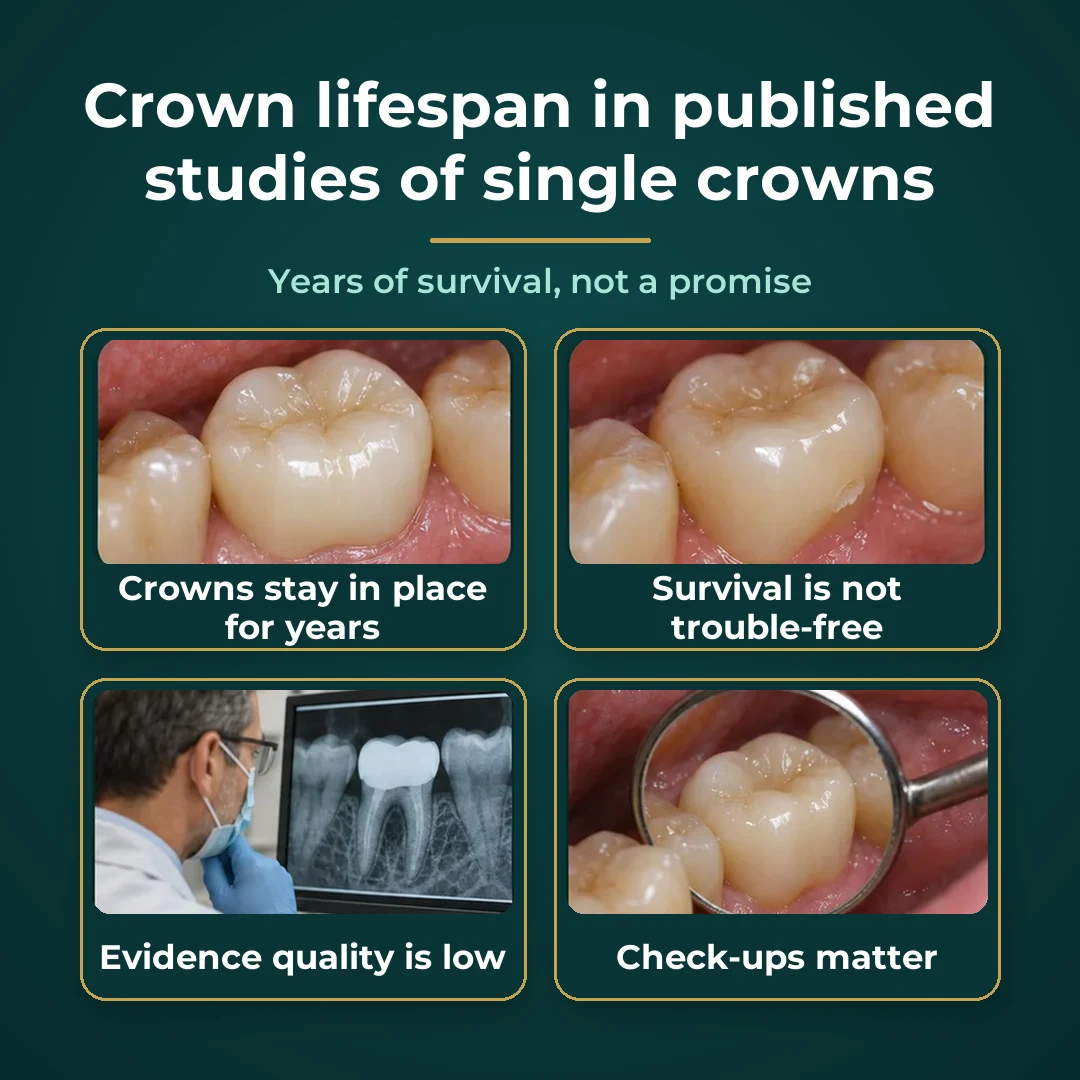
Studies of crowns like those used for Turkey teeth report that most stay in place for years, but no study can promise a figure for your mouth. A 2026 review of zirconia restorations reported pooled survival of 92.9% to 98.7% for single crowns up to 10 years. Survival means the crown stayed in place, not that nothing needed attention.
The same review reported complication rates at 10 years of 12.1% for biological problems and 53.9% for mechanical ones in single crowns. A crown can therefore survive and still have had a chip, a loosening or a repair along the way. The review rated the certainty of its evidence as very low, so these figures show a trend rather than a promise, and check-ups matter as much as the material.
A 2026 review in the International Journal of Prosthodontics reported five-year survival of 96.8% for monolithic zirconia and 98.5% for monolithic lithium disilicate crowns, with fewer ceramic fractures than layered crowns. Our basics guide, what are Turkey teeth, explains the crowns and veneers behind the name.
Patient stories
How Do Patients Describe Their Visit to Er Dental Clinic
Patients describe their own experience at Er Dental Clinic. Individual results vary. These videos were recorded shortly after treatment and do not show long-term results.
How Long Do Veneers Last Compared With Crowns
Veneers and crowns are studied separately, so their survival figures come from different reviews and cannot be compared directly. A 2025 meta-analysis of ceramic laminate veneers reported pooled survival of 96.13% for feldspathic, 93.70% for leucite-reinforced and 96.81% for lithium disilicate ceramics at about 10.4 years.
The same analysis found no long-term data for zirconia veneers, so we do not quote a figure for them. The Oral Health Foundation says veneers can last many years if they are looked after properly, and that small chips may be repaired. Pooled figures describe groups of patients, not a single smile, so your own result depends on the tooth, the material and your habits.
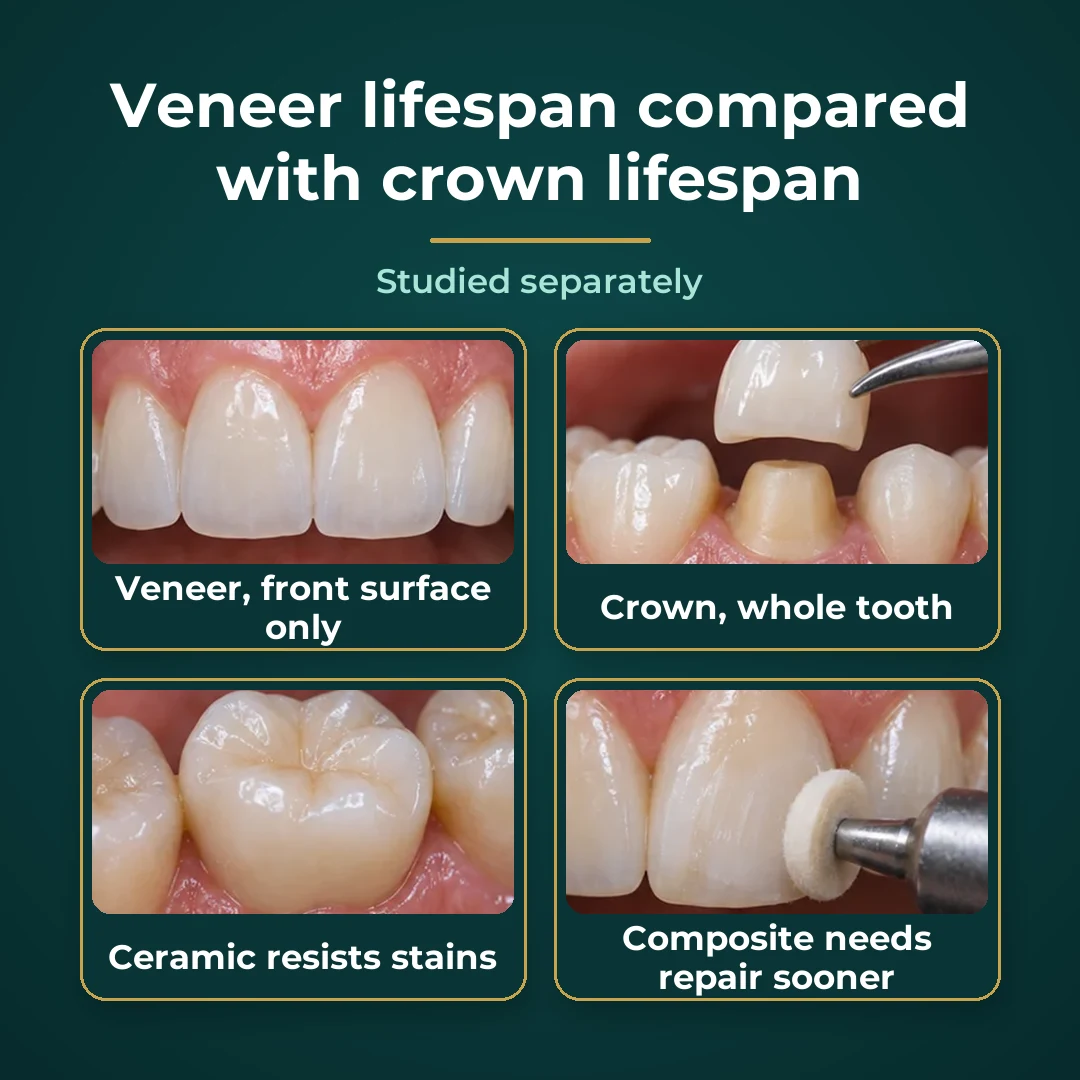
A dental veneer covers the front surface only, while a dental crown covers the whole tooth, so each carries different risks. Composite veneers are a separate case. They can be repaired in the mouth, but resin picks up stains more easily than ceramic, and composite veneers generally need polishing, repair or replacement sooner than ceramic ones.
What Makes Turkey Teeth Last Longer
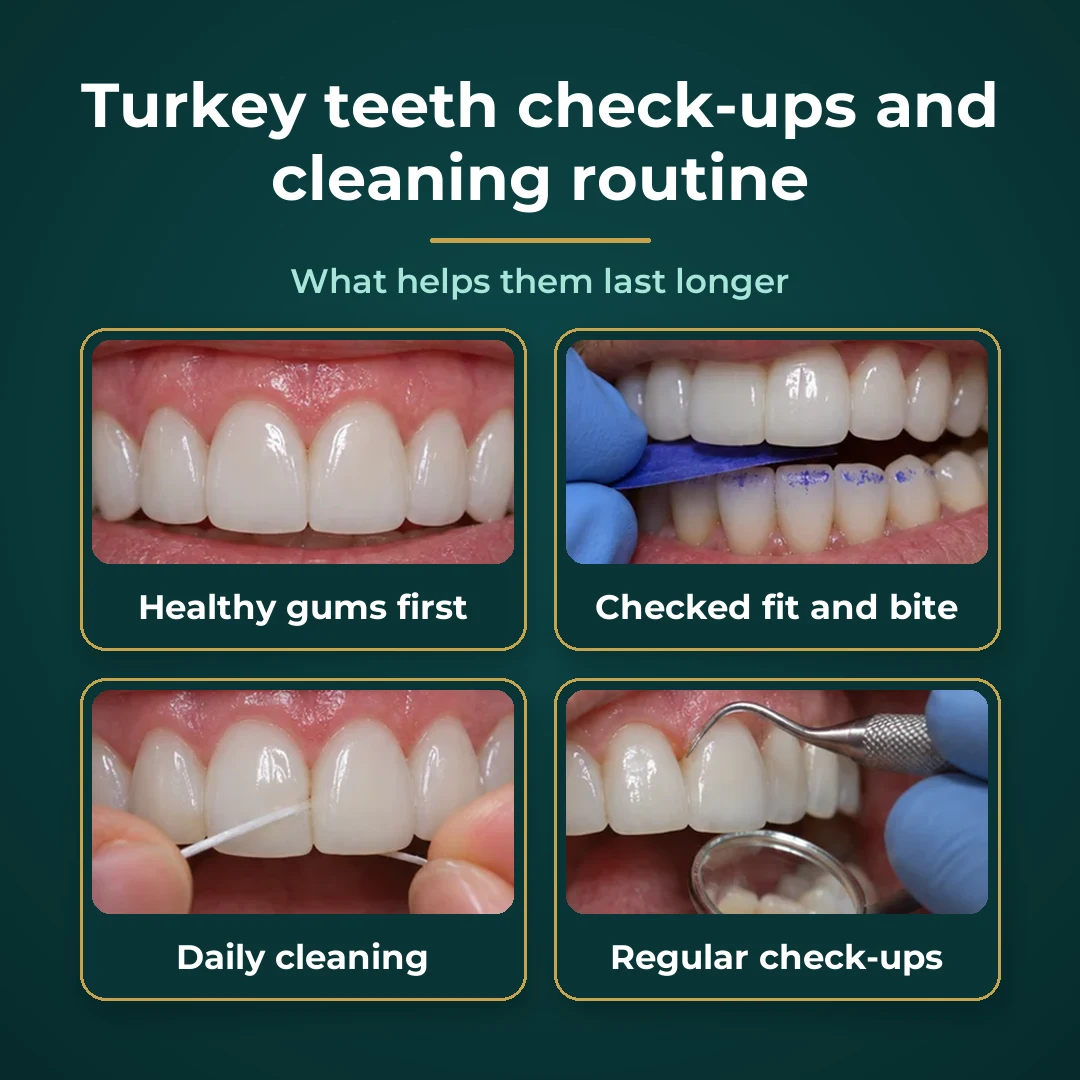
Four things help: healthy teeth and gums before treatment, a well-fitting restoration with a checked bite, careful daily cleaning and regular check-ups. The Oral Health Foundation says good daily cleaning and regular check-ups help veneers last longer, and the same habits protect crowns.
- Healthy teeth and gums when the restoration is fitted
- A fit and bite that are checked before cementing or bonding
- Brushing twice a day with fluoride toothpaste and cleaning between the teeth
- Regular check-ups and professional cleaning
Material choice plays a part, but how a crown behaves also depends on the tooth position, your bite and your routine at home. Our zirconium crown page explains why zirconia is often chosen for back teeth, which do most of the chewing work, and our guide on zirconia or E-max explains that neither material always outlasts the other in every mouth. Your dentist weighs this when choosing between a strong material and a more translucent one.
What Aftercare Do Turkey Teeth Need at Home
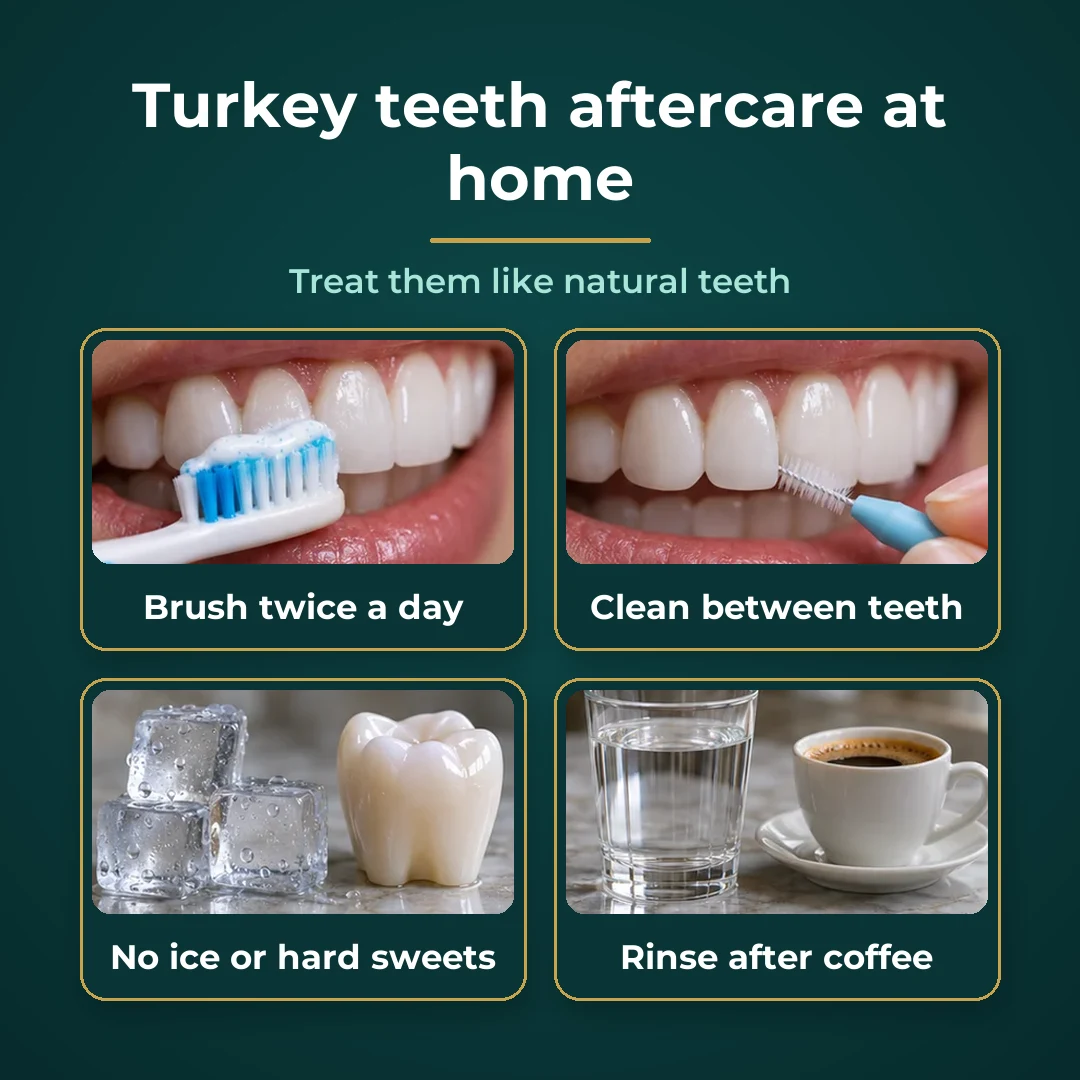
Treat crowns and veneers like natural teeth: brush twice a day with fluoride toothpaste, clean between the teeth with floss or interdental brushes and keep your check-ups, as the Leeds Teaching Hospitals leaflet advises. Your dentist also explains any extra steps for your own plan.
- While you wear temporary restorations, chew on the opposite side where possible and avoid very sticky or hard foods, because temporaries are cemented more loosely
- Avoid biting directly into ice or hard sweets with any ceramic crown or veneer
- Rinse with water after coffee, tea or red wine, because they can mark composite veneers and the edges of any veneer
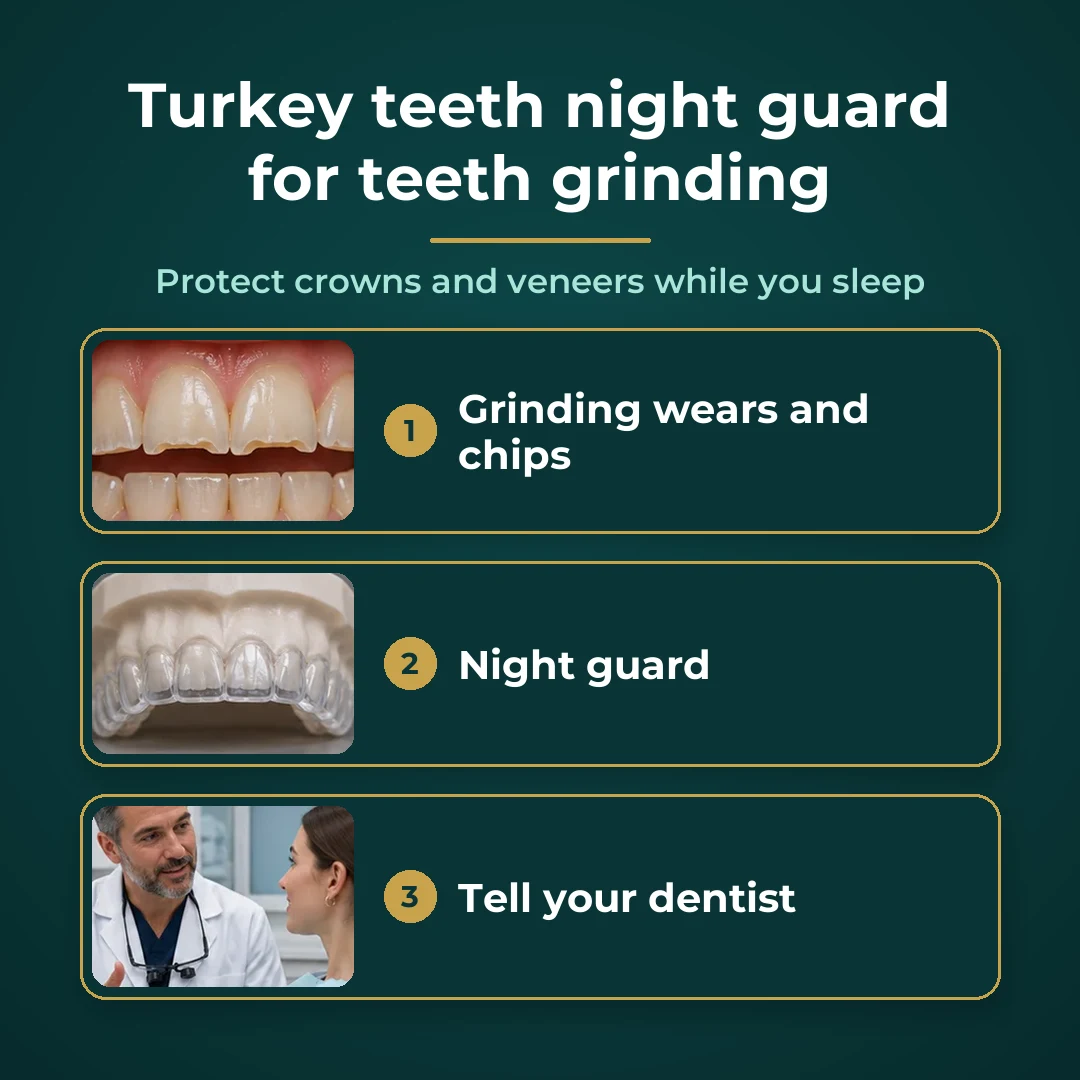
- Wear the night guard your dentist recommends if you grind or clench
Some mild sensitivity to hot or cold is common at first and usually settles on its own. Tell your dentist promptly if a crown ever feels loose, the bite feels uneven or sensitivity does not settle.
What Shortens the Life of Turkey Teeth
Heavy grinding, biting hard objects, poor cleaning and missed check-ups can all shorten the life of crowns and veneers. Decay can also start at the edge of a restoration, because the crown or veneer itself cannot decay but the tooth underneath can.
Grinding and clenching can chip or loosen restorations. The American Dental Association lists chipped or cracked teeth and worn spots among the signs of grinding, and says a dentist may recommend a night guard. Very thin veneer shells carry more risk of chipping under repeated heavy force.
Plaque left along the edge of a restoration can irritate the gum and let decay start, so daily cleaning matters, and so does telling your dentist about any teeth grinding. If you already have symptoms, our guides on zirconia crown problems and Turkey teeth gone wrong explain what to look for and what to do next.
Do Turkey Teeth Last Forever
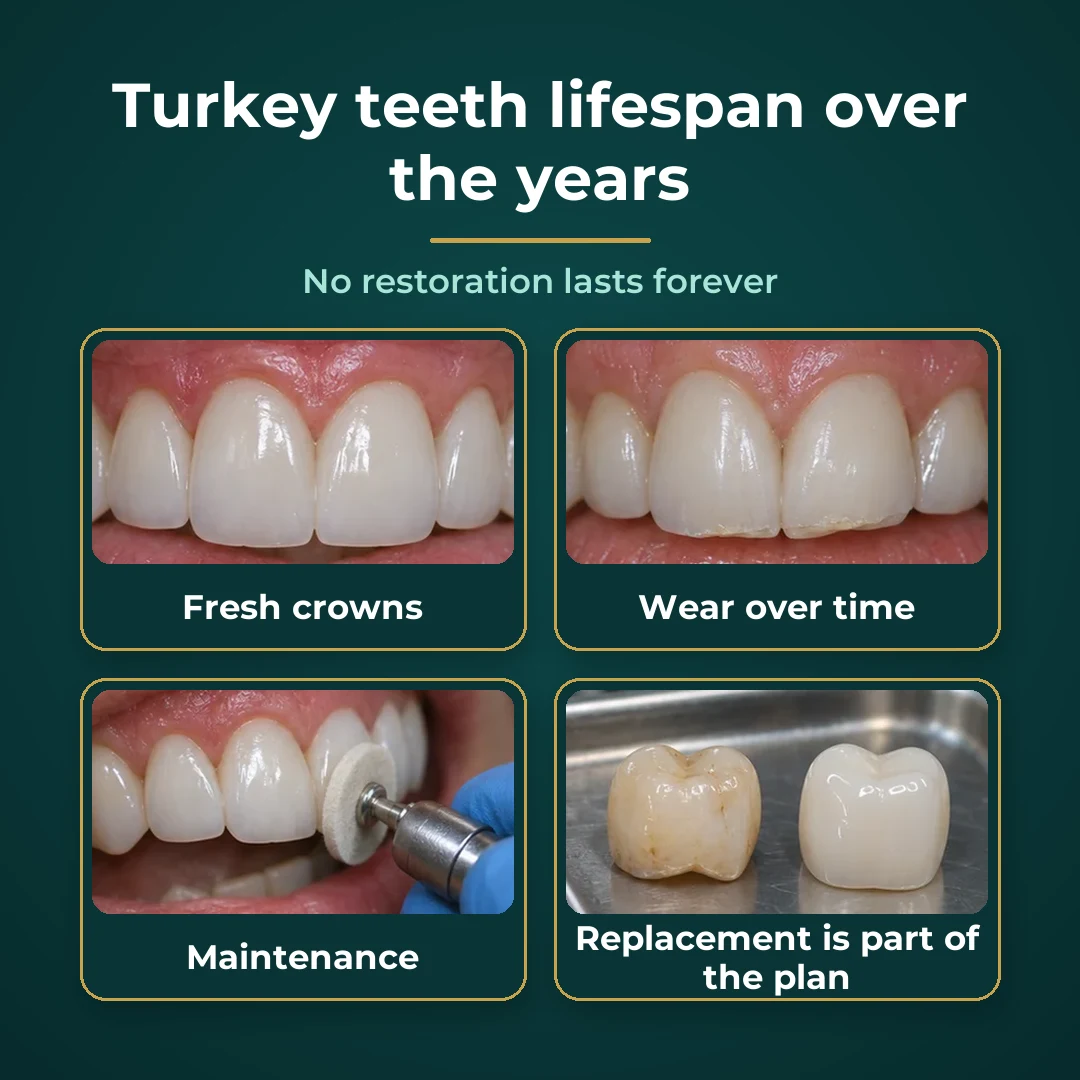
No, no restoration lasts forever, wherever it was made. A crown or veneer is a manufactured cover for part of a living tooth, and it can wear, chip, loosen or need replacing as the years pass. Good care and regular check-ups help it last for years, but nobody can honestly give a lifetime figure.
That is why the decision should be made with the long term in mind. Preparing a tooth for any crown removes a layer of natural tooth structure that cannot be put back, and most ceramic veneers need a thin layer of enamel removed too. A restoration you will need to maintain and eventually replace is part of that choice.
Ask your dentist what upkeep to expect, how a restoration would be replaced and what that involves before you agree to treatment. Your treatment plan states which material is proposed and why.
When Do Turkey Teeth Need Replacing
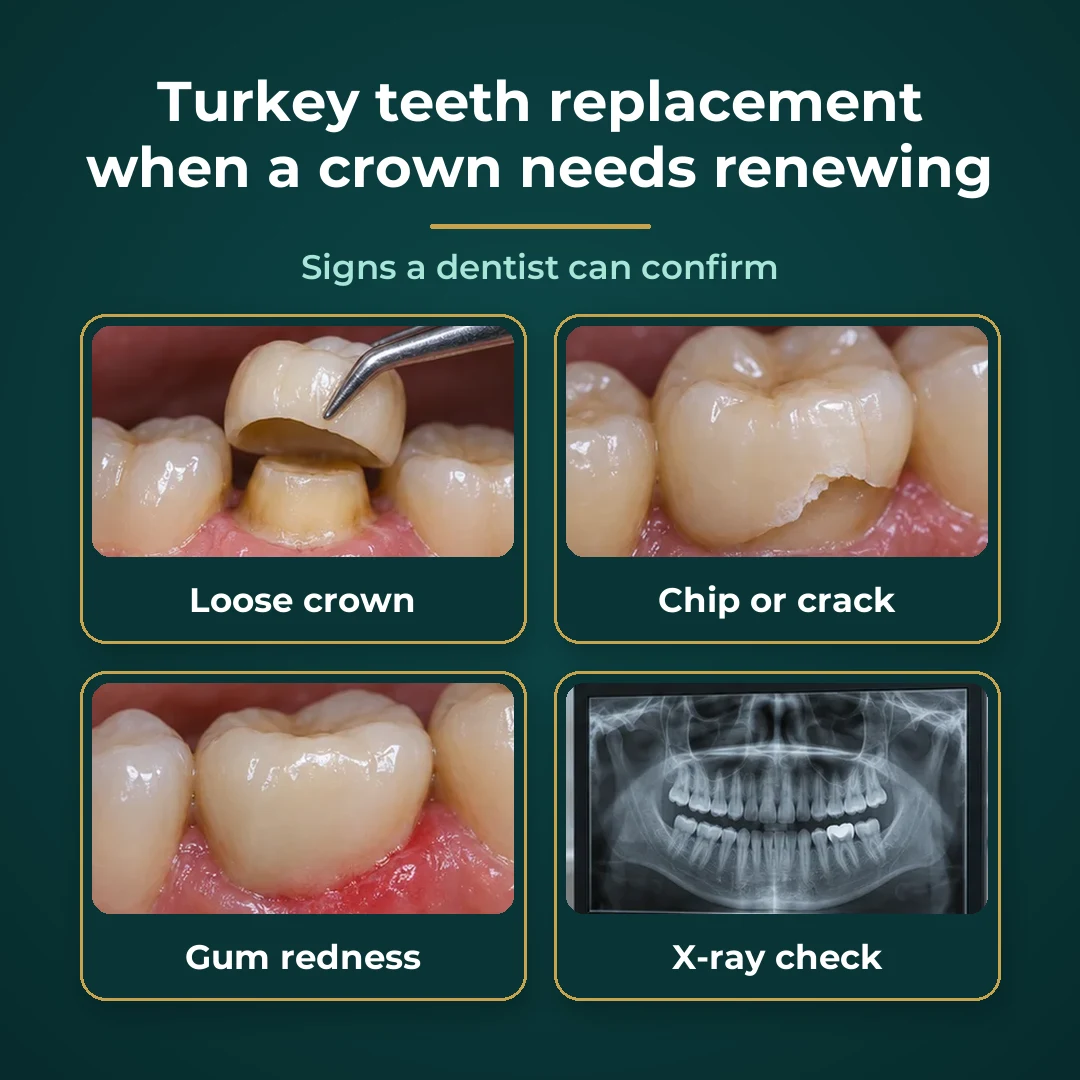
A crown or veneer may need replacing when it is cracked, loose, worn through, decayed underneath or no longer suits your smile, and only a dentist can confirm that after an examination. The Oral Health Foundation says small chips on a veneer may be repaired, and a small chip on a crown can sometimes be polished or repaired too.
These signs may point to a problem that a dentist can confirm after examination:
- A crown or veneer that feels loose or moves
- A chip, crack or rough edge that catches your tongue
- Sensitivity or discomfort that does not settle
- Redness or swelling of the gum around the edge
- A colour or shape that no longer suits you
To decide, your dentist examines the restoration and the tooth under it, checks your bite and gums and takes X-rays. A panoramic X-ray and, where your dentist needs it, a CBCT scan are part of planning. If you wonder how much tooth was prepared when your crown was made, our guide on Turkey teeth shaved down explains tooth preparation.
How Is Follow-Up Arranged After You Fly Home
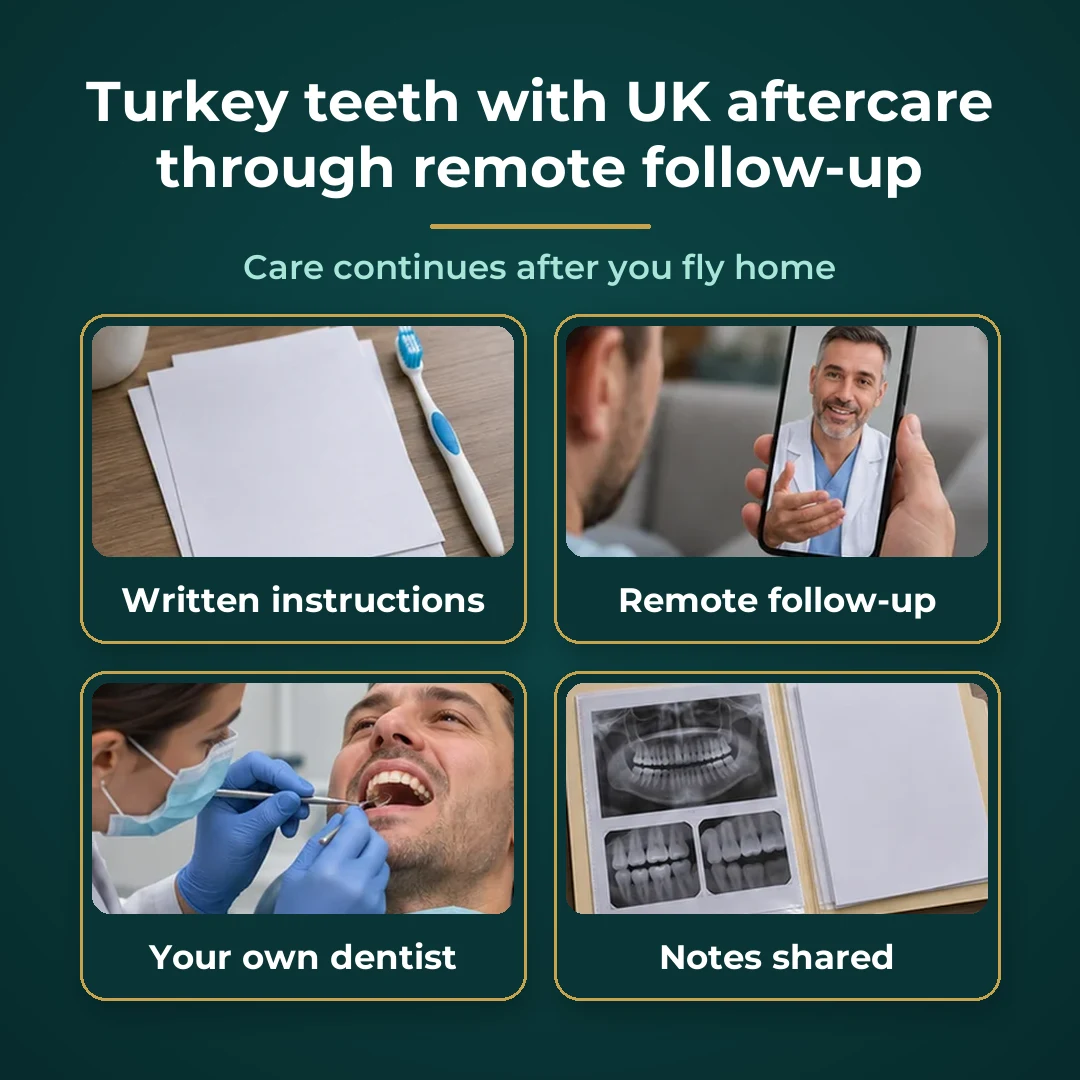
Before you leave Istanbul you receive aftercare instructions and your treatment documents in writing, and after you return we stay in touch for remote follow-up. Your own dentist at home can carry out routine check-ups and cleaning, either instead of or alongside visits to us.
The General Dental Council advises asking who you can contact for advice after treatment and telling your own UK dentist about your plans in case of later complications. The NHS treatment abroad checklist adds that you should be clear how your aftercare will be coordinated and discuss how your medical notes are passed to the overseas team.
If you are thinking of returning for a check-up or a replacement, you can start with a free online consultation. Send photos of your teeth, and any X-ray you have, on WhatsApp or through the contact form, and our dentists reply with advice.
Treatment is planned by Dt. Vijdan Aslanoğlu, a dentist who works on crowns and veneers at Er Dental Clinic, alongside our other general dentists. Patients describe their own experience on our reviews page, but videos recorded soon after treatment are not evidence of long-term results.
Do Turkey Teeth Stain or Change Colour Over Time
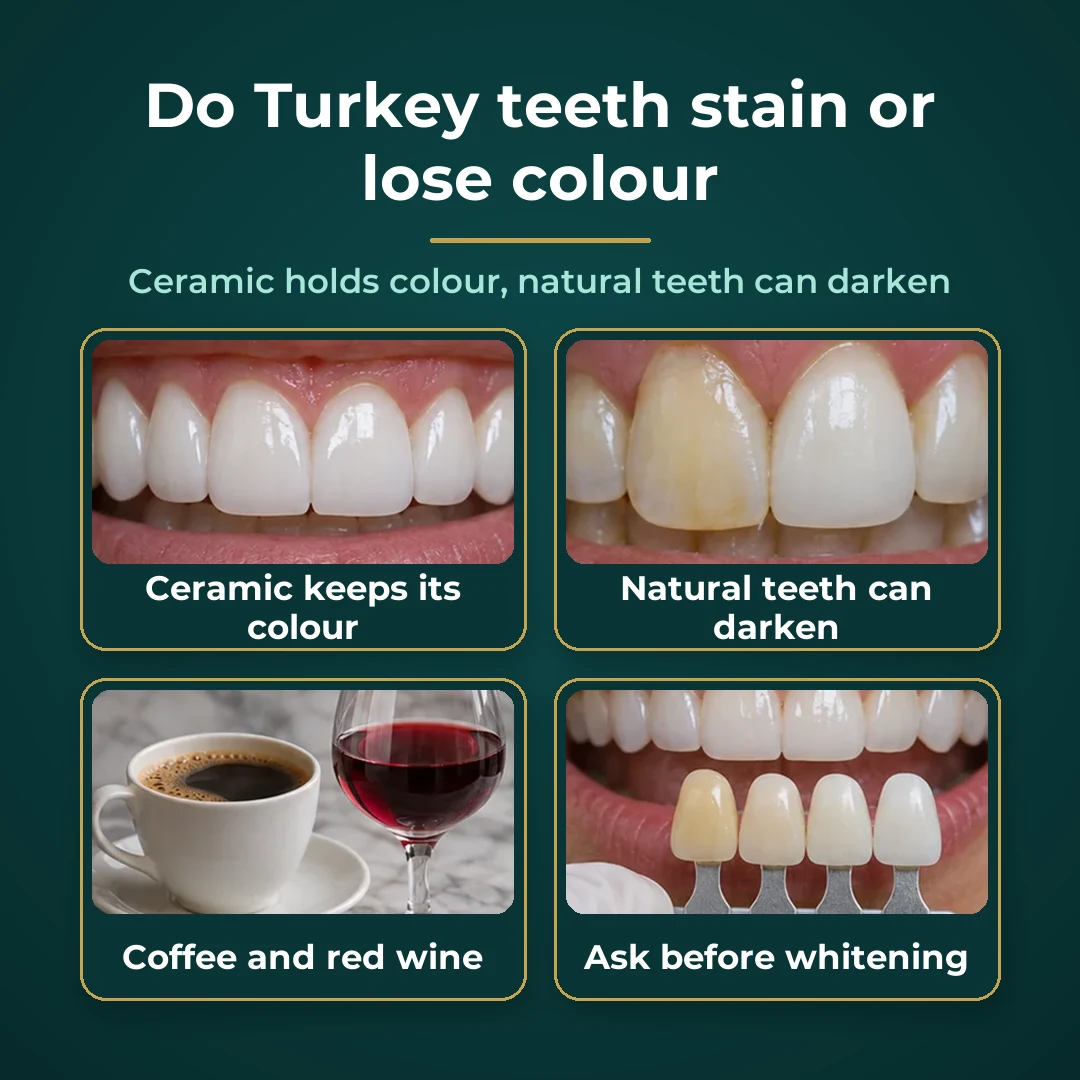
Ceramic crowns and veneers resist staining and keep their colour well, but they do not change shade with whitening, and the natural teeth beside them can darken. Resin (composite) veneers pick up stains more easily than ceramic. Coffee, tea and red wine can also mark the edges of any veneer.
This can leave a mismatch over time. If your natural teeth darken, or you whiten them later, the crowns or veneers may no longer match exactly, so talk to your dentist before you start professional teeth whitening. Whitening done before treatment is built into the shade choice.
Because zirconia contains no metal, there is no risk of a grey line showing at the gum, as can happen over time with porcelain fused to metal crowns. If you are weighing a replacement or a new crown, our price list shows the per-unit price of each crown and veneer material, and the band below shows our zirconia crown price.
Ask a Dentist About Turkey Teeth Aftercare
If you are thinking about crowns or veneers in Istanbul, or you already have them and want advice, send us clear photos of your teeth and an X-ray if you have one. Our dentists reply at no charge, and you can ask them anything about upkeep before you decide.
Turkey Teeth Lifespan Questions Patients Ask
Can Turkey teeth be replaced?
Yes. A crown or veneer can be replaced, but your dentist first examines the tooth underneath and takes X-rays to see whether replacing it, repairing a small chip or treating another problem is the right step. Replacement is planned like the first treatment, with a check of your gums, bite and the condition of the tooth.
Can you whiten Turkey teeth?
Whitening changes natural teeth only. Ceramic crowns and veneers keep the shade they were made in, so whitening can leave them looking mismatched. If you want lighter teeth overall, whitening is done before the shade is chosen. Talk to your dentist before using any whitening product.
How often should I have check-ups after Turkey teeth?
Your dentist sets the interval for you, based on your gums, your bite and the materials used. Regular check-ups and professional cleaning are advised for crowns and veneers, either with us or with your own dentist at home. Ask your dentist which interval suits you before you fly home.
Do I need a night guard after Turkey teeth?
Not everyone does. If you grind or clench, your dentist may recommend one to protect crowns and veneers while you sleep. The American Dental Association notes that guards sold online and in stores may not give the same protection as one made for you, so ask your dentist.
Does grinding your teeth shorten the life of Turkey teeth?
It can. Heavy grinding or clenching can chip or loosen crowns and veneers, and the American Dental Association lists chipped, cracked or worn teeth among its signs. Your dentist considers grinding when choosing the material and may suggest a night guard, so mention it before treatment starts.
Can I fly home straight after getting crowns?
Your dentist tells you when it is safe to fly home, and that depends on your own plan. Once the final crown is cemented it is treated like a natural tooth for eating and cleaning. While you wear temporary crowns, avoid very sticky or hard foods, because temporaries are cemented more loosely.
References
- Clinical outcomes of zirconia dental restorations: A systematic review and meta-analysis — Journal of Dentistry (PubMed PMID 42575241), 2026
- Survival, failure, and complication rates of metal-ceramic, veneered, and monolithic all-ceramic tooth-supported single crowns, Part 1 — International Journal of Prosthodontics (PubMed PMID 41489982), 2026
- Survival and Complication Rates of Feldspathic, Leucite-Reinforced, Lithium Disilicate and Zirconia Ceramic Laminate Veneers: A Systematic Review and Meta-Analysis — Journal of Esthetic and Restorative Dentistry (PubMed PMID 39523553), 2025
- Crowns (patient information leaflet) — Leeds Teaching Hospitals NHS Trust, 2025
- Veneers — Oral Health Foundation, 2026
- Teeth Grinding — American Dental Association (MouthHealthy), 2026
- Going abroad for dental treatment — General Dental Council (GDC), 2026
- Treatment abroad checklist — NHS, 2023
Related Pages
Get your free online consultation
Send us a short message with your question, and photos or X-rays if you have them. Our dentists review your case and reply with a personalised treatment plan — send it by e-mail or WhatsApp — your message is not stored on our server.
A short sentence is enough; no medical terms needed. What you write is only sent when you send it; this page stores no information.