
Which Zirconia Crown Problems Happen and How Are They Prevented
Zirconia crown problems can include wear on the opposing tooth, a crown coming loose, chipping, gum irritation or a bite that feels too high. Each has a usual cause and a practical way to reduce the chance, such as a bite check, good cleaning and a night guard if you grind. Tell your dentist early.
Medically reviewed by Vijdan Aslanoğlu

Can Zirconia Crowns Wear Down Opposing Teeth
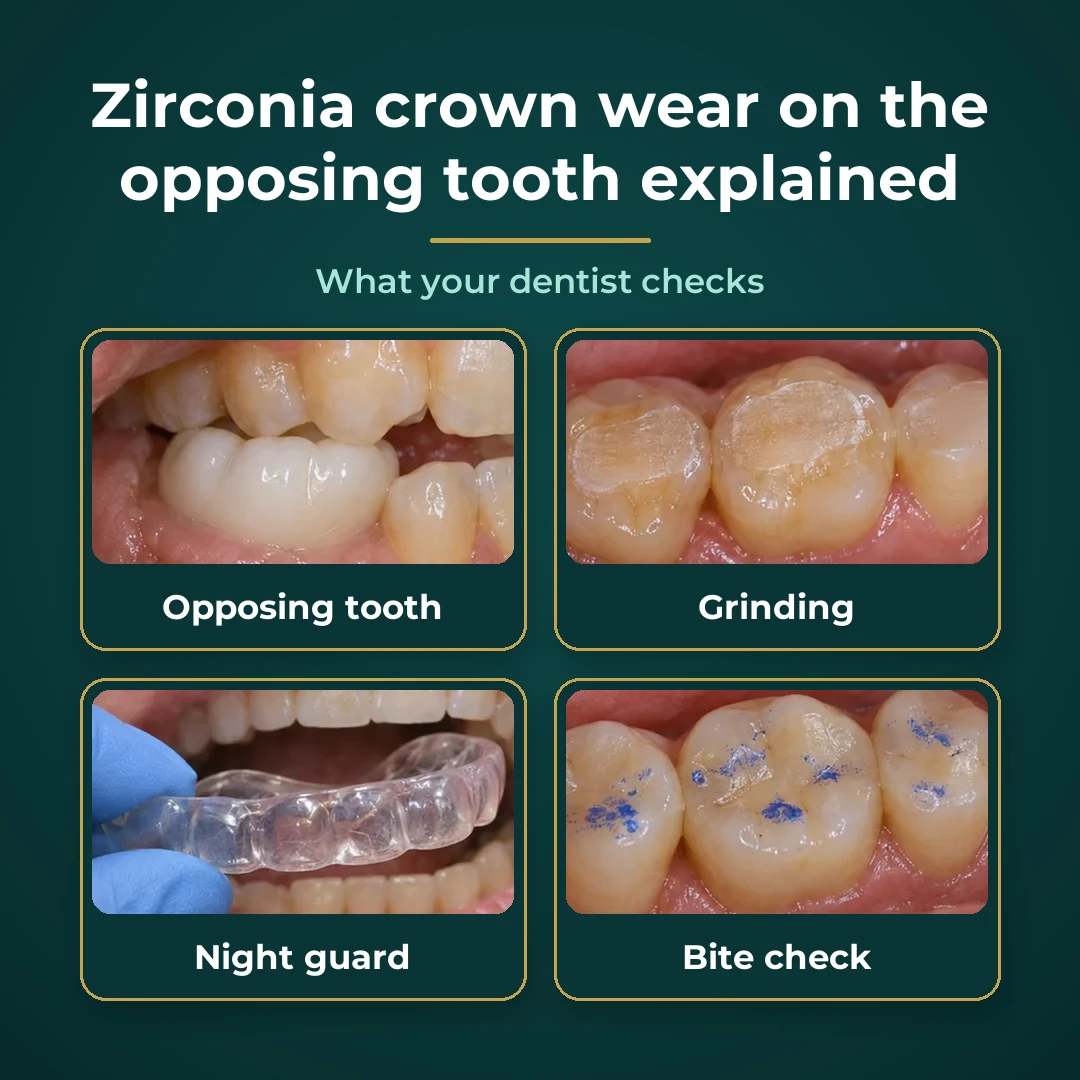
Zirconia can wear the opposing tooth, but the evidence is mixed. A 2024 network meta-analysis of controlled clinical trials found that zirconia crowns wore opposing enamel more than natural teeth did over up to 24 months, though less than metal-ceramic crowns. A 2022 review reported that zirconia caused the least wear of the ceramics it compared.
The studies are small, follow-up is short and the authors of the 2024 analysis call for more trials, so no review can tell you what will happen in your own mouth. What a dentist can do is look at how your teeth meet, whether you grind or clench, and which tooth the crown will bite against.
Before the crown is cemented, the fit, shade and bite are checked, and the authors of the 2024 analysis note that the wear a crown material causes should be evaluated by the dentist. A night guard is worth asking about if you grind your teeth, because the American Dental Association notes that a dentist may recommend one to protect the teeth during sleep. Tell your dentist if the bite feels uneven, so that it can be checked.
Patient stories
How Do Patients Describe Their Crown Appointments
Patients describe their own experience at Er Dental Clinic. Individual results vary.
Why Do Zirconia Crowns Come Off
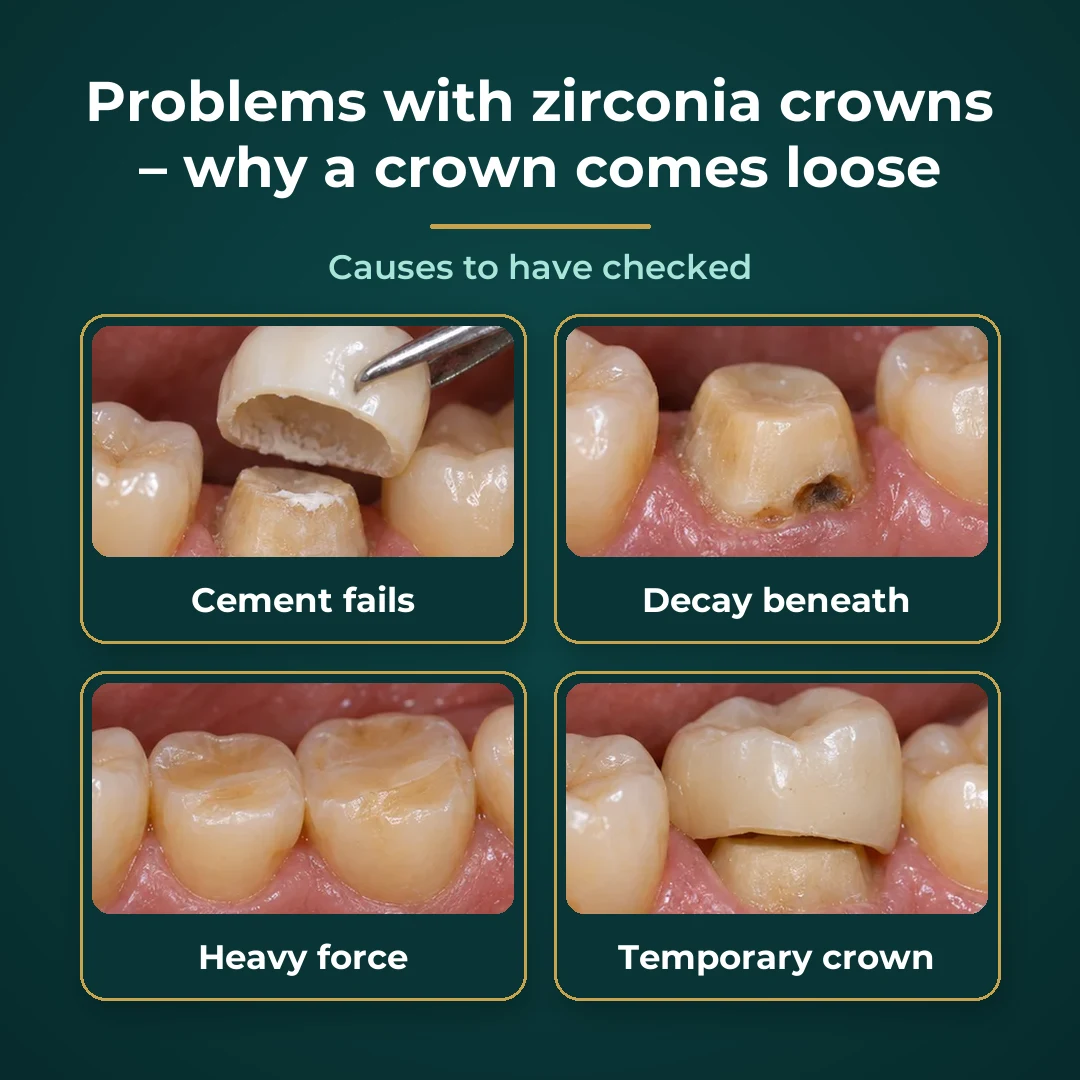
A zirconia crown can come off if the cement holding it fails, if the tooth underneath decays or if the crown takes repeated heavy force, for example from grinding without protection. The crown is fixed to the tooth with dental cement or a bonding material, so any of these can let it loosen over time.
A crown that has loosened can be a sign of something else, such as decay in the tooth beneath it or heavy grinding, so it is worth finding out why before the crown is cemented back. Your dentist can examine the tooth, check the bite and tell you whether the same crown can be recemented, which is possible if the tooth underneath is sound, or a new one is needed.
A temporary crown is cemented more loosely than the final one, so it can come off between visits; if that happens, keep it safe, avoid sticky foods and contact us rather than waiting. Once the final crown is cemented, daily cleaning, regular check-ups and a night guard if you grind all help protect it. How much of the tooth is prepared is covered in our article on Turkey teeth shaved down.
Can Zirconia Crowns Chip or Crack
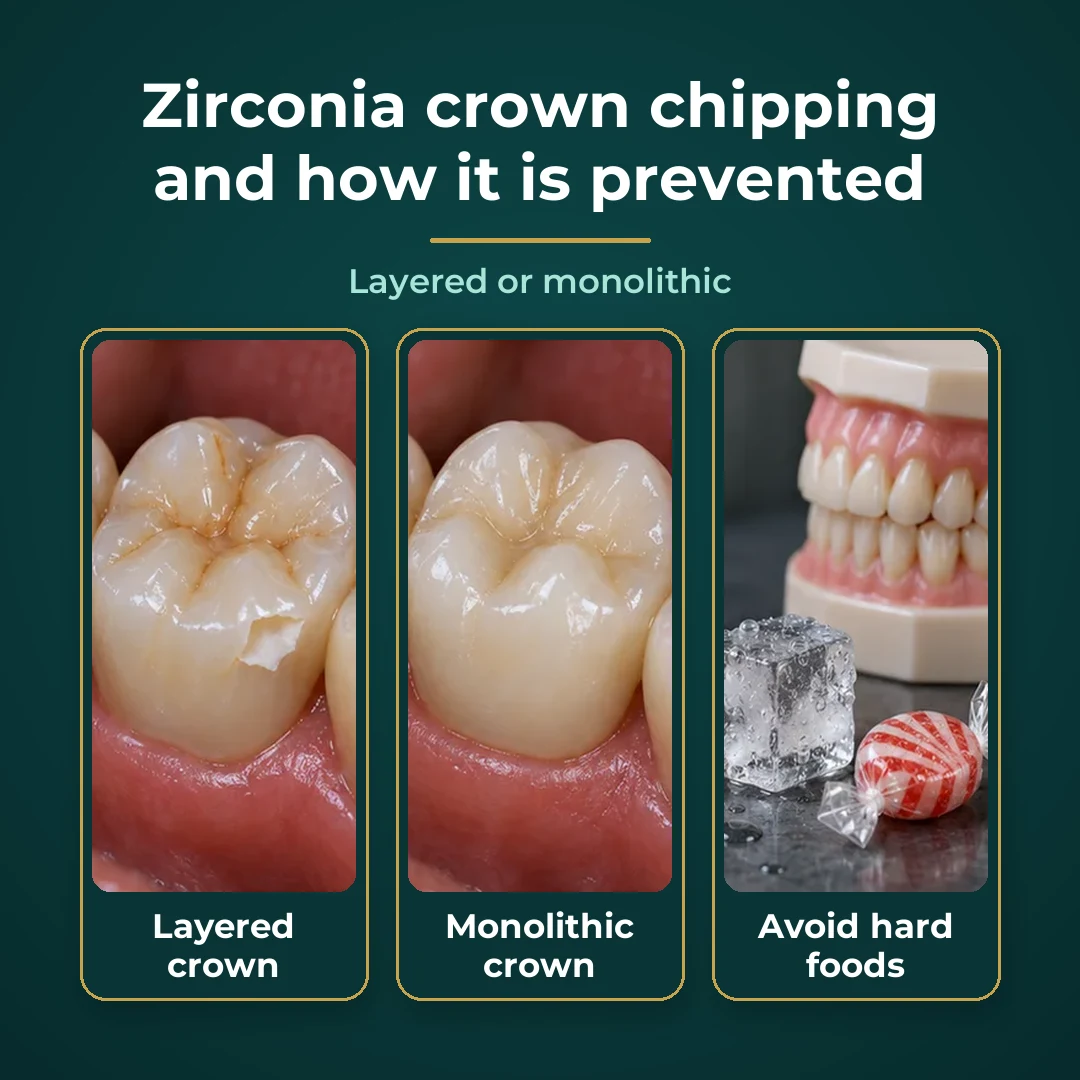
Yes, though the risk depends on the type of zirconia. A 2026 meta-analysis reported significantly fewer ceramic fractures and chipping with monolithic zirconia and lithium disilicate crowns than with veneered crowns, which have a porcelain layer over a core such as zirconia. Cleveland Clinic notes that layers of ceramic can chip away over time.
A 2022 review found that, among technical failures of veneered zirconia crowns and bridges, fracture or chipping was about four times more likely than loss of retention, although most of its 52 studies had an unclear risk of bias. The same review reported relatively high success and survival rates for zirconia crowns overall. The zirconia core itself is very strong, and on a layered crown it is the porcelain surface that can chip.
Ask your dentist whether your crown will be monolithic or layered, since your treatment plan states which crown material is proposed and why. Avoid biting directly into ice or hard sweets with any ceramic crown, and mention grinding, which adds force. How long a crown lasts overall is covered in our guide on how long do Turkey teeth last.
Why Do Gums Get Irritated Around a Zirconia Crown
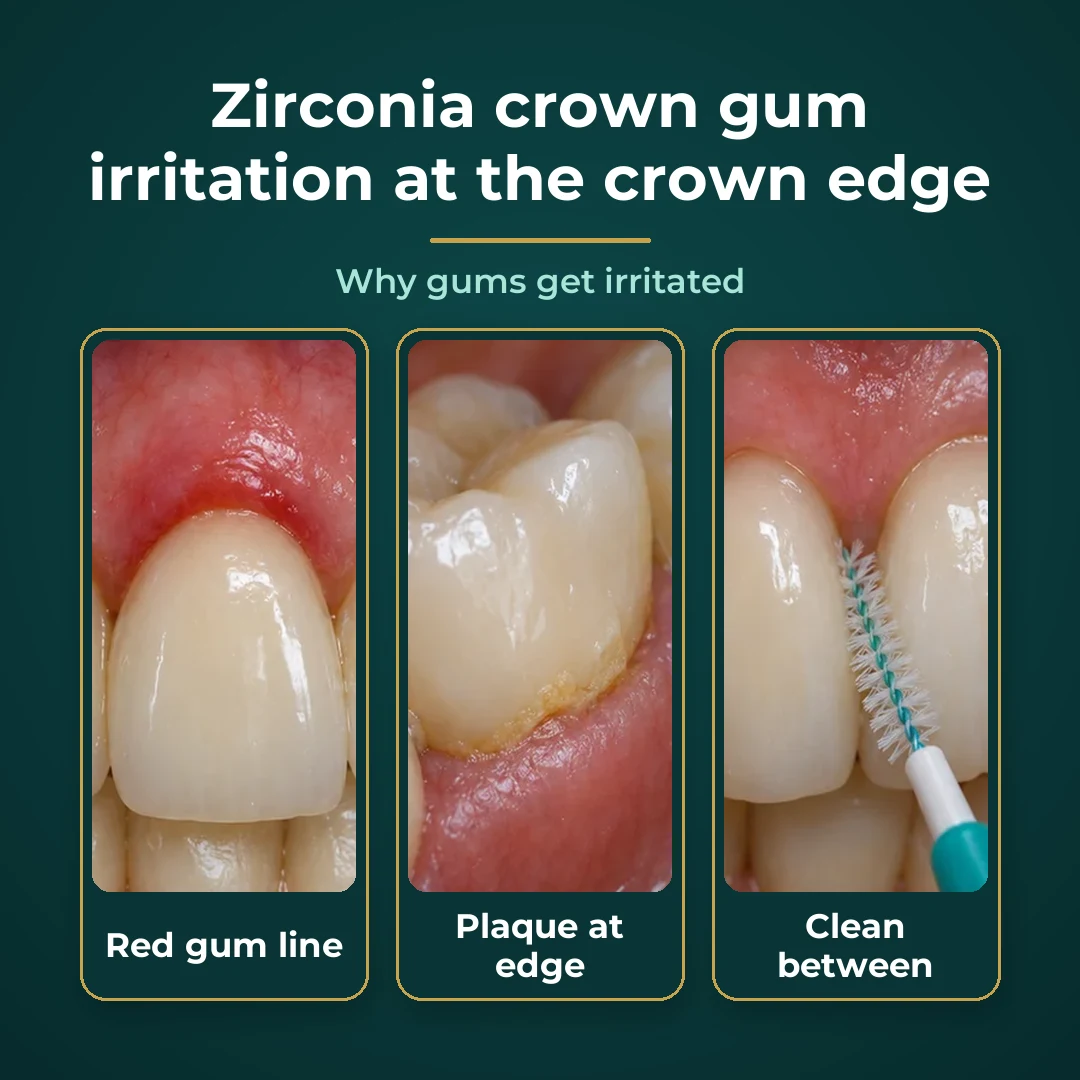
The gum around a new crown can be mildly irritated for a short time while it settles, and this usually improves with normal brushing and flossing. Irritation that does not settle can point to plaque collecting at the crown edge, a poorly fitting margin or gum disease that was already there, which a dentist can confirm after examination.
A 2022 narrative review explains that a poorly fitting crown margin can increase plaque build-up, sensitivity, recurrent decay and gum problems. The same review says the condition of the gums and the person's oral hygiene should be assessed before prosthetic treatment starts. It is a narrative rather than a systematic review, so it carries less weight than a meta-analysis.
That is why a clinical examination and X-rays come first, to confirm the condition of the tooth and the surrounding gum and bone. At home, brush the crown twice a day and clean between the crown and its neighbours with floss or an interdental brush. A sharp edge that bothers your gum or tongue is worth reporting, because Cleveland Clinic lists it as a warning sign.
Can You Get Decay Under a Zirconia Crown
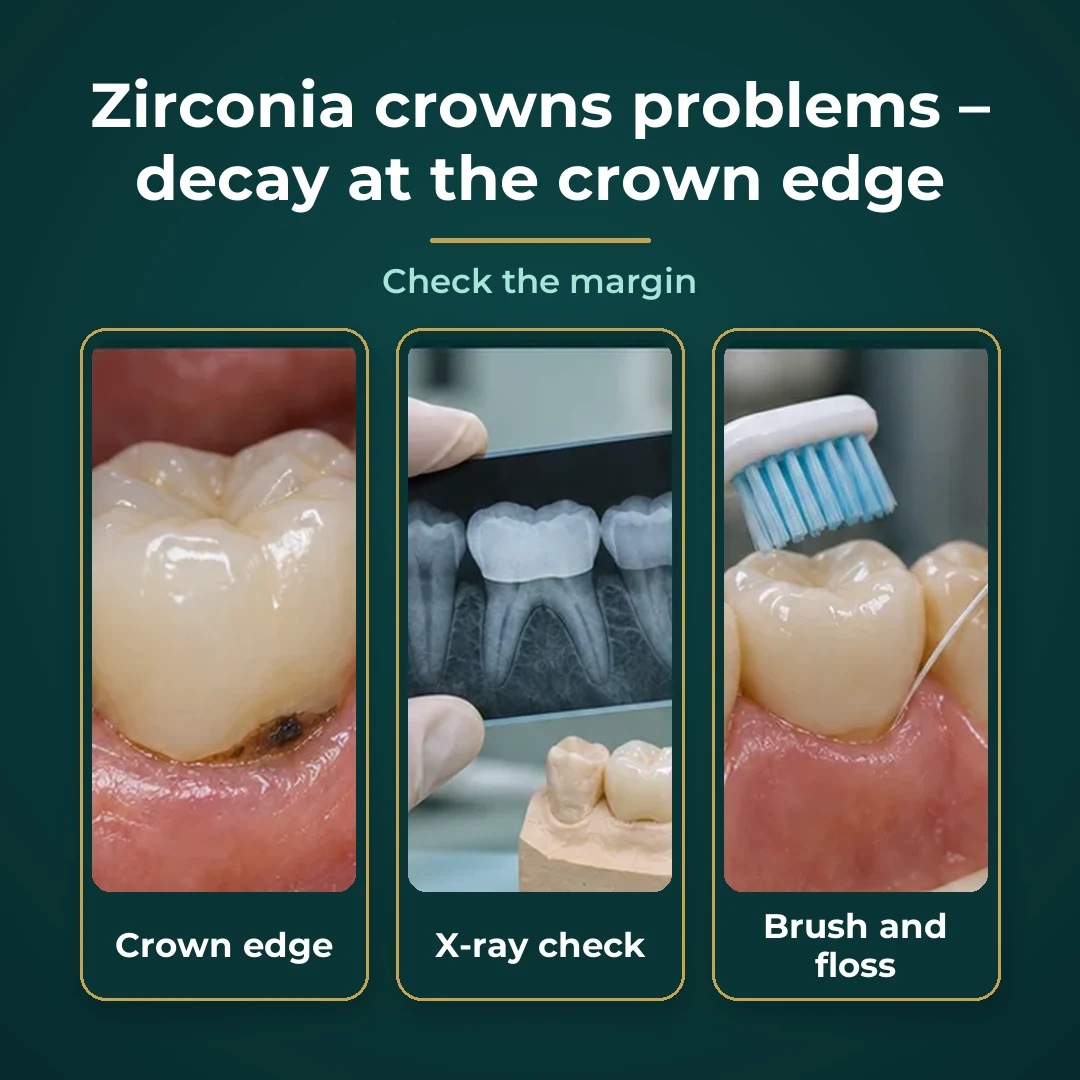
A dental crown cannot decay itself, but the natural tooth underneath it can, especially at the edge where the crown meets the tooth. Cleveland Clinic notes that a crown that does not fit properly can trap bacteria and lead to decay. This is why a crown is not a reason to relax your cleaning routine.
Decay under a crown can be hard to notice yourself, because the crown covers the tooth. Regular check-ups let your dentist review the crown, the gum line around it and your bite. If a crown loosens, report it early so the tooth beneath it can be checked.
To reduce the chance, brush twice a day and clean between your teeth daily. Before treatment, the tooth is examined and X-rays confirm its condition, including whether a filling build-up or root canal treatment is needed before the crown is made. Tell your dentist if the edge of the crown feels rough or the tooth becomes sensitive to hot and cold again.
Can a Zirconia Crown Match the Colour of Your Other Teeth
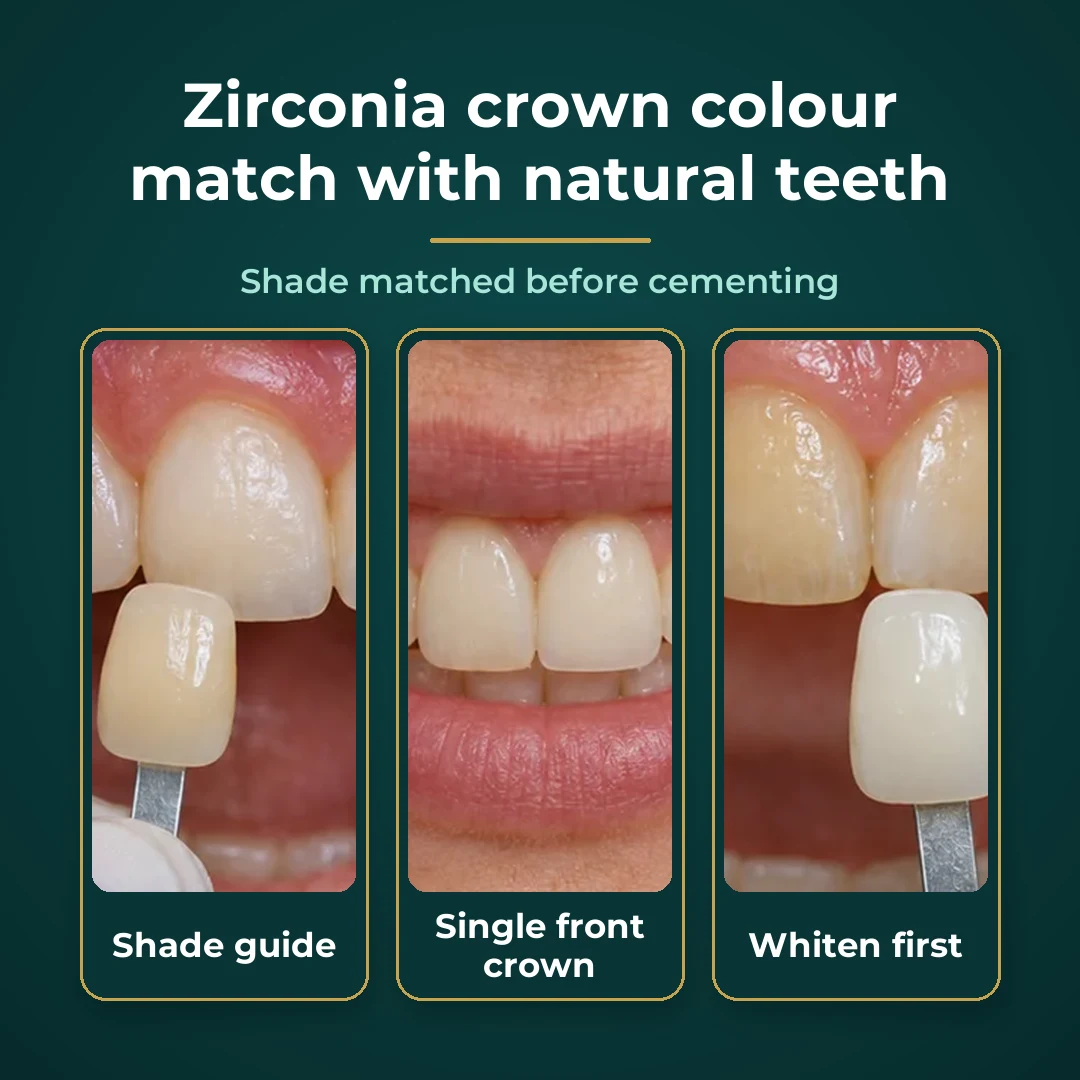
Usually yes, because the shade is matched to your neighbouring teeth before the crown is cemented. Zirconia is white and opaque rather than grey, but a monolithic zirconia crown is generally less translucent than E-max, so a single front tooth beside very translucent natural teeth can be harder to match.
A zirconium crown is milled from a block of zirconia and shaded to blend with the teeth either side. If you plan teeth whitening, it makes sense to do it first so that the crown shade can be chosen to match your whitened teeth.
Where more translucency is wanted, E-max is the other metal-free option, and our E-max crowns and veneers are made with Ivoclar materials. Your dentist explains the trade-offs for your tooth, and our guide on zirconia or E-max sets the two side by side. A crown that looks too white is a separate question, which we cover in our guide on what are Turkey teeth.
What If a Zirconia Crown Feels Too High
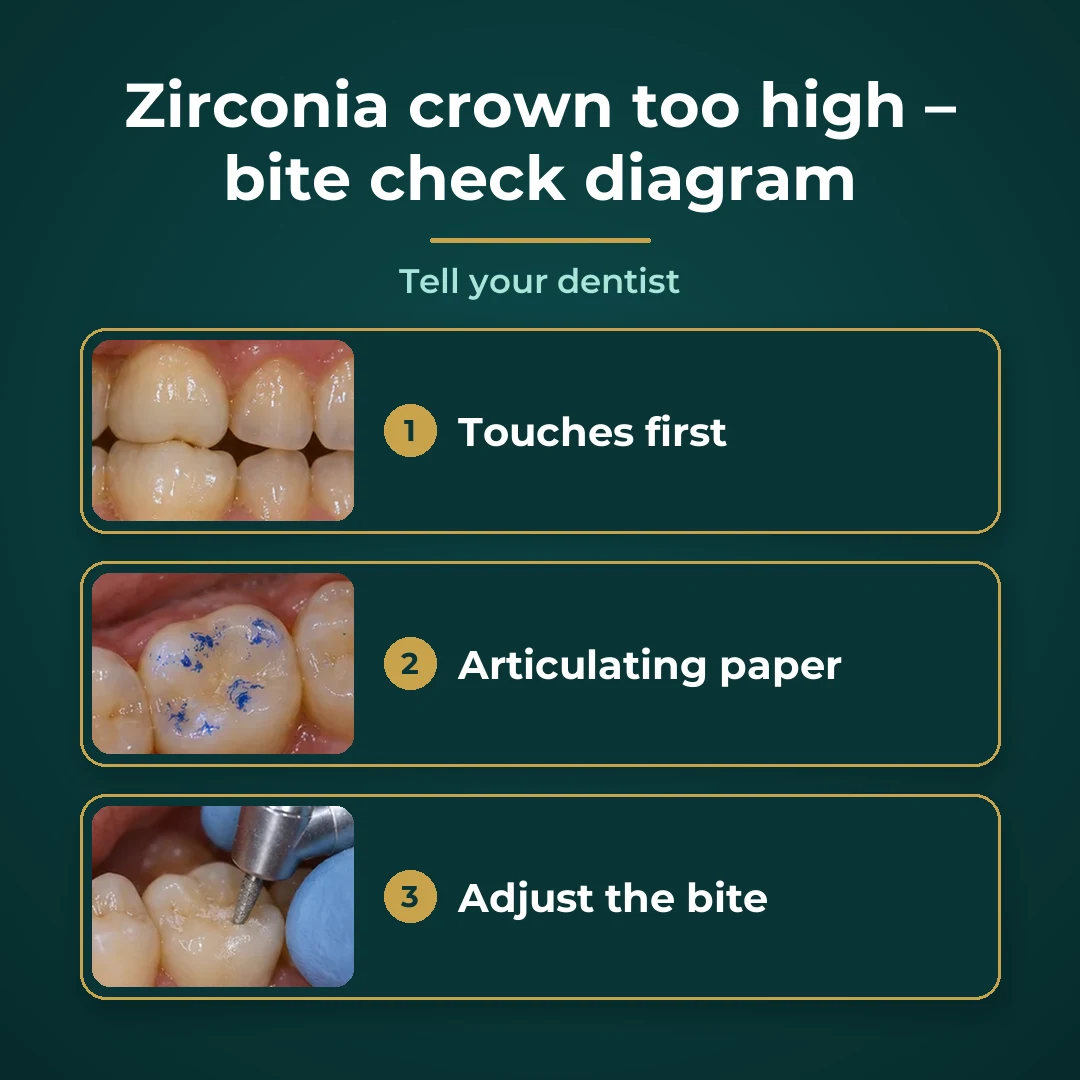
Tell your dentist. A crown that feels high touches the opposing tooth before the neighbouring teeth do when you bite. Your dentist can check the bite and adjust it if needed, so report a bite that feels uneven promptly rather than waiting for it to settle.
If the area was numbed during the visit, a high spot can be hard to judge until feeling returns. Once it does, say so if one tooth seems to touch before the others. Some mild sensitivity to hot or cold in the first few days is common and usually settles on its own.
Cleveland Clinic notes that a crown should not be painful, so pain when you bite is a reason to get in touch rather than wait. At the try-in the fit, shade and bite are checked before the crown is cemented, and that is the moment to say if the bite feels wrong. If you are still in Istanbul, tell us before you fly home so that we can check it.
What Happens at Your Crown Appointments in Istanbul
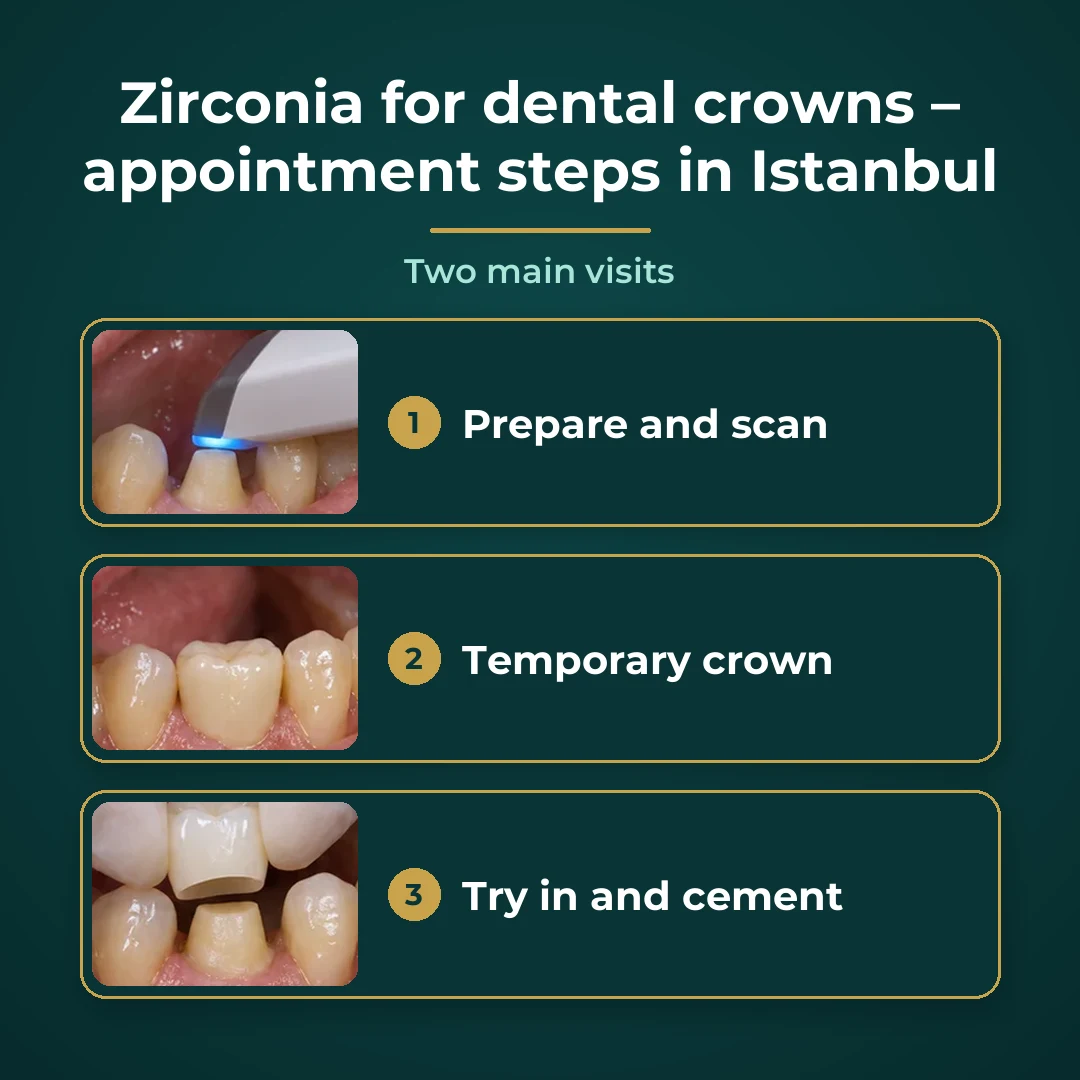
A zirconia crown usually needs two main visits, several working days apart. At the first, the tooth is prepared, scanned and given a temporary crown, and at the second the final crown is tried in to check fit, shade and bite, then cemented. Your dentist confirms the exact schedule for your own plan.
Before you travel, our dentists review your photos and any X-rays and prepare a provisional written treatment plan stating the material, the number of teeth, the expected length of your stay and the price. An in-clinic examination and X-rays then confirm it. Treatment is planned by Dt. Vijdan Aslanoğlu, a dentist who works on crowns and veneers at Er Dental Clinic, alongside our other general dentists.
For the scan we use 3Shape digital scanning, which in many cases replaces traditional impression trays. The scan records the shape the laboratory works from, and you wear a temporary crown while the final one is made.
Our price list shows each crown per unit in pounds, euros and dollars, and the band below gives the zirconia crown figures. Patient videos and written feedback are collected on our reviews page, where individual results vary.
When Should You Contact Your Dentist About Zirconia Crown Problems
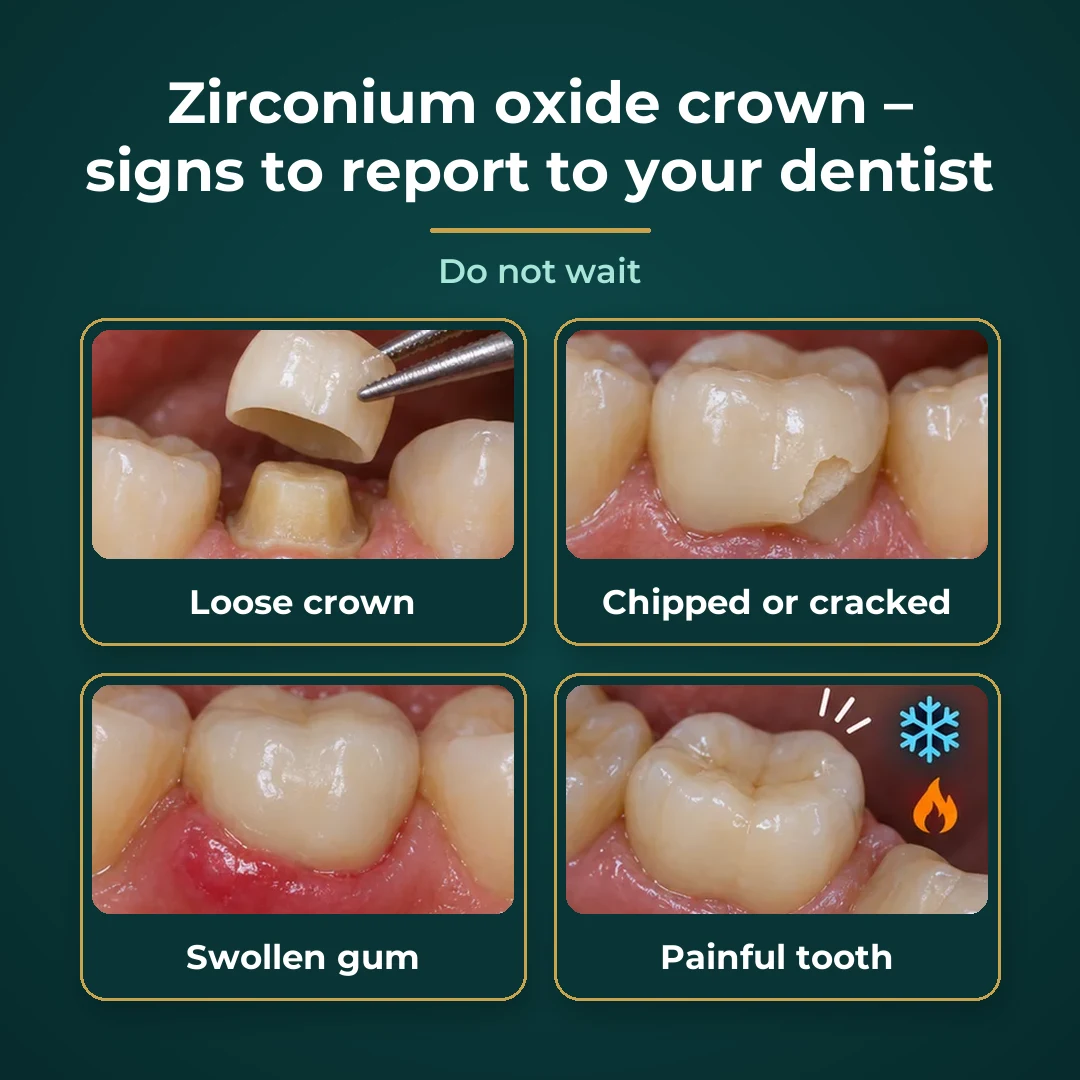
Contact your dentist if a crown feels loose, if the bite feels uneven, if a sharp edge catches your tongue or gum, or if the tooth is painful. Mild sensitivity to hot or cold for a few days is common and usually settles, but a crown should not be painful, so pain is a reason to get in touch.
- The crown or a temporary crown has come off or feels loose
- A piece of the crown has chipped or the crown looks cracked
- The bite feels high or one tooth touches before the others
- The gum around the crown stays swollen, red or tender
- The tooth becomes sensitive again or the pain gets worse
If you are still in Istanbul, tell us at once so that we can see you before you fly. Once you are home, tell your own dentist as well, because the General Dental Council advises that they will need to be aware of your treatment in case of later complications. Keep copies of your treatment records and X-rays.
If you are worried that the problem is bigger than one crown, ask a dentist to examine your teeth; our guide on Turkey teeth gone wrong explains what to do next.
Ask a Dentist About Zirconia Crowns in Istanbul
If you are thinking about a zirconia crown in Istanbul, send us clear photos of your teeth, and an X-ray if you have one, and ask for a free online consultation. Our dentists reply at no charge, and you can ask them anything before you decide.
Zirconia Crown Questions Patients Ask
How to care for a new crown?
Brush it twice a day as you would a natural tooth and clean between the crown and its neighbours with floss or an interdental brush. While you wear a temporary crown, chew on the other side where possible and avoid very sticky or hard foods. Keep regular check-ups so your dentist can review the crown, the gum line and your bite.
Are zirconia crowns safe for the teeth next to them?
The wear studies we cite measured the tooth that bites against a zirconia crown, not the teeth beside it. What can affect the neighbouring tooth and gum is fit, because a poorly fitting crown margin can collect plaque. That is why the fit is checked before cementing, and why cleaning between the crown and the next tooth every day matters.
Why does my zirconia crown hurt?
Some mild sensitivity to hot or cold for the first few days is common and usually settles by itself. Pain when you bite may mean the crown sits high, and pain that lingers or grows may point to a problem with the tooth or gum underneath. Cleveland Clinic notes a crown should not be painful, so a dentist should examine it.
Can a zirconia crown be removed?
Yes, a crown can be taken off by a dentist, but the tooth beneath it was prepared for the crown, so it will always need a crown afterwards. If a crown comes off by itself, keep it safe and contact your dentist, who can recement it if the tooth underneath is sound. Whether a crown needs to come off is decided after an examination and X-rays.
Can you get a zirconia crown if you grind your teeth?
Yes, it can be an option, because monolithic zirconia resists chipping well and is often recommended for back teeth, including in patients who grind or clench. Your dentist checks your bite first and may suggest a custom night guard, which Cleveland Clinic and the American Dental Association both mention for people who grind or clench. A guard made for you may protect better than a shop-bought one.
Do zirconia crowns cause bad breath?
None of the sources we cite links the zirconia material itself to bad breath. They do describe that a crown which does not fit properly can trap bacteria, and that a poorly fitting margin can lead to plaque build-up, decay and gum problems. Clean between the crown and its neighbours every day, and ask a dentist to examine the crown edge if bad breath continues.
References
- Dental Crowns: Types, Procedure & Care — Cleveland Clinic, 2023
- Antagonist enamel tooth wear produced by different dental ceramic systems: systematic review and network meta-analysis of controlled clinical trials — Journal of Dentistry (PubMed PMID 38211687), 2024
- Enamel Wear of Antagonist Tooth Caused by Dental Ceramics: Systematic Review and Meta-Analysis — Journal of Clinical Medicine (PubMed PMID 36362777), 2022
- Survival, failure, and complication rates of metal-ceramic, veneered, and monolithic all-ceramic tooth-supported single crowns, Part 1 — International Journal of Prosthodontics (PubMed PMID 41489982), 2026
- Do tooth-supported zirconia restorations present more technical failures related to fracture or loss of retention? Systematic review and meta-analysis — Clinical Oral Investigations (PubMed PMID 35660957), 2022
- Fixed Prosthetic Restorations and Periodontal Health: A Narrative Review — Journal of Functional Biomaterials (PubMed PMID 35225978), 2022
- Teeth Grinding — American Dental Association (MouthHealthy), 2026
- Going abroad for dental treatment (patients page) — General Dental Council (GDC), 2026
Related Pages
Get your free online consultation
Send us a short message with your question, and photos or X-rays if you have them. Our dentists review your case and reply with a personalised treatment plan — send it by e-mail or WhatsApp — your message is not stored on our server.
A short sentence is enough; no medical terms needed. What you write is only sent when you send it; this page stores no information.