
Dentures in Turkey: Complete, Partial, Immediate and Implant Options
Dentures replace missing teeth with a removable set. Compare complete, partial, immediate and snap-on implant dentures in Istanbul. Get your denture plan.
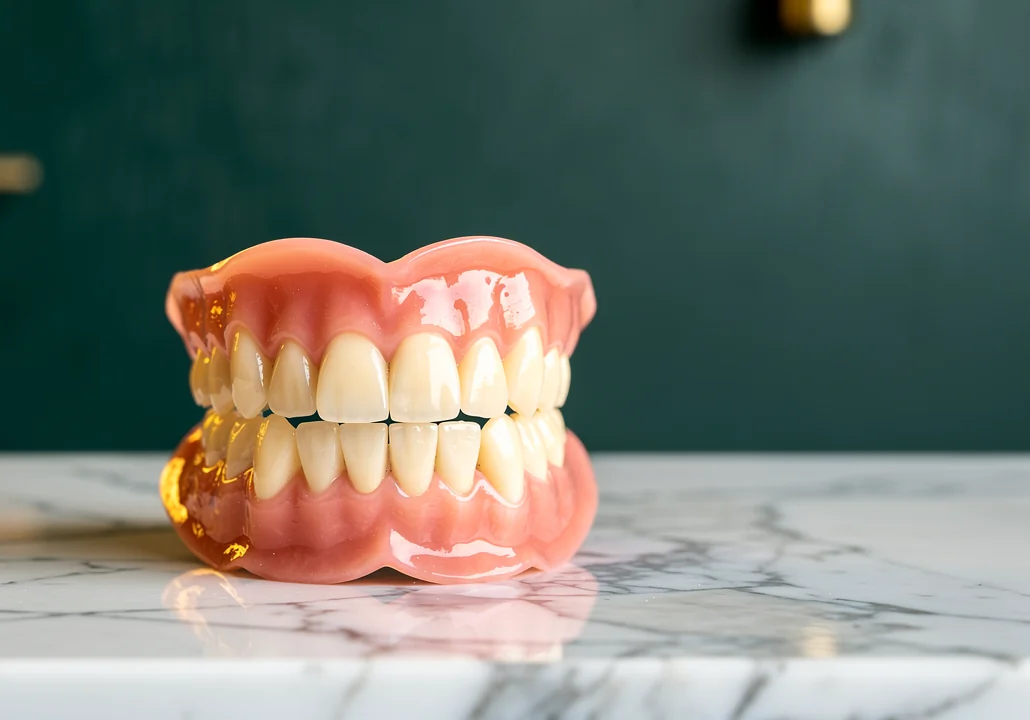
Dentures are removable replacement teeth set in a gum-coloured base that restore chewing, speech and appearance when some or all of your teeth are missing. At Er Dental Clinic in Istanbul, Turkey, complete, partial, immediate and implant-retained snap-on dentures are planned after an examination and X-rays, with a written plan before you travel.
Written by Er Dental Clinic
Treatment at a glance
How Dentures Are Made, Step by Step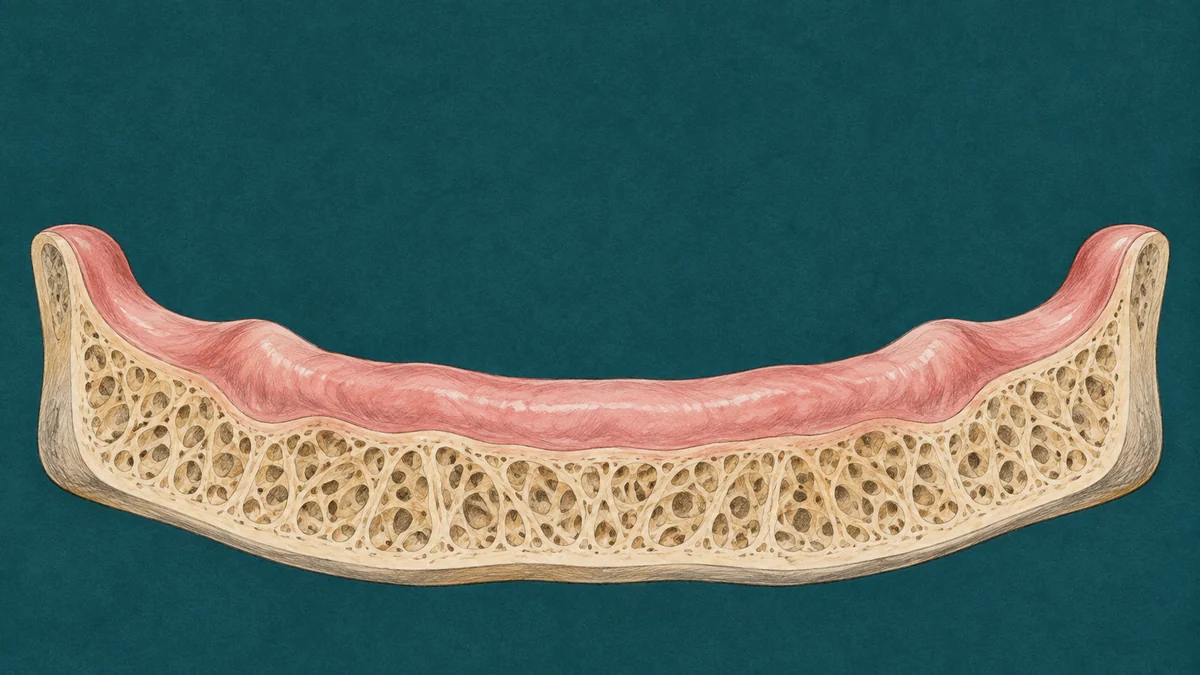
- 1Examination and X-raysYour dentist confirms the plan, treats any problems that need attention first and discusses the look of the teeth with you.
- 2ImpressionsImpressions of your gums and any remaining teeth are taken, first with a standard tray and then with a tray made for your mouth.
- 3Bite recordThe position in which your jaws meet, the height of the bite and the support for your lips are recorded.
- 4Wax try-inThe denture teeth are set in wax so that you can check the fit, the bite, the appearance and your speech before the denture is finished.
- 5Fitting and adjustmentsThe finished denture is fitted, the bite is checked and any pressure points are eased.
What Are Dentures?
A denture is a removable set of replacement teeth fixed in a base that looks like gum. It replaces missing teeth, and in many cases part of the gum and bone that has shrunk after the teeth were lost, so that you can chew, speak and smile with confidence again. Dentures are often called false teeth, and people searching online also describe them as false dentures or removable dentures; all of these terms describe the same idea.
There are two broad groups. Complete dentures replace all the teeth in the upper jaw, the lower jaw or both, and rest on the gums. Partial dentures fill the gaps when some healthy natural teeth remain, and hold on to those teeth to stay in place. Within these groups, immediate dentures are fitted on the same day that teeth are removed, so you are never without teeth, and implant-retained overdentures, often called snap-on dentures, clip onto a small number of dental implants for extra stability while still being removable. Fixed teeth on implants, which are not taken out at home, are a separate treatment described on our implant-supported dentures page.
Getting dentures in Turkey follows the same principles as anywhere else. What makes a denture comfortable is careful records of your mouth, a try-in before the denture is finished and patient adjustment after it is fitted. This guide explains how dentures stay in place, which types are available at our clinic in Istanbul, who they suit, how they are made, what affects the cost and how to live with them day to day.
How a Denture Stays in Place
A denture is built in layers that work together. The denture teeth are the part you see and bite with. They are set in an acrylic base, usually tinted to match your gums, which spreads the chewing force over as wide an area as possible. Under the base are your gums, and under the gums is the jawbone ridge that used to hold your natural teeth. The better the base fits the gum and the ridge, the more comfortable and stable the denture feels.
An upper complete denture covers the roof of the mouth. A thin film of saliva between the base and the palate creates suction, and the muscles of the cheeks and tongue help to hold it, which is why most people find an upper denture reasonably stable. A lower complete denture sits on a narrower, horseshoe-shaped ridge with the tongue in the middle, so it has much less surface to grip and usually moves more. This is one of the most common reasons patients ask about implant-retained options.
Partial dentures add another way of staying in place: small clasps or precision parts hold on to the natural teeth next to the gaps. Snap-on overdentures add attachments that click onto implants in the jawbone, which gives the denture something firm to hold on to.
After teeth are lost, the jawbone ridge gradually changes shape. Because the denture was made for the ridge as it was, the fit slowly becomes less exact, and the denture may need relining or remaking over the years. The illustration below shows the layers from the teeth down to the bone.
What Holds a Denture in Place?
Read this diagram as text
- Denture teeth
- The visible teeth you bite and chew with
- Acrylic base
- Gum-coloured base that holds the teeth and spreads the bite
- Gums
- Soft tissue the base rests on, held by a thin film of saliva
- Jawbone ridge
- Supports the gums and slowly changes shape after tooth loss
When Are Dentures Considered?
Most people do not start by looking for a denture. They start with a problem, and a denture is one of the ways to solve it. The most common situations are:
- All the teeth in a jaw are missing. A complete denture replaces the whole set of teeth in the upper or lower jaw and restores the support for your lips and cheeks.
- Several teeth are missing. A partial denture fills the gaps, helps you chew on both sides and stops the remaining teeth from drifting or tipping into the spaces.
- Teeth that cannot be saved. When teeth are broken down, very loose because of gum disease or badly infected, they may need to be removed. An immediate denture can be fitted on the same day, so you do not leave the clinic without teeth.
- An old denture that no longer fits. Loose or ill-fitting dentures that slip, click or cause sore spots are one of the most frequent reasons patients contact us. An old denture can often be relined, remade or combined with implants.
- When implants are not the right choice. Some patients prefer a removable option, and for others the bone, general health or budget make a denture the more suitable first step.
An examination shows which of these applies to you. Sometimes the answer is not a denture at all: a single missing tooth, for example, may be better replaced with an implant or a bridge.
Patient stories
Hear From Our International Patients
Patients from the UK, Romania, France, Ukraine and Russia talk about their treatment at Er Dental Clinic. Each video shows the treatment the patient had.
Dental Problems Treated with Dentures
Two problems lead to most denture treatments: missing teeth, whether a few or all of them, and an existing denture that has become loose or uncomfortable. Both are explained on their own pages, including the causes and every option for treating them.
Who Is Suitable for Dentures?
Almost anyone who has lost some or all of their teeth can be considered for a denture, and dentures are often chosen when implants are not possible or not wanted. Whether a particular type suits you depends on several practical factors, which your dentist checks during the examination:
- Healthy gums. Inflamed or infected gums should be treated before a denture is made, because the base rests on them and needs healthy tissue underneath.
- The condition of the remaining teeth. For a partial denture, the teeth that hold the clasps must be strong, free of decay and firmly anchored. Weak teeth may need treatment, or a different design may be planned.
- The shape of the jaw ridge. A broad, well-rounded ridge supports a denture better than a thin or flat one. Where the ridge has shrunk a lot, especially in the lower jaw, implant-retained options are often discussed.
- Saliva. A dry mouth reduces suction and can make dentures feel sore. Some medicines cause dry mouth, so tell your dentist what you take.
- General health and healing. If teeth need to be removed before an immediate denture, your medical history is reviewed to make sure extractions and healing are safe.
- A strong gag reflex. Some people find a full upper palate difficult at first. The design can sometimes be adapted, and implant-retained options may reduce the amount of palate that needs covering.
- Realistic expectations. A denture restores appearance and function well, but it is not the same as natural teeth. Knowing that a lower denture usually moves more than an upper one helps you decide whether you want extra stability from implants.
If you are not sure which option fits, send us photos of your teeth or your current denture and any recent X-rays for a free online consultation.
Types of Dentures: Complete, Partial, Immediate and Snap-On
Complete dentures
A complete denture, also called a full denture or a full set of dentures, replaces all the teeth in one jaw. It is made from an acrylic base with acrylic or composite teeth. The upper denture covers the palate and is held by suction and muscle control; the lower denture rests on the ridge and is usually less stable. Complete dentures can be made for one jaw or both, and they are the most common choice when every tooth in a jaw has been lost.
Partial dentures
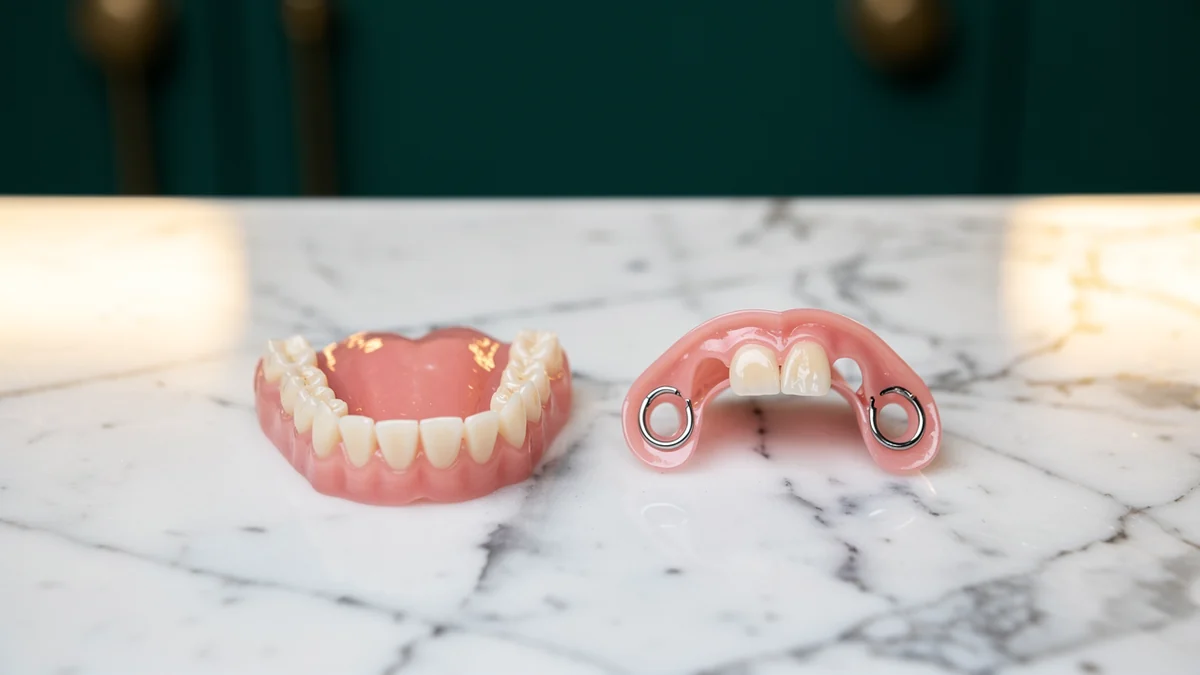
A partial denture replaces one or more missing teeth when healthy natural teeth remain. It holds on to the neighbouring teeth with clasps and fills the gaps so that you can chew evenly. Partial dentures come in several materials, explained below, and many designs can have teeth added later if another tooth is lost.
Immediate dentures
An immediate denture is made before teeth are removed and fitted on the day of extraction, so you never go without teeth. Because the gums and bone shrink as they heal, an immediate denture becomes loose over time and needs a soft lining or a reline. Many patients later move on to a conventional denture or to implants. Immediate dentures are sometimes called temporary dentures for this reason.
Implant-retained overdentures (snap-on dentures)
An overdenture clips onto attachments on dental implants placed in the jaw. It is still removed by the patient for cleaning, but it no longer relies on suction alone, so it moves much less when you eat and speak. It is most often discussed for the lower jaw, where conventional dentures are least stable, and the number of implants is planned on a CBCT scan.
Fixed teeth on implants
If you do not want to take your teeth out at all, a fixed bridge of teeth can be screwed onto several implants. This is a different treatment with its own planning, explained on our implant-supported dentures page and in the dental implants section of the site.
Denture materials
Most denture bases are made of acrylic, a pink resin that can be adjusted, relined and repaired easily. For partial dentures, three materials are used. Acrylic partial dentures are thicker and simpler to make, and they are often used as an interim or budget-conscious option. Flexible partial dentures are made from a nylon-based material that grips the teeth with gum-coloured clasps instead of metal ones, although they are harder to adjust or add to. Metal-framework partial dentures, usually made from cobalt-chrome, are thinner and more rigid, and they are frequently chosen for long-term use. Your dentist explains which material suits your remaining teeth and your bite.
Which Type of Denture Is Right for Me?
The right denture depends mainly on how many natural teeth you still have, whether any teeth need to be removed and how much stability you need, especially in the lower jaw. The guide below is a starting point; your dentist confirms the choice after examining your mouth and X-rays.
All Teeth Missing in a Jaw
A complete denture replaces the whole set of teeth in the upper jaw, the lower jaw or both.
Explore complete denturesSome Teeth Missing
A partial denture in acrylic, flexible or metal-framework material fills the gaps between your own teeth.
Explore partial denturesTeeth About to Be Removed
An immediate denture is fitted on the day of extraction, so you are not left without teeth while you heal.
Explore immediate denturesA Loose Lower Denture
A snap-on overdenture clips onto implants for more stability, while you can still take it out to clean it.
Explore snap-on overdenturesHow Much Do Dentures Cost in Turkey?
Denture prices depend on several choices, so we give you a personal quote rather than a single figure. The main factors are:
- The type of denture. A complete, partial, immediate or implant-retained denture each involves different work and a different number of appointments.
- The material. An acrylic denture, a flexible partial denture and a metal-framework partial denture are made differently and are priced differently.
- One jaw or both. Replacing the teeth in both the upper and lower jaw involves two dentures.
- Treatment needed first. Extractions, gum treatment or fillings on the remaining teeth are added only if they are clinically required.
- Implants. A snap-on overdenture also includes the implants and attachments, which are planned on a CBCT scan.
Our dentists review your photos and X-rays at a free online consultation and send a written treatment plan with the price before you travel. Any change after the examination at the clinic is explained and agreed with you before treatment begins. Current prices for implants, extractions and other treatments are listed on our price page.
Dentures or Dental Implants?
Dental implants vs dentures is one of the most common questions at a consultation, and the honest answer is that there are three options rather than two. A conventional removable denture rests on the gums, needs no surgery and can usually be made in a single trip, but it can move, especially in the lower jaw, and the bone under it continues to change. A snap-on overdenture is still removable, but it clips onto implants, so it is far more stable and needs fewer implants than a fixed option. Fixed teeth on implants are not taken out at home and feel closest to natural teeth, but they need more implants, enough bone and a longer treatment. The choice depends on your bone, your health, how you feel about surgery and your budget, and your dentist explains the options that apply to you.
Removable Complete Dentures
No surgery, rests on the gums; the most direct way to replace a full set of teeth.
Read about complete denturesSnap-On Overdentures
A removable denture that clips onto implants for extra stability when eating and speaking.
Read about snap-on overdenturesFixed Implant-Supported Dentures
A full arch of teeth fixed onto implants that is not removed at home.
Read about fixed teeth on implantsAssessment Before Denture Treatment
A comfortable denture starts with a careful look at the mouth it will sit in.
Before you travel
The process starts with a free online consultation. You send photos of your teeth, your gums or your current denture, and any recent X-rays. Our dentists review them and prepare a written treatment plan that describes the proposed type of denture, the material, any extractions or other treatment needed, the expected number of appointments and the price, so you can decide before booking anything.
At the clinic
At your first appointment, a clinical examination and X-rays confirm the plan. Your dentist checks the gums, the shape of the jaw ridge, any remaining teeth and roots, and how your jaws meet. If you already wear a denture, bring it: its fit and wear show what has worked for you and what has not.
If treatment is needed first
Teeth that will hold a partial denture may need fillings or cleaning, gum inflammation is treated so that the base rests on healthy tissue, and teeth that cannot be saved are planned for extraction. For a snap-on overdenture, a CBCT scan shows how much bone is available for implants and whether it needs building up. If the examination changes your plan, the reason and any cost difference are explained and agreed with you before treatment begins.
The look of your new teeth
The shape, size and shade of the denture teeth are discussed with you. Old photos of your smile are helpful, because they show your natural tooth shape and how your lips were supported.
How We Plan Dentures at Er Dental Clinic
Denture treatment is planned around comfort and function rather than appearance alone. The aim is a denture that fits closely, meets the opposite teeth evenly and supports your lips and cheeks naturally, because a good fit and an even bite are what stop dentures from rubbing and slipping.
The clinic holds an International Health Tourism Authorization Certificate issued by the Republic of Türkiye Ministry of Health (certificate no. ST-6264, dated 27 August 2025), which carries the HealthTürkiye logo. You can check it yourself on the e-Devlet document verification service at turkiye.gov.tr/saglik-bakanligi-ebys with the code 3D0867DC-7D38-4EBF-B6D7-7B8F049AC725.
Every denture plan follows the same sequence:
- 1Online review. Your photos and X-rays are assessed and you receive a written treatment plan and quote before you travel.
- 2Examination of the whole mouth. A clinical examination and X-rays check your gums, the jaw ridge and any remaining teeth.
- 3Type matched to your mouth. A complete, partial, immediate or implant-retained denture is proposed according to your teeth, bone and wishes.
- 4Accurate records. Impressions of your gums and a record of how your jaws meet are taken so the denture fits and bites evenly.
- 5Try-in before finishing. You see and test the teeth set in wax, and changes are made before the denture is completed.
- 6Adjustments and follow-up. Sore spots and the bite are adjusted after fitting, with aftercare instructions and remote follow-up once you are home.
How Dentures Are Made Step by Step
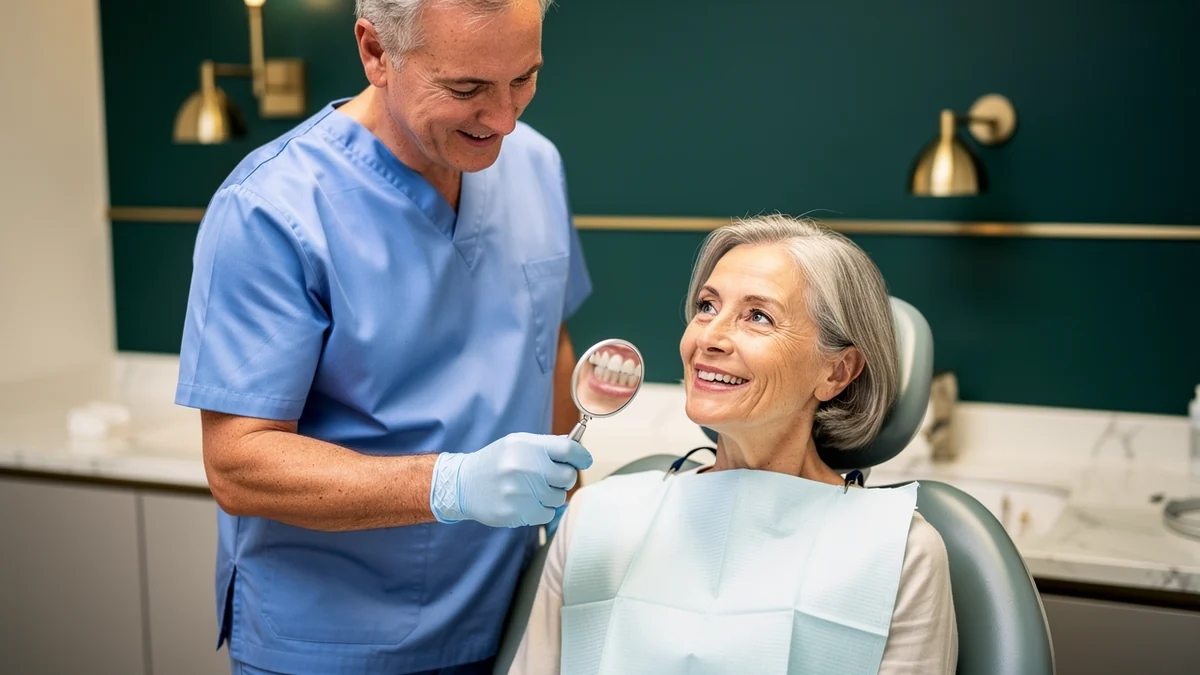
Dentures are made over several appointments, because each stage records something the laboratory needs to build a denture that fits you. How many days you need in Istanbul depends on the type of denture and on whether extractions or implants are part of the plan. Implants need time to bond with the bone before an overdenture is attached to them, so implant-retained dentures may involve more than one visit. The number of appointments and days is written into your plan before you book.
- 1Examination and X-rays. Your dentist confirms the plan, treats any problems that need attention first and discusses the look of the teeth with you.
- 2Impressions. Impressions of your gums and any remaining teeth are taken, first with a standard tray and then with a tray made for your mouth.
- 3Bite record. The position in which your jaws meet, the height of the bite and the support for your lips are recorded.
- 4Wax try-in. The denture teeth are set in wax so that you can check the fit, the bite, the appearance and your speech before the denture is finished.
- 5Fitting and adjustments. The finished denture is fitted, the bite is checked and any pressure points are eased.
- 6Review. Follow-up checks deal with sore spots that appear once you start eating and speaking with the denture.
Living with Dentures: Cleaning, Eating and Speaking
New dentures take some getting used to. At first they can feel bulky, you may produce more saliva than usual and some words may sound different. These effects usually settle as the muscles of your cheeks and tongue learn to hold the denture. Reading aloud and practising difficult words helps speech return to normal.
For eating, start with soft food cut into small pieces and chew slowly on both sides at the same time, which keeps the denture balanced. Add firmer food gradually. Very sticky or hard food is more likely to move a denture.
Daily care keeps the denture and your mouth healthy:
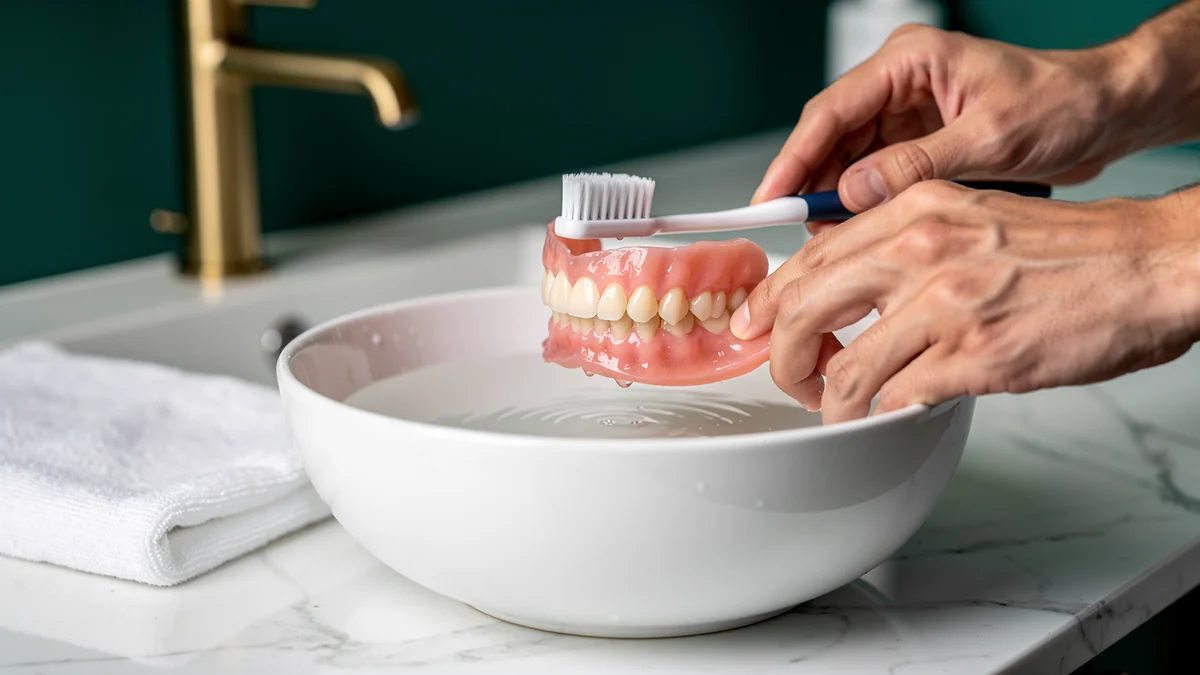
- Take the denture out and clean it every day with a soft brush and a denture cleaner or mild soap and water, as your dentist advises. Ordinary toothpaste can be abrasive and scratch the surface.
- Clean over a bowl of water or a folded towel, so the denture does not break if you drop it.
- Rinse the denture after meals to remove food.
- Brush your gums, your tongue and any natural teeth you still have, especially the teeth that hold a partial denture.
- Unless your dentist tells you otherwise, take the denture out at night to let your gums rest, and keep it moist in water or a soaking solution so it does not dry out and change shape. Do not use hot water, which can warp it.
- Keep regular check-ups, either with us or with your dentist at home, so that the fit and the health of your gums can be checked.
Before you leave Istanbul, you receive written aftercare instructions and your treatment documents, so you can share the details with your dentist at home. After you return, we stay in touch for remote follow-up.
Common Problems with Dentures
Most denture problems are small and can be solved with an adjustment, but it helps to know what to expect and when to have a denture checked:
Sore spots
Areas of pressure can cause small ulcers in the first days or weeks. They are usually eased by adjusting the base. Do not try to file or reshape the denture yourself.
Looseness
A new lower denture often feels less stable than an upper one. Over time, the gums and jawbone change shape, which makes any denture looser; a reline or a new denture restores the fit, and implants can add stability.
Gagging
Some people find the upper denture uncomfortable at the back of the palate at first. This often improves with practice, and the design can sometimes be adjusted.
Speech changes
Some sounds may be difficult for a while. Speech usually improves as you get used to the denture; if a whistling or clicking sound persists, the denture can be checked.
Cracked or broken denture
A denture can crack if it is dropped or if the fit is poor. Do not glue it at home; a dental laboratory can often repair it.
Gum irritation and infection
Wearing a denture day and night or not cleaning it well can lead to red, sore gums under the denture or cracks at the corners of the mouth. Good cleaning and removing the denture at night help to prevent this.
Bone change over time
The jawbone ridge continues to change after teeth are lost, so dentures are reviewed regularly and may need relining, rebasing or remaking.
A sore that does not heal should always be checked by a dentist. Your dentist explains the problems that are most likely in your case before you give your consent.
Dentures in Turkey: Frequently Asked Questions
How much do dentures cost in Turkey?
The cost of dentures in Turkey depends on the type of denture, the material, whether one or both jaws are treated and whether extractions or implants are needed. At Er Dental Clinic, denture prices are quoted after our dentists review your photos and X-rays, and you receive a written plan with the price before you travel. Prices for implants, extractions and other treatments are listed on our price page.
What types of dentures are there?
The main types are complete dentures, which replace all the teeth in a jaw, and partial dentures, which fill gaps between natural teeth. Immediate dentures are fitted on the day teeth are removed, and snap-on overdentures clip onto dental implants for extra stability. Partial dentures can be made in acrylic, a flexible nylon-based material sometimes known by brand names such as Valplast, or a metal framework.
How long do dentures take to make?
Dentures are made over several appointments: impressions, a bite record, a wax try-in and the final fitting with adjustments. The number of days depends on the type of denture and on whether teeth need to be removed or implants placed first. Your written plan states the expected number of appointments and days before you book.
How long do dentures last?
How long a denture lasts depends on its fit, wear and care. Dentures are reviewed regularly, and as the gums and jawbone change they may need relining, rebasing or remaking. Cleaning the denture every day, taking it out at night unless advised otherwise and keeping regular check-ups all help it serve you well.
Dentures or dental implants: which should I choose?
Neither is right for everyone. A conventional denture needs no surgery and is quicker to make, but it can move, especially in the lower jaw. A snap-on overdenture on implants is much more stable while still removable, and fixed teeth on implants feel closest to natural teeth but need more implants and enough bone. Your dentist explains which options suit your bone, health and wishes.
Can I get dentures if I still have some teeth?
Yes. A partial denture replaces the missing teeth and holds on to your remaining healthy teeth with clasps, which also stops them from drifting into the gaps. If the remaining teeth are weak or cannot be saved, your dentist may suggest removing them and fitting an immediate or complete denture instead, and explains why.
Is it safe to get dentures in Turkey?
Safety depends on the clinic, the assessment and the health of your mouth rather than the country. Er Dental Clinic holds an International Health Tourism Authorization Certificate from the Republic of Türkiye Ministry of Health (ST-6264). Your gums, remaining teeth and X-rays are examined before treatment, and your written plan sets out the treatment, materials and costs before you travel.
References
- Dentures (false teeth) — NHS, 2026
- Dentures — Oral Health Foundation, 2026
- Dentures — American Dental Association (MouthHealthy), 2026
- Dentures: Types, Procedure and Care — Cleveland Clinic, 2026
Get Your Denture Plan in Istanbul
Send us photos of your teeth or your current denture for a free online consultation. Our dentists review them and reply with a written treatment plan that states the proposed type of denture, the material and a clear quote, so you can compare your options before you decide to travel.
Dentistry · Esenyurt, İstanbul
Why Er Dental Clinic?
Related Pages
Complete (Full) Dentures: A Full Set of Teeth for One or Both Jaws
Partial Dentures in Turkey: Acrylic, Flexible and Metal-Framework Options
Immediate Dentures: Wearing Teeth from the Day of Extraction
Implant-Supported Overdentures: Snap-On Dentures Held by Implants
Loose or Ill-Fitting Dentures: Why It Happens and What Can Be Done
Free Online Dental Consultation: Send Your Photos and X-Rays for a Written Plan
Er Dental Clinic: Meet the Dentists Who Plan and Carry Out Your Treatment
Contact Er Dental Clinic
Dental Implants in Istanbul: Single, Multiple and Full-Arch
Your treatment plan · 3 short steps
Get your personal denture plan
Answer a few quick questions — it takes about a minute. Our dentists review your answers and reply with a written treatment plan and a clear price for your case, before you decide anything.
- Your treatmentWhat are you looking for?
- Your timingX-ray, dates and how we reply
- Your detailsSo we can send your plan
What you receive
- A written treatment plan prepared by our dentists
- A clear price for your case before you travel
- No obligation — ask every question first


Your answers are reviewed by our dentist teamErtan Omerov · Enes Yol · Ahmet Mustafa Zeren · Vijdan Aslanoğlu