TREATMENTS


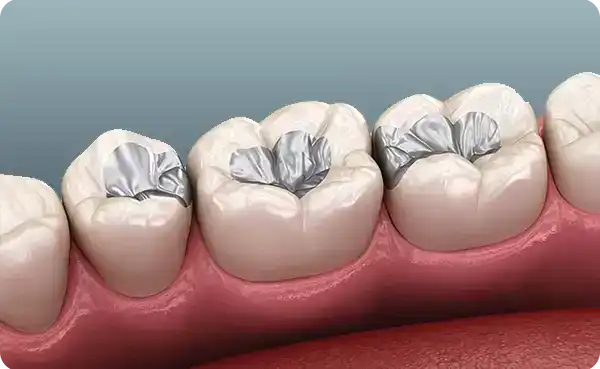
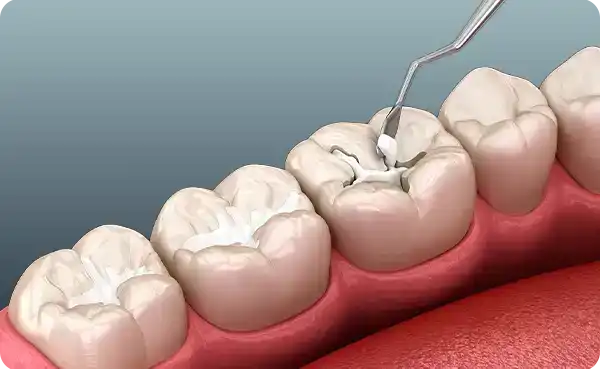
The decayed or damaged area is removed, then the tooth is rebuilt with a tooth-colored (aesthetic) or metal filling.
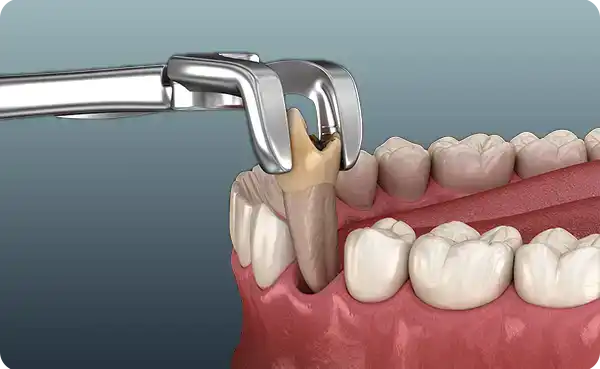
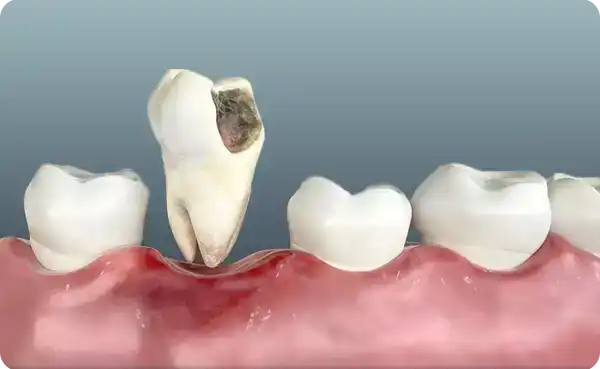
The tooth is removed under local anesthesia, and if needed, a surgical extraction is performed.
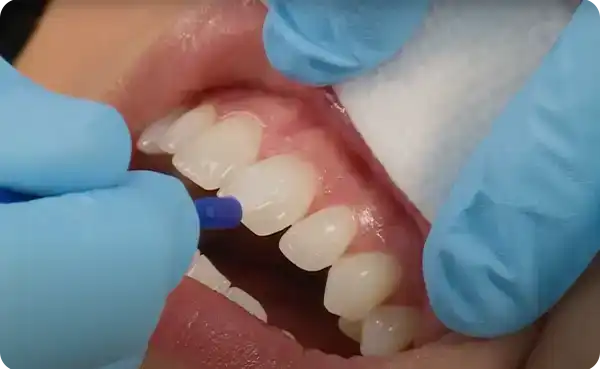
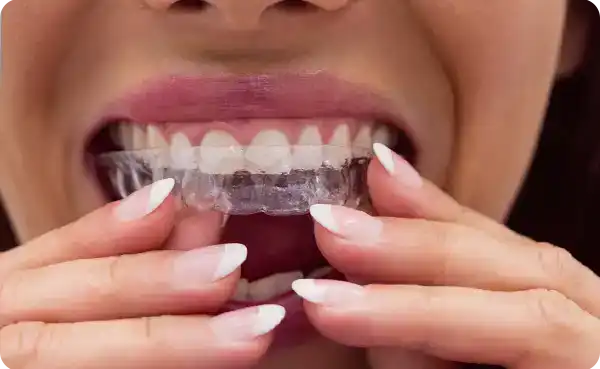
It’s a fast, straightforward treatment that reinforces the enamel and helps protect teeth from decay.
 Average Length of Stay in Istanbul
-
Average Length of Stay in Istanbul
-
 Number of Visits Required
-
Number of Visits Required
-
 Recovery Time
-
Recovery Time
-
 Price
-
Price
-
 Murat Anıl
Today, I came in for my daughter’s tooth. After a free examination and check-up in a very comfortable, home-like environment, her treatment was completed in just 10 minutes with an immediate surgical procedure. Endless thanks to our doctor and all the attentive staff members.
Ulku Uluda Yılmaz
Hello,
As someone with a fear of dentists, I went in feeling very anxious. But the friendly approach, the sincere and warm welcome inside, and the dentists were all wonderful — it was clearly evident that they are true experts at what they do. Not only that, but their follow-up calls and continued attention also show how carefully and diligently they work. Thank you so much to everyone in the ER Dental family.
Emre Şahin
First of all, I would like to thank Dt. Gizem Yaman and Ms. Serpil for their friendly attitude and attentive care. I was happy with every procedure, and I left feeling truly satisfied. I asked many questions, and they answered all of them patiently without getting tired. I strongly recommend that anyone who is considering going there book an examination with Dt. Gizem.
Kelly McCabe
I had lots of routine dental work done here after years of avoiding UK dentists. A few months late I need a route canal and crown, I'm going to fly from UK to Istanbul to get my teeth done here at an affordable price but top quality work, rather than pay UK prices for sub standard results. Very caring, great interpreter, top quality dental surgery.
Firdevs Numanoğlu
Hello, I had been suffering from tooth pain for a long time, and after doing my research, I chose Private ER Oral and Dental Health Polyclinic. Thanks to the sincere care of the staff and the experience of **Dt. Vijdan**, the entire process went smoothly and I was very satisfied. I would highly recommend it to everyone. Kind regards ????
Nimet Avcı
When my toothache started, I looked for a place to get my tooth treated. After reading the reviews, I visited Private ER Oral and Dental Polyclinic. Hygiene and trust were important to me, and the hygiene there is truly excellent. I would like to sincerely thank my dentist, Dr. Mujgan [Surname]. Her touch is really gentle. I would also like to thank Ms. Elvan and the other staff members. From now on, I won’t go anywhere else.
Buse Gumus
The whole team is friendly and attentive. I had my root canal treatment and filling done here. Thank you so much to Dr. Vijdan and the rest of the team ☺️
Amin Najafi
Two things were truly exceptional for me.
First, the clinic’s team was extremely professional and their approach was excellent.
Second, the doctor who performed my dental surgery carried out the procedure with great patience and a very high level of professionalism.
I definitely recommend this clinic.
Eva G.
I feel very lucky that a modern dental clinic, Era Dental, with its own in-house laboratory has opened in our city.
Even before I became a patient, they successfully treated my daughter’s complex multi-root tooth, and we were completely satisfied with Dr. Vijdan’s professionalism.
As for me, I underwent three dental implant placements, cyst removal, a sinus lift procedure, and root canal treatment. I am very pleased with the attentive care provided by Dr. Virjan and the entire team.
I would also like to highlight the warm, friendly reception staff and the availability of translators for international patients, which makes the whole treatment process as comfortable as possible.
Murat Anıl
Today, I came in for my daughter’s tooth. After a free examination and check-up in a very comfortable, home-like environment, her treatment was completed in just 10 minutes with an immediate surgical procedure. Endless thanks to our doctor and all the attentive staff members.
Ulku Uluda Yılmaz
Hello,
As someone with a fear of dentists, I went in feeling very anxious. But the friendly approach, the sincere and warm welcome inside, and the dentists were all wonderful — it was clearly evident that they are true experts at what they do. Not only that, but their follow-up calls and continued attention also show how carefully and diligently they work. Thank you so much to everyone in the ER Dental family.
Emre Şahin
First of all, I would like to thank Dt. Gizem Yaman and Ms. Serpil for their friendly attitude and attentive care. I was happy with every procedure, and I left feeling truly satisfied. I asked many questions, and they answered all of them patiently without getting tired. I strongly recommend that anyone who is considering going there book an examination with Dt. Gizem.
Kelly McCabe
I had lots of routine dental work done here after years of avoiding UK dentists. A few months late I need a route canal and crown, I'm going to fly from UK to Istanbul to get my teeth done here at an affordable price but top quality work, rather than pay UK prices for sub standard results. Very caring, great interpreter, top quality dental surgery.
Firdevs Numanoğlu
Hello, I had been suffering from tooth pain for a long time, and after doing my research, I chose Private ER Oral and Dental Health Polyclinic. Thanks to the sincere care of the staff and the experience of **Dt. Vijdan**, the entire process went smoothly and I was very satisfied. I would highly recommend it to everyone. Kind regards ????
Nimet Avcı
When my toothache started, I looked for a place to get my tooth treated. After reading the reviews, I visited Private ER Oral and Dental Polyclinic. Hygiene and trust were important to me, and the hygiene there is truly excellent. I would like to sincerely thank my dentist, Dr. Mujgan [Surname]. Her touch is really gentle. I would also like to thank Ms. Elvan and the other staff members. From now on, I won’t go anywhere else.
Buse Gumus
The whole team is friendly and attentive. I had my root canal treatment and filling done here. Thank you so much to Dr. Vijdan and the rest of the team ☺️
Amin Najafi
Two things were truly exceptional for me.
First, the clinic’s team was extremely professional and their approach was excellent.
Second, the doctor who performed my dental surgery carried out the procedure with great patience and a very high level of professionalism.
I definitely recommend this clinic.
Eva G.
I feel very lucky that a modern dental clinic, Era Dental, with its own in-house laboratory has opened in our city.
Even before I became a patient, they successfully treated my daughter’s complex multi-root tooth, and we were completely satisfied with Dr. Vijdan’s professionalism.
As for me, I underwent three dental implant placements, cyst removal, a sinus lift procedure, and root canal treatment. I am very pleased with the attentive care provided by Dr. Virjan and the entire team.
I would also like to highlight the warm, friendly reception staff and the availability of translators for international patients, which makes the whole treatment process as comfortable as possible.
We completely understand your anxiety. Sadly, 'bait-and-switch' tactics do happen in this industry, but we strictly operate on transparency and ethics. The price we quoted is based on a careful analysis of the X-rays and photos you sent, and for the vast majority of patients, that price does not change.
However, remote X-rays are 2-dimensional. Once you sit in the chair for a 3D examination, there is a small chance we might find a hidden issue—such as insufficient bone density—that requires a procedure like a sinus lift or bone grafting to ensure your implants don't fail.
The difference with our clinic is that we warn you about these specific possibilities before you travel, rather than surprising you with them later. If we do find a medical need to adjust the plan, we will show you the X-ray evidence, explain why it is necessary, and get your full approval before doing anything. We will never force a hidden charge on you.
Please don’t worry about that—we don't expect you to navigate a new city alone. Since most of our patients visit us from other countries, assisting with accommodation is a standard part of what we do.
We can provide you with a list of trusted, comfortable hotels located very close to the clinic, or if you prefer, we can handle the booking process entirely for you. Our goal is to make sure you have a safe and convenient place to rest so you can focus 100% on your treatment.
We completely understand your concern, but you can rest assured: Yes, it is very safe. Turkey is one of the top tourist destinations in the world, welcoming millions of visitors from Europe and the US every year without issue.
In major cities like Istanbul, the safety advice is the same as it would be for London, Paris, or New York—just use standard common sense.
More importantly, you won't be navigating the city alone. We arrange your VIP airport transfers and book you into trusted, secure hotels. From the moment you land until you leave, we handle the logistics to ensure your experience is not only successful but also completely stress-free and safe.
Yes, that is actually one of the classic warning signs of gum disease. It is very common.
When gums are healthy, they seal tightly around the teeth. But when gum disease develops, 'pockets' form where bacteria and tartar get trapped deep below the gumline—places your toothbrush simply can't reach. As these bacteria feed and multiply, they release foul-smelling gases, which causes that persistent bad breath.
It’s not something you can cure with mints because the source is an infection. The good news is that once we perform a professional deep cleaning and treat the inflammation, the source of the odor is removed, and your breath usually freshens up immediately.
We understand that flexibility is important. We do offer a variety of payment solutions designed to make things easy for our patients.
To ensure we provide you with the most secure and suitable option for your specific situation, please reach out to our team directly, and we will guide you through the details.
That depends on the specific treatment package you choose. We offer different options—some are all-inclusive packages that cover your accommodation and VIP transfers, while others focus strictly on the dental procedure.
To give you an accurate answer, please contact our team directly. We can check the details of the treatment plan you are interested in and let you know exactly what is included.
We understand that financial flexibility is important. We do have different payment options available to help manage the cost of your treatment packages.
Since the specific plans can vary, please reach out to our team directly. We would be happy to explain the details and help you find a payment solution that works best for you.
Yes, absolutely. We stand behind the quality of our work, and every treatment we provide is backed by a guarantee for a specific period of time (subject to standard terms). If you would like to know the exact details of our warranty policy, please reach out to us and we will be happy to explain.
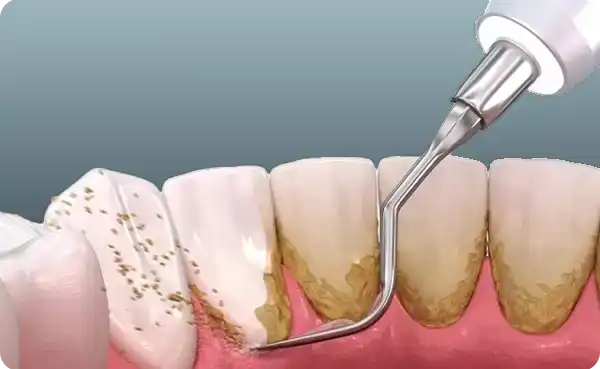
Think of deep cleaning (scaling) as the standard heavy-duty cleaning. We use it when gum issues are still mild. It focuses on scraping away the hard tartar and plaque that sits just above and slightly below your gumline to prevent things from getting worse.
Curettage is a step further and is used when gum disease is more advanced. In this procedure, we don't just remove the tartar; we also clean out the infected, soft tissue from the inside of the deep gum pockets. This scraping removes the 'sick' tissue so your gums can heal and tighten back up around the tooth.
Essentially, we choose the treatment based on how deep the infection has gone. Regardless of which one is needed, we must clear up this infection first before we can move on to any other dental work.
Think of flap surgery as a deep cleaning 'under the hood.' When gum disease becomes advanced, deep pockets form between your gums and teeth where a toothbrush or standard professional cleaning simply cannot reach.
During this procedure, we gently lift the gum tissue to access and remove the hidden bacteria and tartar stuck deep on the tooth roots. Once everything is perfectly clean, we secure the gum back in place so it can heal tightly around the tooth.
We prefer this method because if those deep pockets are left untreated, the infection will continue to damage the bone, which can lead to loose teeth or even tooth loss. This surgery is the best way to stop the infection and save your teeth.
The effects of whitening are not permanent, but with good care they can last quite a while. On average, most patients enjoy their brighter smile for a year. How long it lasts also heavily depends on your habits. For example, drinking coffee, tea, red wine, or smoking can make the teeth darken again more quickly.
Regular brushing, routine dental cleanings, and avoiding too many staining foods or drinks will help keep the results for longer. Some patients also choose a small “touch-up” session once in a while to maintain their ideal shade.
Yes, unfortunately, that is exactly what happens if you wait too long.
Think of the infection as an invader. Once it runs out of room inside the tooth, it breaks out and starts attacking the bone that holds the tooth in place. This causes the bone to dissolve, which is why infected teeth often become loose and eventually have to be pulled out.
The good news is that we can stop this process immediately. If we treat the infection now—usually with a root canal—we can get rid of the bacteria and save both your tooth and your bone structure before any permanent damage is done.
Yes, we can do it, but we generally advise caution.
While gold is a strong material, decorative caps or tooth jewelry are often purely for fashion and don’t always fit as precisely as a medical crown. This can create small gaps where food and bacteria get trapped, which might lead to cavities or gum problems later on.
If this is really what you want, we can arrange it as a special request. However, our main priority is your oral health, so we usually recommend standard medical crowns because they are safer, cleaner, and better for your teeth in the long run.
No, not necessarily. Most of the time, a simple filling is all you need to repair the damage.
A root canal is only necessary if the decay has gone very deep and actually reached the nerve inside the tooth. If the decay is just on the surface or the middle layers, a filling is perfectly sufficient.
We will take an X-ray to check the depth, but unless the nerve is affected, you won’t need a root canal.
The root canal only fixes the inside of the tooth by removing the infection, but it leaves the tooth hollow and brittle. We need to place a filling (or a crown) to seal the opening on top.
Think of it this way: The root canal saves the tooth, but the filling is what seals it shut and makes it strong enough to chew on again. Without it, the tooth could easily crack or get reinfected.
That is a very common question. Theoretically, yes—if a wisdom tooth grew in perfectly straight and had plenty of room, you could absolutely keep it. The problem, however, is rarely the tooth itself; it is the size of the jaw.
By the time these teeth arrive (usually in your late teens), your mouth is essentially 'fully booked.' Because there is no space left, wisdom teeth often try to squeeze in by growing sideways, staying trapped under the gum, or pushing against your healthy molars.
If we leave them in that position, they become impossible to clean, which leads to painful infections, swelling, and damage to the neighboring teeth. We recommend removing them not because they are useless, but because they simply don't fit safely in your mouth.
In some situations, delaying dental treatment for a short period may be possible, but it is generally not the healthiest choice. Many dental issues begin quietly, without noticeable pain or discomfort, and tend to progress over time.
What starts as a small cavity or mild gum problem can develop into a more serious condition, such as infection, intense pain, tooth damage or loss, and even bone loss if left untreated. This often means the treatment later becomes more complex and costly.
If your dentist confirms that the problem is not urgent, a brief delay may be acceptable. However, the longer treatment is postponed, the greater the risk of complications. The smartest step is to consult your dentist and plan a treatment schedule that works for you while still safeguarding your long-term oral health.
That is the most common worry we hear! You will have plenty of time during your stay (usually 7–10 days) to test the look, but there is one 'Golden Rule' you need to know about dental ceramics:
We can always make the teeth darker, but we cannot make them whiter once they are made.
If you try them on and feel they look too bright or 'fake,' we can easily send them back to the lab to add texture and darker tones to make them look more natural. However, if you choose a darker color initially and then decide you want them whiter, we cannot fix that—we would have to build the whole tooth again from scratch.
This is why we guide you carefully through the color selection process. If you are stuck between two shades, we usually suggest picking the lighter one, because it gives us the flexibility to adjust it later if needed.