
Dental Crowns in Turkey: Zirconia, E-max and Porcelain Options
Dental crowns cover and protect a damaged tooth. Compare zirconia, E-max, PFM and all-ceramic crowns and how treatment works in Istanbul. Get your crown plan.
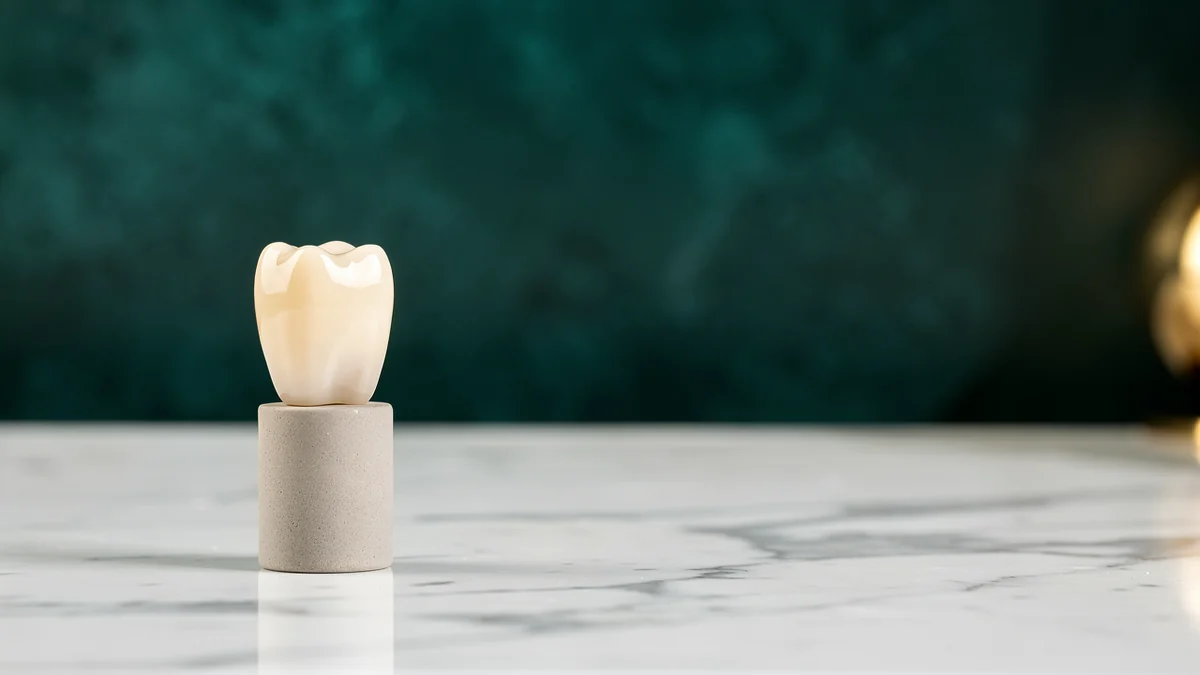
A dental crown is a tooth-shaped cap that covers the whole visible part of a damaged, weakened or discoloured tooth and restores its shape and strength. At Er Dental Clinic in Istanbul, Turkey, crowns are made in zirconia, E-max ceramic or porcelain fused to metal, chosen for each tooth after an examination.
Written by Er Dental Clinic
Treatment at a glance
How a Dental Crown Is Fitted, Step by Step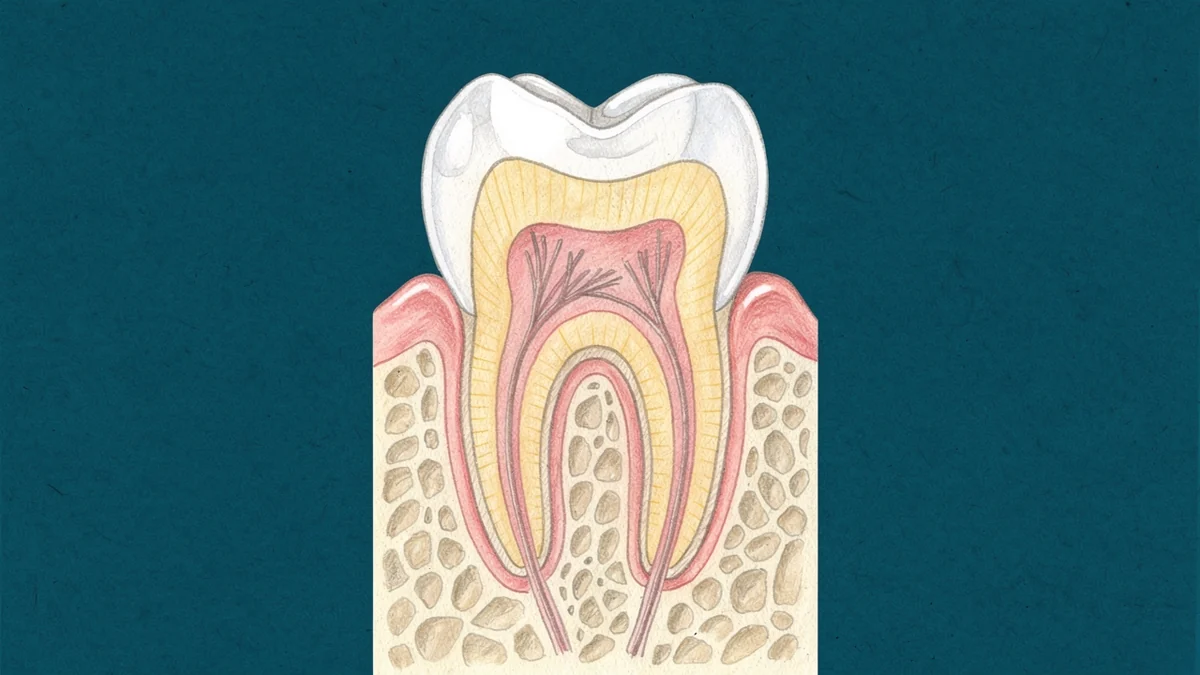
- 1Examination and X-raysA clinical examination and X-rays check the tooth, its root and the surrounding gum.
- 2Tooth preparationUnder local anaesthesia, the tooth is reshaped so the crown can fit over it.
- 3Digital scan or impressionThe prepared tooth and your bite are recorded with an intraoral scan or a traditional impression.
- 4Temporary crownA temporary crown protects the prepared tooth while the final crown is made.
- 5Final crownThe crown is fixed with dental cement and your bite is adjusted.
What Is a Dental Crown?
A dental crown is a tooth-shaped cover that fits over the whole visible part of a tooth, from the gum line to the biting surface. It is often called a cap or a tooth cover. Once it is cemented or bonded in place, the crown takes over the job of the outer tooth: it restores the shape, protects what is left of the natural tooth underneath and lets you bite and chew normally again.
A crown is usually suggested when a tooth is too damaged, weakened or discoloured for a filling to do the job. A filling repairs part of a tooth; a crown encloses all of it. That extra coverage is what holds a cracked tooth together, protects a tooth after root canal treatment and allows a worn or broken tooth to be rebuilt to its original height. Crowns are also placed on dental implants to replace a missing tooth, and they can anchor a bridge.
You may have seen the term “Turkish crowns” online. It simply describes crowns made during dental treatment in Turkey: the materials and techniques are the same as in other countries, and what really decides the result is how carefully each tooth is assessed and prepared. This guide explains how crowns work, which materials are available at our clinic in Istanbul, who they suit, what treatment involves and what it costs.
Real patients
Before and After at Er Dental Clinic
Photos of Er Dental Clinic patients. Every case is different — ask us to see crown cases similar to yours.
How a Dental Crown Works: Preparation, Crown and Cement
Every crown has the same three elements. First, the tooth is prepared: a thin layer is removed from all its surfaces so that the crown can sit over it without making the tooth bulky. How much is removed depends on the material, because some ceramics need more thickness than others to be strong. Second, the crown itself is made in a dental laboratory from a digital scan or an impression of the prepared tooth, so that it fits closely and matches your bite and the colour of the neighbouring teeth. Third, the crown is fixed with dental cement or a bonding material, which seals the edge where the crown meets the tooth.
The illustration below shows why a crown is different from a veneer. A veneer is a thin shell that covers only the front surface of a tooth and leaves most of the natural tooth untouched. A crown covers the entire tooth, which is why it is chosen when the tooth needs protection from all sides rather than a cosmetic change at the front.
How Does a Crown Cover a Tooth?
Read this diagram as text
- Natural tooth: Enamel on the outside, dentine beneath it and the pulp at the centre.
- Veneer: A thin shell covers only the front surface of the tooth.
- Crown: The tooth is reshaped and the crown covers all of it.
When Do You Need a Dental Crown?
People rarely start by looking for a crown. They start with a problem, and a crown is one of the ways to solve it. The most common reasons are:
- A broken or cracked tooth. A crack can spread when you bite; a crown holds the tooth together and spreads the force across it.
- Worn teeth. Teeth grinding, acid erosion and years of wear can shorten teeth and change your bite. Crowns can rebuild the lost height.
- After root canal treatment. A back tooth that has had root canal treatment has often lost a lot of its structure and can become brittle, so a crown is frequently recommended to protect it.
- A very large filling. When a filling takes up most of the tooth, the remaining walls are thin and can break; a crown covers and supports them.
- A missing tooth. A crown can be fitted on a dental implant, or two crowns can hold a bridge across a gap.
- Appearance. A badly discoloured, misshapen or heavily restored tooth can be covered with a crown when whitening, bonding or a veneer would not be enough.
Not every damaged tooth needs a crown. A small chip may be repaired with a filling, and a tooth that has lost one or two cusps may be restored with an inlay or onlay, which keeps more of the natural tooth. Your dentist explains which option fits each tooth after an examination.
Patient stories
Hear From Our International Patients
Patients from the UK, Romania, France, Ukraine and Russia talk about their treatment at Er Dental Clinic. Each video shows the treatment the patient had.
Dental Problems Treated with Crowns
Two problems lead to many crown treatments. A broken, cracked or worn tooth is the most common starting point, and teeth grinding is one of the main reasons that teeth wear down or crack. Both are explained on their own pages.
Broken and Worn Teeth
Why teeth chip, crack and wear down, when a tooth needs urgent attention and how each repair option compares.
Read about broken and worn teethTeeth Grinding (Bruxism)
How grinding and clenching wear teeth and crowns, and how a night guard can protect them.
Read about teeth grindingWho Is Suitable for Dental Crowns?
Most adults with a damaged, weakened or heavily filled tooth can be considered for a crown. Whether a crown is the right choice for a particular tooth depends on a few practical factors, which your dentist checks on X-rays and during the examination:
- Enough tooth to hold the crown. The crown needs a solid core to sit on. If too little tooth is left, a post and core build-up may be needed first, and sometimes a tooth cannot be saved.
- A healthy root. An infected or inflamed nerve should be treated with root canal treatment before the crown is made, not after.
- Healthy gums. Gum disease should be brought under control first, because the edge of a crown sits at the gum line and needs healthy tissue around it.
- Your bite and grinding habits. Heavy grinding or clenching puts crowns under strain. It affects the choice of material and may mean a night guard is recommended.
- Front or back tooth. Front teeth need a natural, translucent look; back teeth need to withstand strong chewing forces. The position of the tooth guides the choice of material.
- Oral hygiene. A crown cannot decay, but the tooth underneath can, especially at the edge of the crown, so daily cleaning matters.
If you are unsure whether you need a crown, send us photos or recent X-rays. A less invasive option, such as a filling or an onlay, may be possible.
Types of Dental Crowns: Zirconia, E-max, PFM and All-Ceramic
Zirconia crowns
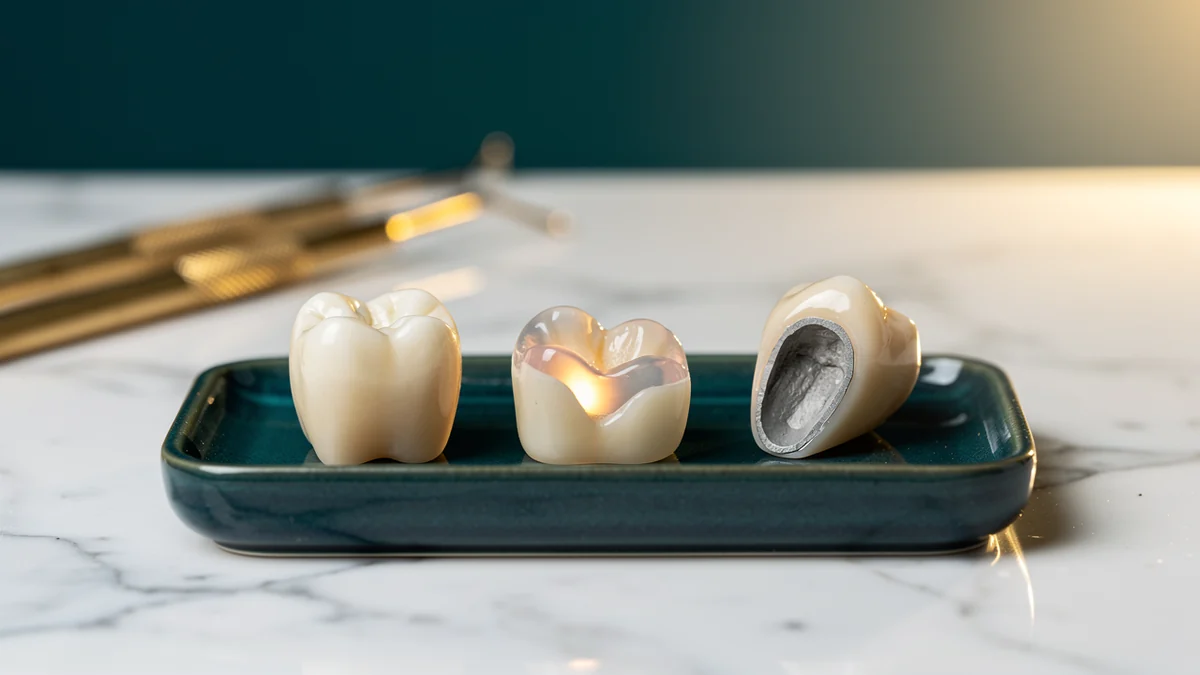
Zirconia (zirconium oxide) is a very strong, tooth-coloured ceramic. Zirconia crowns are often chosen for back teeth, where chewing forces are highest, and for patients who grind their teeth. They can be made in one solid piece (monolithic) for maximum strength, or with a layer of porcelain on the surface for a more lifelike appearance on visible teeth. Zirconia is also commonly used for crowns on implants and for bridges.
E-max crowns
E-max is a lithium disilicate glass ceramic made by Ivoclar. It lets light pass through in a way that resembles natural enamel, so E-max crowns are often chosen for front teeth and for smiles where appearance matters most. They are strong enough for many teeth, but for heavy grinding or the back molars your dentist may suggest zirconia instead.
Porcelain fused to metal (PFM) crowns
A PFM crown has a metal framework covered with porcelain. It has a long clinical track record and is still used in some situations, for example for certain bridges. Because metal does not let light through, a PFM crown can look more opaque, and a dark line may become visible at the gum line if the gum recedes, which is why metal-free crowns are usually preferred for front teeth.
Full ceramic (all-ceramic) crowns
“Full ceramic” or “all-ceramic” is the general name for metal-free crowns. Zirconia and E-max are both all-ceramic materials, so if you are looking for a crown without metal, these are the two main options.
Crowns on implants
When a tooth is missing, an implant can replace the root and a crown is fitted on it. Implant crowns are usually made from zirconia or E-max and are planned together with the implant.
Your written plan states which material is proposed for each tooth and why. If you have a preference, for example for a metal-free crown, tell us at the consultation.
Which Dental Crown Is Right for Me?
The right crown depends mainly on where the tooth is, how strongly you bite or grind and how important a natural, translucent look is for that tooth. The guide below is a starting point; your dentist confirms the choice after examining your teeth.
Choosing a Crown
Front teeth, back teeth, grinding and appearance: how dentists match the material to the tooth.
Find the crown that suits youZirconia Crowns
A strong, metal-free crown often chosen for back teeth, grinders and implant crowns.
Explore zirconia crownsE-max Crowns
A translucent glass ceramic crown often chosen for front teeth and a natural look.
Explore E-max crownsPFM Crowns
Porcelain over a metal framework, with a long clinical history and some limits for front teeth.
Explore PFM crownsFull Ceramic Crowns
What metal-free crowns are, which types exist and how they compare with metal-based crowns.
Explore full ceramic crownsHow Much Do Dental Crowns Cost in Turkey?
Crown prices depend mainly on the material and on the number of teeth treated. Our published prices are clinic-direct rates per unit, which means per crown. Your final cost is confirmed after our dentists review your X-rays, photos and clinical needs, and any extra treatment is disclosed in writing before you travel.
- Zirconia crown: from £215 / €250 / $290 per unit.
- E-max ceramic crown: £300 / €350 / $400 per unit.
- 20 Zirconia Crowns — Smile Rehabilitation Package (10 upper / 10 lower): £4,300 / €5,000 / $5,800.
- 20 E-max Ceramic Crowns — Smile Rehabilitation Package (10 upper / 10 lower): £6,020 / €7,000 / $8,120.
The two smile rehabilitation packages include digital smile design, a clinical examination with X-rays or 3D impressions, tooth preparation, temporary crowns during your stay, all laboratory work, and the final fitting and bite adjustments. The E-max package uses Ivoclar E-max ceramic. PFM crowns are quoted individually after your X-rays have been reviewed. If a tooth needs root canal treatment or a post and core build-up before the crown, this is quoted separately and only when it is clinically required. The price page lists every treatment and what each package includes.
Comparing Crowns: Materials, Inlays, Onlays and Veneers
Three comparisons come up in most consultations. The first is zirconia vs E-max: zirconia is usually chosen where strength matters most, such as back teeth and patients who grind, while E-max is usually chosen where a translucent, natural look matters most, such as front teeth. The second is whether a tooth needs a full crown at all. An inlay or onlay repairs only the damaged part of a back tooth and keeps more of the natural tooth, while a crown covers the whole tooth and is preferred when the damage is extensive or after root canal treatment. The third is crown or veneer: a veneer changes the front of a healthy tooth for cosmetic reasons, while a crown rebuilds and protects a damaged one. The first two comparisons have their own pages.
Assessment Before Dental Crown Treatment
A crown is only as good as the tooth underneath it, so every crown plan starts with checking that tooth.
Before you travel
The process starts with a free online consultation. You send recent photos of your teeth and, if you have them, X-rays. Our dentists review them and prepare a written treatment plan with the proposed crowns, the material for each tooth, the expected length of your stay and the price, so you can decide before booking anything.
At the clinic
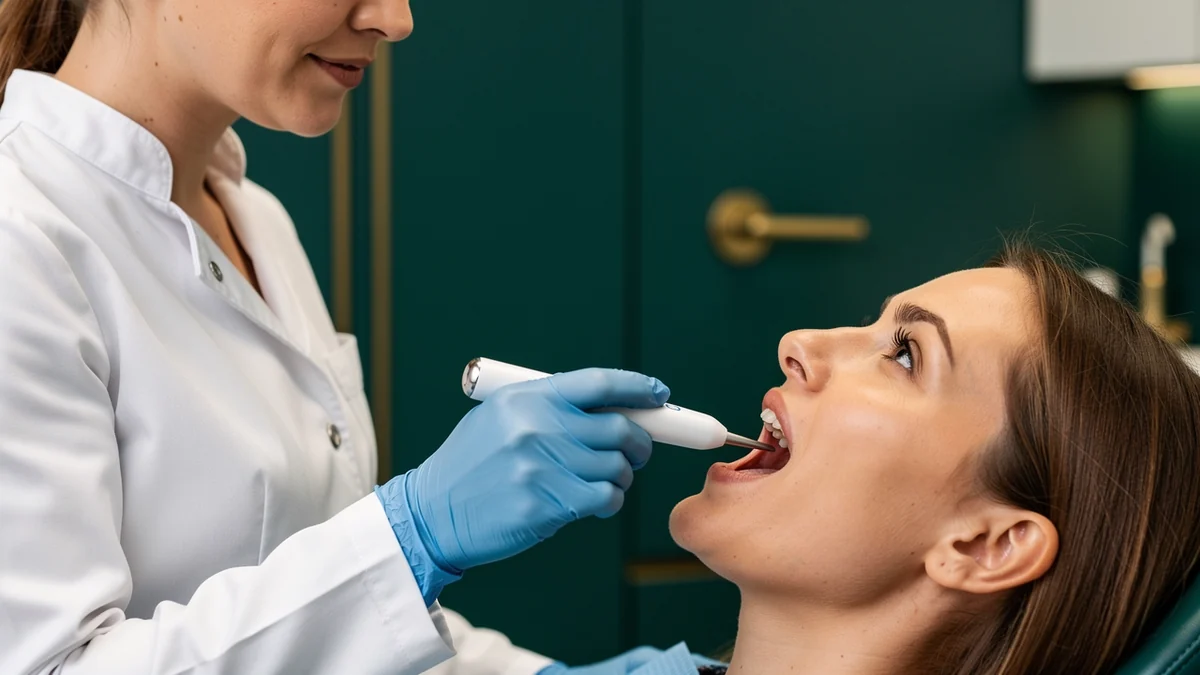
At your first appointment, a clinical examination and X-rays confirm the plan. Your dentist checks each tooth for decay, cracks and the health of the nerve and root, looks at your gums and assesses how your teeth meet when you bite.
If a tooth needs more work first
Some teeth need treatment before a crown can be made. An infected nerve is treated with root canal treatment, a tooth with little structure left may need a post and core build-up, and gum inflammation is treated so that the crown edges sit against healthy tissue. If the examination changes your plan, the reason and any cost difference are explained and agreed with you before treatment begins.
Shape and shade
When several visible teeth are crowned, digital smile design helps you see the proposed shape and length before the teeth are prepared, and the shade is chosen in daylight against your natural teeth.
How We Plan Crowns at Er Dental Clinic
Crown treatment is planned tooth by tooth. The aim is to keep as much natural tooth as possible, to choose a material that suits the position of each tooth and your bite, and to make crowns that fit closely at the gum line, where problems usually begin.
The clinic holds an International Health Tourism Authorization Certificate issued by the Republic of Türkiye Ministry of Health (certificate no. ST-6264, dated 27 August 2025), which carries the HealthTürkiye logo. You can check it yourself on the e-Devlet document verification service at turkiye.gov.tr/saglik-bakanligi-ebys with the code 3D0867DC-7D38-4EBF-B6D7-7B8F049AC725.
Every crown plan follows the same sequence:
- 1Online review. Your photos and X-rays are assessed and you receive a written treatment plan and quote before you travel.
- 2Tooth-by-tooth diagnosis. A clinical examination and X-rays check each tooth, its root and the surrounding gum.
- 3Material matched to the tooth. Zirconia, E-max or PFM is proposed for each tooth according to its position, your bite and your wishes.
- 4Careful preparation. Only as much tooth is reshaped as the chosen material needs, and temporary crowns protect the teeth meanwhile.
- 5Written warranty. Crowns, bridges and veneers are covered by a 5-year warranty, provided you keep to the recommended hygiene and check-up schedule.
- 6Remote follow-up. Aftercare instructions and your treatment documents before you leave, and remote follow-up once you are home.
Dental Crown Treatment Step by Step
Crown treatment on natural teeth is usually completed in one trip to Istanbul, with a gap of several working days between preparing the teeth and fitting the final crowns while the laboratory makes them. If a tooth needs root canal treatment or other work first, or if crowns are fitted on implants, the timeline changes. The number of appointments and days is written into your plan before you book.
- 1Examination and X-rays. Your dentist confirms the plan, treats any decay or nerve problems and agrees the shade and shape with you.
- 2Tooth preparation. Under local anaesthesia, each tooth is reshaped so the crown can fit over it.
- 3Digital scan or impression. The prepared teeth and your bite are recorded with an intraoral scan or a traditional impression.
- 4Temporary crowns. Temporary crowns protect the prepared teeth and let you eat and smile while the final crowns are made.
- 5Laboratory work. The dental laboratory makes the crowns in the chosen material and shade.
- 6Fitting and bite adjustment. The crowns are tried in, checked for fit and colour, fixed in place and your bite is adjusted.

Aftercare: Looking After Your Dental Crowns
After the crowns are fitted, your teeth may feel slightly sensitive to hot and cold for a few days, and the new shape can take a little getting used to. If your bite feels high or uneven when you close, tell your dentist before you leave, because a small adjustment usually solves it.
In the long term, crowns need the same care as natural teeth:
- Brush twice a day with a fluoride toothpaste, paying attention to the edge where the crown meets the gum.
- Clean between the teeth every day with floss or interdental brushes.
- Avoid biting very hard objects such as ice, pen lids or hard sweets, and do not use your teeth to open packaging.
- If you grind or clench your teeth, a night guard may be recommended to protect the crowns.
- Keep regular check-ups and professional cleanings, either with us or with your dentist at home.
Before you leave Istanbul, you receive written aftercare instructions and your treatment documents, so you can share the details with your dentist at home. After you return, we stay in touch for remote follow-up.
Risks and Possible Problems with Dental Crowns
Crowns are one of the most established treatments in dentistry, but like any treatment they have possible drawbacks that you should understand before deciding:
Sensitivity
Prepared teeth can be sensitive to temperature for a while after treatment; this usually settles.
Chipping or fracture
Ceramic can chip, especially with grinding or biting hard objects. Small chips can sometimes be polished or repaired; larger ones may need a new crown.
Loosening
A crown can come loose if the cement washes out or the tooth underneath decays. Keep the crown and contact a dentist so it can be checked and recemented if the tooth is sound.
Gum irritation
The gum around a crown can become inflamed if plaque builds up at the edge, and gums can recede over time and expose the crown margin.
Nerve problems
Some teeth, particularly those with deep decay or large old fillings, may develop nerve inflammation after preparation and need root canal treatment later.
Decay under the crown
The crown itself cannot decay, but the tooth at its edge can, which is why daily cleaning and check-ups matter.
Irreversible preparation
Because tooth structure is removed, a crowned tooth will always need a crown in the future.
Your dentist explains the risks that apply to your teeth, based on your X-rays and examination, before you give your consent.
Dental Crowns in Turkey: Frequently Asked Questions
How much is a dental crown in Turkey?
At Er Dental Clinic, a zirconia crown starts from £215 / €250 / $290 per unit and an E-max ceramic crown is £300 / €350 / $400 per unit. For a full smile, the 20 Zirconia Crowns package is £4,300 / €5,000 / $5,800 and the 20 E-max Ceramic Crowns package is £6,020 / €7,000 / $8,120 (10 upper / 10 lower). Your final cost is confirmed after our dentists review your X-rays, and any extra treatment is disclosed in writing before you travel.
Is it safe to get crowns in Turkey?
Safety depends on the clinic, the assessment and the health of your teeth rather than the country. Er Dental Clinic holds an International Health Tourism Authorization Certificate from the Republic of Türkiye Ministry of Health (ST-6264). Each tooth is examined and X-rayed before it is prepared, and your written plan sets out the treatment, materials and costs before you travel. Be cautious of any plan that crowns healthy teeth purely for cosmetic reasons without explaining the alternatives.
How long do dental crowns last?
Many crowns last for years with good care; lifespan depends on the material, your bite, grinding and your oral hygiene. The tooth under the crown still needs daily cleaning and regular check-ups. Crowns fitted at our clinic are covered by a 5-year warranty, provided you keep to the recommended hygiene and check-up schedule.
How many visits do dental crowns need?
Crowns on natural teeth are usually completed in one trip to Istanbul, with several working days between preparing the teeth and fitting the final crowns. You wear temporary crowns while the laboratory makes them. If a tooth needs root canal treatment first, or the crowns are for implants, the plan changes, and your written plan states the expected number of days before you book.
Should I get a crown or a veneer?
A veneer suits a healthy tooth that you want to change in colour or shape, because it covers only the front surface and needs less preparation. A crown suits a tooth that is broken, weakened, heavily filled or root-treated, because it covers and protects the whole tooth. Your dentist recommends one or the other for each tooth after examining it.
Do I need a crown after a root canal?
Often, yes, especially for back teeth. A root-treated molar or premolar has usually lost a lot of its structure and can crack under chewing forces, so a crown is frequently recommended to protect it. Front teeth with less damage may only need a filling. At our clinic, root canal treatment is £215 / €250 / $290 and a fiber post and core build-up is £100 / €120 / $140, quoted only if clinically required.
Can crowns be fitted on dental implants?
Yes. When a tooth is missing, a dental implant replaces the root and a crown is fitted on it once the implant has bonded to the bone. Implant crowns are usually made from zirconia or E-max and are planned together with the implant. Our dental implant pages explain the implant stage in detail.
References
- Dental Crowns: Types, Procedure and Care — Cleveland Clinic, 2026
- Crowns — Oral Health Foundation, 2026
- Crowns — American Dental Association (MouthHealthy), 2026
Get Your Crown Plan in Istanbul
Send us your photos or X-rays for a free online consultation. Our dentists review them and reply with a written treatment plan that states the proposed crown material for each tooth and a clear quote, so you can compare your options before you decide to travel.
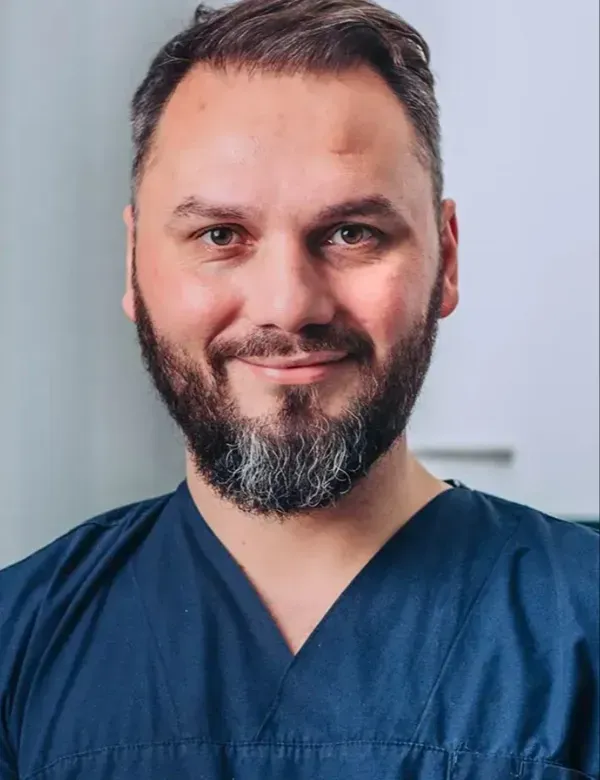
Dentistry · Esenyurt, İstanbul
Why Er Dental Clinic?
Related Pages
Zirconia (Zirconium) Crowns in Turkey: Strength and Natural Colour
Porcelain Fused to Metal (PFM) Crowns: How They Work and Who They Suit
E-max Crowns in Turkey: Translucent Ceramic Crowns for a Natural Look
Full Ceramic (All-Ceramic) Crowns: Metal-Free Crowns Explained
Broken, Cracked or Worn Teeth: Causes and Repair Options
Which Dental Crown Is Right for Me? Front Teeth, Back Teeth and More
Inlay, Onlay or Crown? How Dentists Choose the Right Restoration
Teeth Grinding (Bruxism): Causes, Signs and What It Does to Your Teeth
Dental Implants in Istanbul: Single, Multiple and Full-Arch
How Much Are Turkey Teeth? Treatment Prices at Er Dental Clinic, Istanbul
Free Online Dental Consultation: Send Your Photos and X-Rays for a Written Plan
Er Dental Clinic: Meet the Dentists Who Plan and Carry Out Your Treatment
Contact Er Dental Clinic
Your treatment plan · 3 short steps
Get your personal crown plan
Answer a few quick questions — it takes about a minute. Our dentists review your answers and reply with a written treatment plan and a clear price for your case, before you decide anything.
- Your treatmentWhat are you looking for?
- Your timingX-ray, dates and how we reply
- Your detailsSo we can send your plan
What you receive
- A written treatment plan prepared by our dentists
- A clear price for your case before you travel
- No obligation — ask every question first

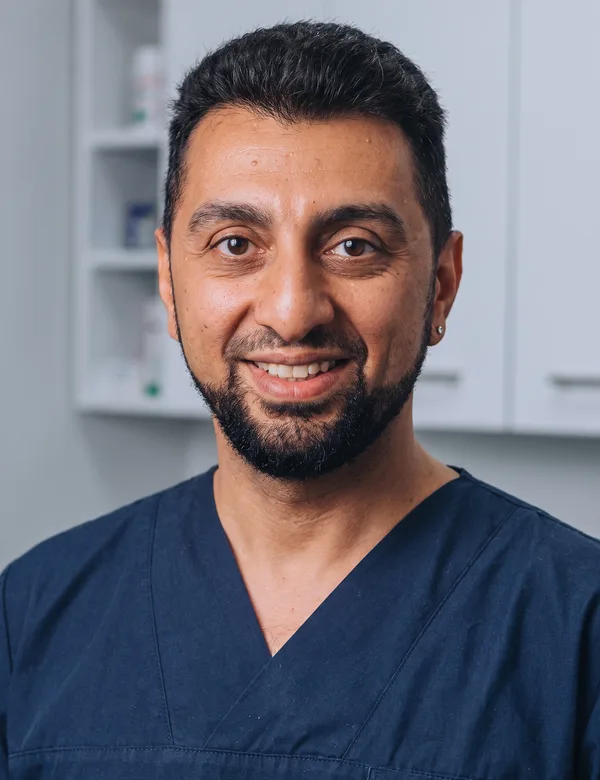

Your answers are reviewed by our dentist teamErtan Omerov · Enes Yol · Ahmet Mustafa Zeren · Vijdan Aslanoğlu